
 Karnataka SIR: Teaching on the back burner
  Trump administration offers mixed messages on limits to Ukraine’s Starshield access
  US Treasury proposes a rule to crack down on high-tech investments in China, other adversaries
  Calley Means, a key MAHA advocate, resigns as a top RFK Jr. adviser
  Spotify Tightens Family Plan Controls with QR Code Verification
 Bangladesh Discusses Joining Saudi-Turkey-Pakistan Mecca Pact
**
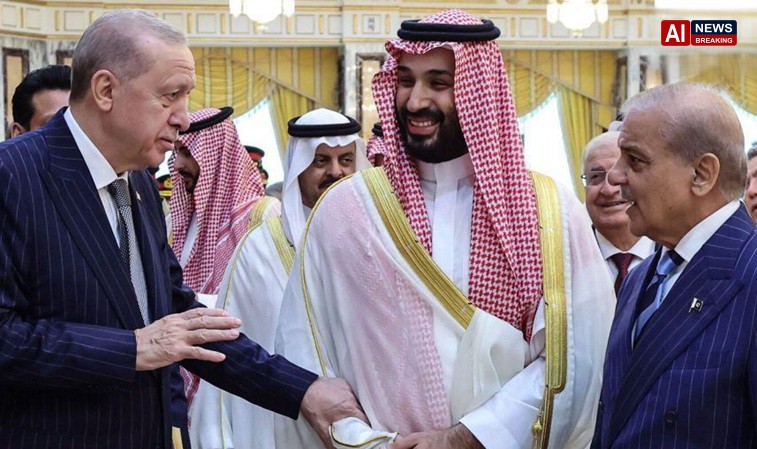
Bangladesh Discusses Joining Saudi-Turkey-Pakistan Mecca Pact - AI News Breaking
bangladesh discusses joining sauditurkeypakistan:
Bangladesh is reportedly evaluating the possibility of joining the mutual defence pact recently signed by Saudi Arabia, Turkey, and Pakistan, a diplomatic development that signals a significant shift in South Asia’s geopolitical landscape. A senior government minister confirmed that Dhaka is in active discussions regarding membership in the agreement, known as the Mecca Pact, which was formalized this month amidst rising regional tensions. This potential inclusion marks a pivotal test for Bangladesh’s foreign policy, as it seeks to balance its traditional economic and political ties with its Islamic roots while navigating the complex strategic interests of its regional neighbors and global superpowers.The Mecca Pact, orchestrated through high-level diplomatic channels in the holy city, represents a historic alignment of three major Muslim-majority nations with distinct strategic priorities..
Saudi Arabia, a financial and religious heavyweight within the Islamic world, sought to consolidate its influence and secure its western flank against Iranian proxy groups. Turkey, under President Recep Tayyip Erdogan, aimed to project itself as a stabilizing military power and a bridge between the West and the Middle East. Pakistan, facing mounting security pressures along its borders with Afghanistan and India, viewed the alliance as a crucial safeguard for its national security and a validation of its regional stature..
The agreement includes commitments to mutual defense assistance, intelligence sharing, and coordinated responses to threats against any member state.For Bangladesh, the decision to consider joining this tripartite alliance carries profound implications for its domestic politics and international standing. As a nation founded on the principles of secularism yet with a population that is overwhelmingly Muslim, Bangladesh has historically walked a careful tightrope in its foreign engagements. Officially, Dhaka maintains a policy of non-alignment and prioritizes economic diplomacy, particularly with China, India, and the United States..
However, the domestic political narrative often emphasizes the country’s Islamic identity, particularly during election cycles or when asserting cultural sovereignty against perceived Western encroachment. Joining the Mecca Pact could be interpreted by various political factions as a way to reinforce national pride and religious solidarity, potentially appealing to conservative voter bases.Analysts suggest that Bangladesh’s interest in the pact may also stem from a desire to diversify its security partnerships beyond its immediate geographical neighbors. While India remains a critical partner in trade, infrastructure, and counter-terrorism cooperation, New Delhi views any formal defense alliance between Islamabad and Riyadh with deep suspicion..
India has historically maintained strong economic ties with Saudi Arabia, but its rivalry with Pakistan remains a central pillar of regional security architecture. A Bangladeshi entry into the Mecca Pact could complicate Delhi’s strategic calculations, potentially forcing New Delhi to re-evaluate its regional engagement strategies. This dynamic underscores the delicate balancing act Dhaka must perform to avoid alienating either major neighbor while securing its own national interests.Economic considerations play an equally vital role in this diplomatic maneuvering..
Saudi Arabia is a preferred destination for millions of Bangladeshi expatriate workers, whose remittances form a crucial backbone of the national economy. In 2023 alone, Bangladesh received billions of dollars in remittances from the Gulf region, with Saudi Arabia accounting for a significant portion of this inflow. Strengthening political and defense ties with Riyadh could lead to more favorable labor agreements, increased investment opportunities, and potentially greater access to Saudi sovereign wealth funds..
For a country grappling with inflation, currency depreciation, and the need for foreign exchange reserves, deepening these economic ties through a formal security framework offers tangible benefits.However, the move is not without its risks and criticisms. Domestic critics, including secular political parties and civil society organizations, have expressed concern that joining a Muslim-led defense pact could undermine Bangladesh’s secular foundations established in its constitution. There are fears that such an alignment might empower religious hardliners and distort the country’s multi-ethnic and multi-religious fabric..
Furthermore, international partners, particularly Western nations that maintain strong military and intelligence cooperation with Pakistan and Turkey, may view Bangladesh’s entry with caution. The United States and European Union members might worry about the implications for human rights standards and democratic governance, given the varying records of the alliance members in these areas.From a regional security perspective, the inclusion of Bangladesh could alter the balance of power in the Bay of Bengal. Pakistan and Turkey have shown increasing interest in maritime security and naval cooperation, areas where Bangladesh also has significant stakes..
With extensive coastlines and strategic ports, Bangladesh is a key player in the Indo-Pacific region. Closer defense ties with Ankara and Islamabad could facilitate joint naval exercises, intelligence sharing on maritime piracy, and coordinated efforts to secure sea lanes that are critical for global trade. This cooperation could potentially counterbalance Chinese influence in the region, although Beijing remains a major defense equipment supplier to both Bangladesh and Pakistan.The diplomatic process leading to this potential membership has been characterized by discreet negotiations and high-level visits..
Bangladeshi officials have reportedly met with counterparts from Saudi Arabia and Turkey in recent months, discussing the terms of participation and the specific areas of collaboration. These discussions have likely covered issues such as the extent of military commitment, the mechanism for decision-making within the alliance, and the financial contributions expected from new members. The final decision will likely hinge on a detailed cost-benefit analysis conducted by the Ministry of Foreign Affairs and the Ministry of Defence, weighing the potential security guarantees against the diplomatic costs and domestic political fallout.Observers note that the Mecca Pact itself remains somewhat ambiguous in its operational details..
Since its signing, information on how the alliance intends to function in practice has been limited. Questions remain about whether the pact includes automatic military intervention clauses similar to Article 5 of the NATO treaty, or if it serves primarily as a framework for dialogue and limited cooperation. For Bangladesh, clarity on these operational aspects will be essential before committing to membership..
The government will likely seek assurances that joining the pact does not obligate it to engage in conflicts that are not directly pertinent to its national security interests.As the deliberations continue, the global community watches closely, recognizing that Bangladesh’s decision could set a precedent for other Non-Aligned Movement countries. The potential realignment highlights the evolving nature of international alliances in the 21st century, where economic pragmatism and security concerns often trump traditional ideological divides. For Dhaka, the choice represents a strategic gamble: embracing a regional identity driven by religious and cultural affinities while attempting to preserve its independent foreign policy trajectory..
The outcome of these negotiations will provide significant insight into the future direction of Bangladesh’s geopolitics and its role in the broader Islamic world and South Asian security architecture.Ultimately, the decision to join the Mecca Pact will reflect Bangladesh’s assessment of its immediate security threats and long-term strategic goals. If the government concludes that the benefits of enhanced cooperation with Saudi Arabia and Turkey outweigh the diplomatic friction with India and potential domestic opposition, it may move forward with membership. Conversely, if the risks are deemed too high, Dhaka may opt to maintain its current stance.
Updated: August 25, 2026
Dhaka weighs entry into the Mecca Pact amid shifting South Asian geopolitics and domestic debates over secularism.
The move could deepen Gulf ties and boost remittances but risks straining relations with India.