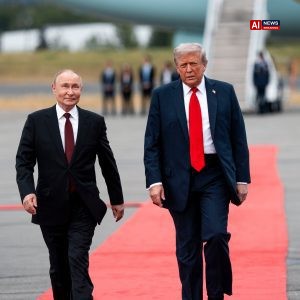
 Trump administration offers mixed messages on limits to Ukraine’s Starshield access
  US Treasury proposes a rule to crack down on high-tech investments in China, other adversaries
  Calley Means, a key MAHA advocate, resigns as a top RFK Jr. adviser
  Spotify Tightens Family Plan Controls with QR Code Verification
  Use of Chief Minister C. Joseph Vijay’s deep fake videos to collect money: Rajasthan youth moves Madras High Court seeking bail
 Strait of Hormuz Crisis: Trump Declares Sea Route Mine-Free as Iran and Oman Seek Safe Shipping Deal
strait hormuz crisis trump:
US President Donald Trump has said the US Navy has removed or detonated all known mines from the international waters of the Strait of Hormuz, while warning Iran against any attempt to lay new mines. The announcement comes as Iran and Oman work on a separate arrangement for a temporary maritime corridor intended to restore safer commercial shipping through the strategic waterway.
The Strait of Hormuz has once again become the centre of an intense geopolitical and maritime-security confrontation after US President Donald Trump announced that American forces had cleared mines from the strategically vital waterway and issued a stark warning to Iran against planting new ones.
Trump’s announcement marks a potentially important development in the long-running crisis surrounding the strait, which connects the Persian Gulf with the Gulf of Oman and the wider Arabian Sea. The waterway is one of the world’s most important maritime passages for energy supplies, making any disruption there capable of affecting oil markets, shipping companies, insurers, consumers and economies far beyond the Middle East.
According to Trump, the US Navy informed him that mines had either been removed or detonated from the international waters of the Strait of Hormuz. He simultaneously warned that any vessel attempting to deploy new mines would face an immediate US military response. Reports said Trump described Washington’s policy as one of “zero tolerance” toward new mine placement.
The announcement came at a particularly sensitive moment. While Washington has focused on restoring freedom of navigation through the waterway, Iran and Oman have been working on a different track aimed at establishing a temporary maritime route that could allow commercial vessels to move through the strait under agreed conditions.
The parallel developments point to two competing but potentially overlapping approaches to the same problem: the United States is emphasizing military mine clearance and freedom of navigation, while Iran and Oman are seeking a diplomatic and operational arrangement for shipping.
Trump announces mine clearance operation
Trump’s announcement centred on the removal or destruction of naval mines from international waters in the Strait of Hormuz.
Naval mines are among the most difficult threats to eliminate from a commercial shipping route. Unlike conventional attacks, mines can remain hidden beneath or near the surface of the water for extended periods and can threaten ships long after an immediate military confrontation has ended.
For commercial shipping companies, the mere possibility of mines can be enough to discourage vessels from using a particular route. Tankers, container ships and other large commercial vessels must take into account not only whether mines have actually been detected, but also whether authorities can confidently certify a route as safe.
That makes the US claim significant even if commercial traffic does not immediately return to pre-crisis levels.
Trump said the US Navy had completed the mine-clearing task and warned Iran that attempts to place new mines would trigger an immediate response. Reports also indicated that Washington was using surveillance capabilities to monitor the waterway.
The message was therefore both operational and deterrent.
Operationally, Washington was presenting the waterway as having undergone a major mine-clearance effort. Strategically, Trump was attempting to establish a clear red line against any renewed effort to use mines to restrict navigation.
The announcement also reflected the broader US position that commercial vessels should be able to use international waters without being subjected to unilateral restrictions.
Why the Strait of Hormuz matters so much
The importance of the Strait of Hormuz extends far beyond the countries immediately surrounding it.
The narrow maritime passage is one of the principal gateways through which energy exports from the Persian Gulf reach international markets. Oil and petroleum products transported through the waterway supply refineries and consumers across Asia, Europe and other parts of the world.
Before the current crisis, more than 20 million barrels per day were reportedly moving through the wider Hormuz route. Recent disruption has sharply reduced that flow. Reuters reported that oil shipments had fallen to roughly 5 million barrels per day by Monday, according to Vortexa data.
Such a decline has enormous consequences.
The global oil market does not need the strait to be completely closed for prices to become unstable. A reduction in available shipping capacity can create fears about future supply, increase insurance costs, lengthen voyages and encourage traders to build precautionary inventories.
For countries heavily dependent on imported energy, the consequences can eventually reach domestic fuel prices, inflation, transportation costs and industrial production.
The strait is therefore not simply a geographic chokepoint. It is an important component of the global economic system.
Mine clearance does not automatically mean normal shipping
One of the most important distinctions in the latest development is the difference between clearing mines and restoring normal commercial navigation.
The US announcement represents a significant military claim, but commercial shipping depends on a much broader range of factors.
Shipping companies need confidence that a route is safe. Insurers need to assess the probability of attack or damage. Shipowners must consider whether vessels could be seized, intercepted or damaged. Crews need assurances about navigational safety. Ports need predictable traffic flows.
Even after mines have been removed or detonated, uncertainty can remain.
A maritime-security warning cited by Seatrade Maritime indicated that concerns about drifting or uncharted mines could persist around the traffic separation scheme even after Trump’s declaration.
This highlights the difference between military mine clearance and the restoration of commercial confidence.
A navy may determine that it has removed known mines from a particular shipping lane. A commercial operator, however, may still ask whether another mine could have been deployed, whether a previously undetected device remains underwater, or whether a vessel could face another form of attack.
Consequently, Trump’s declaration could be an important step toward reopening the route without necessarily being the final step.
Iran and Oman pursue a temporary maritime corridor
At the same time that Washington was announcing the mine-clearance operation, Iran and Oman were pursuing their own approach to the crisis.
The two countries have been discussing arrangements for a temporary maritime corridor through the Strait of Hormuz. Iranian officials have indicated that discussions with Oman have focused on establishing a safe route for vessels rather than direct negotiations with Washington.
The proposal is important because Oman occupies a unique position in the dispute.
Oman is a littoral state of the Strait of Hormuz and has historically played a role in regional diplomacy. Its geography gives it a direct interest in maintaining safe maritime traffic, while its diplomatic relationships give it the ability to communicate with different sides of a conflict.
Iran, meanwhile, has a direct strategic interest in the waterway because the northern side of the strait is controlled by Iranian territory and because the country’s economic and security interests are deeply linked to the Gulf.
A temporary corridor could therefore provide Iran and Oman with a mechanism for managing shipping without immediately resolving the larger political dispute between Tehran and Washington.
What a temporary corridor could mean for shipping
The proposed corridor would not necessarily represent a full return to unrestricted maritime traffic.
Instead, it could provide a controlled route under specific conditions.
Such an arrangement could potentially involve designated shipping lanes, coordinated navigation, communication procedures and mechanisms for identifying commercial vessels.
The objective would be to reduce uncertainty and allow at least some shipping activity to resume.
Reports earlier this month indicated that Iran and Oman had been discussing the route and working toward an understanding regarding the map of the transit area.
This matters because shipping companies do not necessarily need a complete political settlement before restarting operations. What they need is a sufficiently predictable and secure operating environment.
A temporary corridor could therefore function as an interim mechanism.
It could allow humanitarian, commercial or selected cargo movements while broader negotiations continue.
At the same time, however, questions would remain about who would control the route, how vessels would be identified, what security guarantees would exist and how disputes would be handled.
Those questions could determine whether the corridor becomes a meaningful reopening mechanism or merely a limited diplomatic arrangement.
The US and Iran are approaching the problem differently
The latest developments expose a fundamental difference between Washington and Tehran.
The Trump administration has emphasized freedom of navigation and the ability of commercial vessels to transit international waters without interference.
Iran has sought greater control over maritime traffic in and around the strait, while negotiations with Oman have focused on creating a temporary route.
This difference is not merely technical.
It reflects a larger dispute over sovereignty, security, military presence and the rules governing international shipping.
The United States views unrestricted navigation as a strategic and economic priority. Iran sees the waterway as part of its immediate security environment and a critical instrument of national power.
The result is a complicated situation in which even a seemingly straightforward question — whether a tanker can safely cross the strait — becomes connected to much larger geopolitical questions.
Trump’s warning raises the stakes
Trump’s warning against future mine-laying is arguably as important as his declaration that the mines have been removed.
By saying that vessels attempting to deploy new mines would be immediately destroyed, Washington is establishing a direct deterrent.
Such a policy could reduce the likelihood of another mining operation if Iran believes the United States has both the surveillance capability and the political will to respond.
But deterrence also creates risk.
If US forces believe they have identified an Iranian vessel preparing to deploy mines and act against it, Tehran could interpret the strike as an escalation. Iran could respond against American forces, commercial shipping or regional partners.
The danger is therefore that an effort designed to protect maritime navigation could itself become a trigger for further military confrontation.
That is why the implementation of the warning will matter as much as the warning itself.
The role of surveillance
Trump’s comments also drew attention to the role of surveillance in maintaining the security of the strait.
The United States has extensive intelligence, surveillance and reconnaissance capabilities in the region. Tracking vessels, monitoring maritime activity and identifying potential mine-laying operations can provide a significant advantage.
The US claim that the Space Force is monitoring the strait adds another dimension to the security architecture.
Satellite surveillance can help identify unusual vessel movements, changes in maritime traffic and activity around strategic locations. However, surveillance alone does not eliminate the physical danger of mines.
Mine warfare is inherently difficult because mines can be small, difficult to detect and potentially deployed in changing patterns.
This is why mine countermeasures require specialized equipment, trained personnel and repeated verification.
Why mines are particularly dangerous for tankers
Large oil tankers are especially vulnerable to underwater explosive devices.
A mine does not need to sink a vessel completely to cause enormous disruption.
Damage to the hull, propulsion system, steering mechanism or cargo tanks could force a tanker to stop inside or near a narrow shipping lane. Such an incident could create a secondary navigational crisis even if no other vessels are attacked.
A disabled tanker could block part of a route, requiring other vessels to slow down or change course.
The possibility of an oil spill would create another environmental concern.
For these reasons, mine clearance is not simply about removing explosives. It is about restoring confidence in the entire maritime transportation system.
The economic impact of reduced Hormuz traffic
The decline in shipping through Hormuz has already created economic pressure.
Oil markets respond not only to actual supply disruptions but also to expectations.
If traders believe that shipping will remain constrained for weeks or months, they may price additional risk into crude futures. If the situation improves, those risk premiums can fall quickly.
This helps explain why any announcement concerning the Strait of Hormuz attracts immediate attention in global financial markets.
The latest developments could therefore have several possible consequences.
If the US mine-clearance claim is followed by verified commercial shipping, markets could interpret it as evidence that the crisis is easing.
If Iran and Oman successfully establish a temporary corridor, traders could see another sign that maritime traffic is gradually returning.
But if mine warnings, attacks or political disputes continue, the market could remain nervous despite the US military operation.
Shipping insurance remains a major obstacle
Even if the physical route is cleared, insurance could remain one of the biggest barriers to a full reopening.
War-risk insurance premiums can rise sharply when vessels enter areas exposed to military conflict.
A tanker operator might therefore conclude that a voyage is technically possible but economically unattractive.
Higher insurance costs are ultimately reflected in freight rates and can affect the delivered cost of oil and other commodities.
For a shipping route to return to normal, insurers must have confidence that the risk has declined sufficiently.
That process can take longer than a military mine-clearance operation.
The human cost of the crisis
The Strait of Hormuz crisis has also created significant disruption for seafarers.
A New Indian Express report said that approximately 6,000 sailors and 500 ships had remained stuck in the Gulf since the beginning of the conflict.
Behind the statistics are crews who may spend weeks or months aboard vessels waiting for security conditions to improve.
Long periods at anchor create their own logistical problems.
Ships require fuel, food, maintenance and crew rotations. Delayed vessels can disrupt schedules across global shipping networks, while companies must manage crews who may be unable to return home on time.
For sailors, a geopolitical crisis can therefore become a prolonged workplace and personal-security crisis.
Oman emerges as a critical diplomatic player
Oman’s role deserves particular attention.
Muscat has historically maintained diplomatic channels with countries that have difficult relationships with one another. That position can make Oman valuable as an intermediary.
In the Hormuz crisis, Oman’s interests are also directly connected to maritime stability.
The country sits alongside one side of the strategic waterway and has its own ports, shipping interests and economic concerns.
A prolonged disruption to the strait can affect Oman’s economy even if Omani territory is not directly attacked.
This gives Muscat a strong incentive to promote a workable maritime arrangement.
The temporary corridor discussions therefore represent more than a bilateral Iranian-Omani initiative. They could provide a potential diplomatic bridge between regional maritime security and the broader international demand for freedom of navigation.
The unresolved question of control
One of the most difficult questions is who ultimately controls the terms under which ships pass through the strait.
Washington has consistently emphasized unrestricted commercial navigation.
Iran has sought mechanisms that provide greater control over traffic and security.
Oman has an interest in facilitating movement while avoiding a direct confrontation between the United States and Iran.
These positions can overlap on one point — the need to prevent attacks on commercial shipping — but diverge sharply on how that objective should be achieved.
The temporary corridor could therefore become a test of whether the parties can separate immediate maritime safety from the larger political dispute.
Could the US mine clearance change the Iran-Oman plan?
Trump’s announcement raises an obvious question: if the US says the central shipping lane has been cleared, is a separate temporary corridor still necessary?
The answer is not straightforward.
According to Axios, US officials said the Navy had cleared the Traffic Separation Scheme, the central shipping arrangement between Iran and Oman, while tankers had previously been routed through a southern lane near Oman. The announcement coincided with ongoing Iran-Oman discussions over navigation arrangements.
If the central route is genuinely safe and commercially usable, the need for a specially negotiated temporary corridor could diminish.
But diplomatic arrangements may still be necessary because mine clearance addresses only one element of the crisis.
Commercial operators also need assurance against interception, attack and other forms of interference.
Consequently, the US military operation and the Iran-Oman talks could potentially complement each other rather than compete.
Military mine clearance could reduce physical navigational risk, while a diplomatic arrangement could reduce political and operational risk.
Why the word “temporary” matters
The temporary nature of the proposed corridor is also significant.
A temporary arrangement allows governments to test whether shipping can resume without requiring them to settle every unresolved political question.
It could be implemented for a limited period, monitored and adjusted according to security conditions.
If successful, the arrangement could become the foundation for a broader reopening.
If unsuccessful, the parties could suspend it without having formally committed themselves to a permanent settlement.
That flexibility may make it easier for Iran and Oman to reach an initial understanding.
The risk of false confidence
There is also a danger that declarations about the strait being cleared could create false confidence.
Maritime security professionals tend to distinguish between “known mines removed” and “the waterway is completely risk-free.”
The latter is an extremely high standard.
A single undetected device can still threaten a commercial ship.
Likewise, a waterway can be free of mines and still be unsafe because of missiles, drones, small-boat attacks, seizures or military confrontation.
Recent maritime-security reporting has continued to highlight risks even after claims that mines had been removed.
This means shipping companies will probably assess multiple layers of risk before deciding whether to resume normal operations.
The wider geopolitical message
Trump’s statement also sends a wider message about American military power.
By claiming responsibility for clearing the international waters of the Strait of Hormuz, Washington is signaling that it is prepared to use naval resources to maintain access to a major global maritime route.
The message is aimed not only at Iran.
Other governments and maritime actors are also watching to see whether the United States can restore traffic and enforce its stated policy.
If the operation succeeds and shipping increases, Washington could argue that military pressure has restored freedom of navigation.
If commercial traffic remains depressed, critics could argue that mine clearance alone was insufficient.
Iran faces a strategic calculation
For Iran, the decision over future mine deployment or restrictions on shipping involves significant risks.
Mines can impose costs on an adversary without requiring a conventional naval confrontation, making them attractive from an asymmetric-warfare perspective.
But once the United States has publicly declared a zero-tolerance policy, attempting to deploy additional mines could produce a direct military confrontation with American forces.
Iran must therefore weigh the potential strategic benefit of maritime pressure against the risk of escalation.
At the same time, Tehran has economic reasons to avoid prolonged disruption.
The Iranian economy is heavily affected by restrictions on energy exports, sanctions and wartime disruption. A controlled reopening of shipping could provide economic relief even if broader political disagreements remain unresolved.
The US also faces difficult choices
Washington’s position is not without risks.
Maintaining a large military presence in the Gulf is expensive and exposes American personnel and vessels to potential attacks.
Every additional interception or strike creates the possibility of escalation.
The United States therefore needs to demonstrate that its maritime-security strategy can work without triggering a wider regional conflict.
That requires careful coordination between military forces, diplomatic channels and international shipping authorities.
What shipping companies will watch next
The next phase of the crisis will likely be determined by practical indicators rather than political statements alone.
Shipping companies will watch whether tankers begin using the central shipping lanes in greater numbers.
They will monitor whether vessels receive reliable navigation guidance.
Insurers will examine whether attacks and mine warnings decline.
Oil traders will watch the volume of petroleum moving through the waterway.
Satellite and maritime tracking data will provide an indication of whether the route is genuinely returning to normal.
If traffic rises steadily, confidence could improve quickly.
If commercial operators remain reluctant to enter the waterway, it would suggest that the security situation remains unresolved despite the mine-clearance announcement.
The importance of verification
The difference between a political announcement and a verified maritime-security development is crucial.
Trump’s statement is significant, but shipping companies and governments will seek independent confirmation of the operational situation.
The precise area that has been cleared, the methods used, the number of mines removed or detonated and the status of surrounding waters are all important details.
The Traffic Separation Scheme is particularly important because commercial vessels depend on clearly defined routes to navigate safely through a confined waterway.
Any uncertainty over adjacent waters could limit the practical impact of mine clearance.
A possible pathway toward reopening
The developments of August 2026 suggest a possible sequence for restoring maritime traffic.
First, military forces clear known mines from critical shipping lanes.
Second, Iran and Oman establish a temporary arrangement that defines how commercial vessels can transit.
Third, international shipping operators gradually test the route.
Fourth, insurers adjust risk assessments based on real-world traffic and incident levels.
Finally, if the arrangement proves sustainable, the temporary corridor could evolve into a more stable maritime-security framework.
None of these steps is guaranteed.
But the combination of military demining and diplomacy creates a possible pathway away from the current disruption.
What could derail the process?
Several factors could undermine the emerging opening.
A new mine-laying incident would immediately raise questions about the reliability of the route.
An attack on a tanker could have a similar effect.
A confrontation between American and Iranian forces could cause commercial operators to withdraw even if the waterway itself remained physically clear.
Political disagreements between Tehran and Washington could also spill into maritime operations.
Furthermore, if Iran and Oman fail to finalize their temporary corridor arrangement, commercial shipping may remain uncertain about which procedures to follow.
The oil market remains the ultimate pressure point
The economic significance of Hormuz means the crisis will continue to be closely watched by energy markets.
A sustained recovery in shipments could reduce concerns about global supply.
A renewed disruption could have the opposite effect.
The reported decline from more than 20 million barrels per day before the conflict to around 5 million barrels per day illustrates the scale of the disruption.
The implications go beyond crude oil.
Petroleum products, liquefied natural gas and other energy-related cargoes can also be affected by restrictions on maritime traffic.
Countries dependent on Gulf energy exports therefore have a direct interest in a rapid and sustainable reopening.
India and Asian economies have a major stake
Asian economies are particularly sensitive to disruptions in the Gulf because of their dependence on imported energy.
India, China, Japan, South Korea and other major Asian economies have significant exposure to Middle Eastern energy markets.
A prolonged disruption can raise procurement costs and increase pressure on inflation.
For India in particular, the Strait of Hormuz is strategically important because Gulf countries are major suppliers of crude oil and other energy products.
Any reduction in shipping volumes can therefore affect Indian refiners and the wider energy market.
A stable reopening of the strait would be welcomed by energy-importing countries across Asia.
A fragile opportunity
The current situation should therefore be viewed as an opportunity rather than a final resolution.
Trump’s announcement could represent a major operational milestone if the US Navy has successfully cleared the principal shipping lanes.
The Iran-Oman talks could provide a diplomatic mechanism for translating that physical clearance into predictable commercial traffic.
But neither development by itself guarantees a return to normality.
The central challenge remains the same: ensuring that commercial ships can move through the Strait of Hormuz without being caught in the wider US-Iran confrontation.
What happens next
The coming days are likely to be closely watched.
The most important developments will include any confirmation that commercial tankers are returning to the central route, further details about the US mine-clearance operation and progress in the Iran-Oman discussions.
The reaction of international shipping companies will also be revealing.
If major operators begin sending vessels through the strait, it could signal that confidence is returning.
If ships continue to wait or use alternative routes, it would suggest that the security concerns remain significant.
The US warning against new mine deployment could also become a major factor.
If no further mine-laying incidents occur, the deterrent may be judged effective.
If another incident takes place, the crisis could quickly escalate.
Conclusion
Donald Trump’s announcement that the US Navy has cleared or detonated mines from international waters in the Strait of Hormuz represents one of the most significant maritime developments in the current crisis.
The declaration comes with an unmistakable warning to Iran: Washington says any attempt to lay new mines will be met with immediate military action.
At the same time, Iran and Oman are working toward a temporary maritime corridor designed to provide a controlled mechanism for commercial shipping through the strategic waterway.
These developments could eventually reinforce one another.
US mine clearance can address the physical danger posed by underwater explosives. Iran-Oman diplomacy can potentially address the political and operational uncertainty surrounding commercial navigation.
But the road back to normal shipping remains complicated.
A mine-free shipping lane is only one requirement for restoring confidence. Commercial operators must also believe that vessels will not be attacked, intercepted or caught in another confrontation.
The Strait of Hormuz is too important to the global economy for prolonged uncertainty to be treated as a regional issue alone. Its disruption affects energy markets, shipping costs, insurance premiums, inflation and economic planning across continents.
The next test will therefore not be whether Washington, Tehran or Muscat can make a political announcement. The real test will be whether tankers and other commercial vessels can once again move through the strait safely, predictably and at commercially sustainable cost.
If that happens, the latest developments could mark the beginning of a gradual stabilization of one of the world’s most important maritime chokepoints.
If it does not, Trump’s declaration of mine clearance may prove to be only one stage in a much longer and more dangerous struggle over control, security and freedom of navigation in the Strait of Hormuz.
AI Insight: The latest developments suggest that the Strait of Hormuz crisis is entering a potentially important transition from direct disruption toward controlled reopening, but the situation remains highly fragile. The US mine-clearance operation addresses one of the most immediate physical threats to maritime traffic, while the Iran-Oman corridor initiative addresses the diplomatic problem of getting commercial operators back into the waterway. The two approaches could complement each other if Washington focuses on maritime security while Oman helps establish practical communication and transit arrangements with Tehran. However, the biggest risk is that a new mine-laying attempt, attack on a commercial vessel or confrontation between US and Iranian forces could rapidly reverse the progress. From an economic perspective, sustained restoration of shipping would likely be more important than any single political statement because energy markets ultimately respond to actual cargo flows. The critical indicators over the coming days will therefore be tanker movements, insurance conditions, maritime-security warnings and the implementation of the Iran-Oman temporary corridor. If those indicators improve simultaneously, the world could see a gradual normalization of Hormuz traffic. If they do not, the latest announcements may provide only temporary reassurance rather than a durable solution.