 Trying to establish ‘facts’ about incident ‘apparently’ involving Indians on yacht off Yemen coast: India
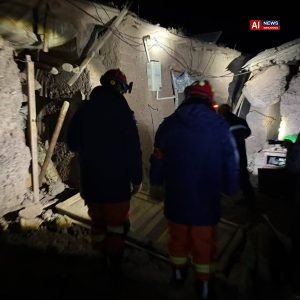
 Powerful Earthquake in Tibet Kills at Least 16
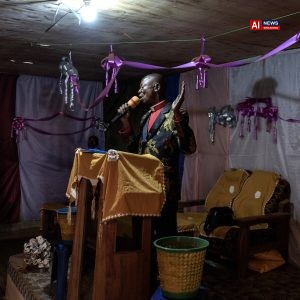
 How Pastors Mobilize Communities in Congo’s Fight Against Ebola
 Gadi Eisenkot
Faith Hedgepeth Murder Trial Begins 14 Years After UNC Student’s Death
**
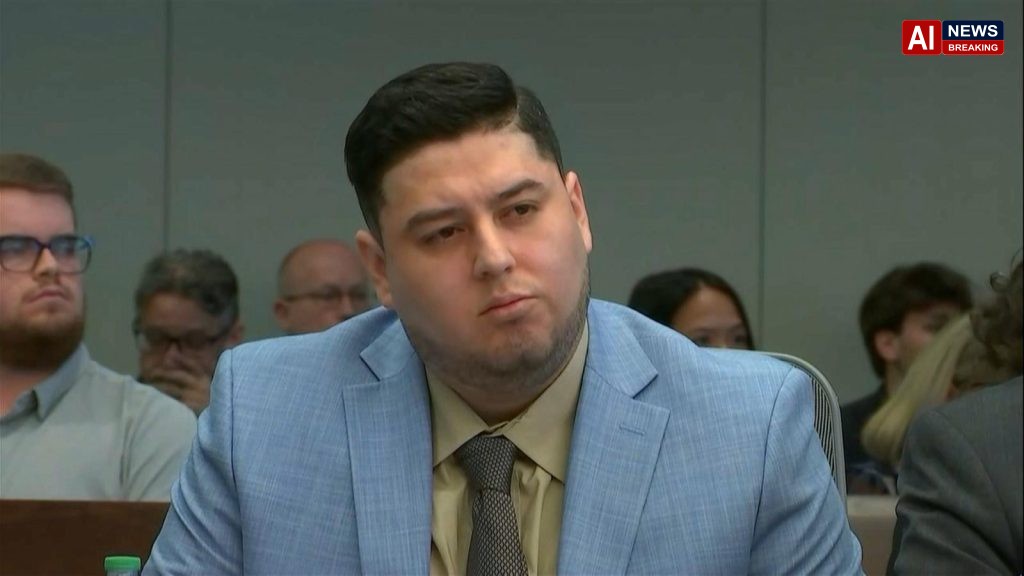
Trial begins for a man accused of killing UNC student Faith Hedgepeth 14 years ago - AI News Breaking
Durham, North Carolina: The long-running murder case involving University of North Carolina at Chapel Hill student Faith Hedgepeth has finally reached trial, more than 14 years after the 19-year-old was found beaten to death in her off-campus apartment.
The defendant, Miguel Enrique Salguero-Olivares, is charged with first-degree murder, first-degree rape, first-degree sexual offense and first-degree burglary. He was arrested in September 2021 after investigators said DNA evidence connected him to material recovered from the original crime scene. Salguero-Olivares has maintained his innocence.
Key Highlights
- Faith Hedgepeth, a 19-year-old UNC-Chapel Hill student, was found dead on September 7, 2012.
- Her death remained unsolved for more than nine years before Miguel Salguero-Olivares was arrested in 2021.
- Prosecutors say DNA evidence links the defendant to the crime scene and several pieces of evidence.
- The defense is challenging the prosecution’s evidence and pointing to missing forensic material.
- Opening statements began October 7, 2026, after jury selection in Durham.
What Happened to Faith Hedgepeth?
Hedgepeth was a UNC-Chapel Hill student living with her roommate, Karena Rosario, at an apartment complex on Old Chapel Hill Road in Durham County.
On September 7, 2012, Hedgepeth was found dead inside the apartment after suffering a severe beating. Investigators determined that her death was a homicide. The case immediately became one of the area’s most closely watched unsolved killings.
According to prosecutors’ account presented during opening statements, Hedgepeth and Rosario had gone out the night before. Hedgepeth drove them home in the early morning hours, while Rosario later left the apartment with a friend. Rosario eventually returned and discovered Hedgepeth’s body.
The prosecution alleges that Hedgepeth was attacked by a stranger in a violent incident. Prosecutors told jurors that the defendant’s DNA was found in multiple locations connected to the crime, including on a rum bottle described as the suspected murder weapon, on Hedgepeth’s body and on a fast-food bag containing a threatening or jealous message.
Nine Years of Investigation Before an Arrest
For years, investigators were unable to publicly identify a suspect. The breakthrough came in 2021.
Chapel Hill police and the North Carolina State Bureau of Investigation submitted DNA evidence to the state crime laboratory. Authorities said the resulting DNA match led investigators to Salguero-Olivares, who was arrested on September 16, 2021.
The investigation involved extensive forensic work. Court records indicate that the case generated more than 39,000 pages of evidence, including digital forensic material, social-media information and laboratory analysis. The size and complexity of the investigation contributed to the lengthy period between the arrest and trial.
The defense, however, argues that the DNA evidence does not by itself establish how or when the defendant came into contact with the material.
Defense Challenges Missing Evidence
One of the most significant disputes before trial concerned missing forensic evidence.
Investigators collected what appeared to be blood from a bathroom door frame during the original investigation. The swab was subsequently lost and could not be located in the evidence system.
During a pretrial hearing in August 2026, the defense argued that the missing sample should have serious consequences for the prosecution’s case and asked the court to dismiss the charges or allow a negative inference against the state.
The judge rejected the request to dismiss the case but criticized the loss of the evidence, describing it as “absurd.”
That issue has now become part of the defense’s broader argument that investigators failed to preserve or properly document all potentially important evidence.
What Prosecutors Are Alleging
During opening statements on October 7, Assistant District Attorney Angela Garcia-Lamarca told jurors that the prosecution’s case is supported by forensic evidence rather than a claimed personal relationship between Hedgepeth and the defendant.
Prosecutors contend that Salguero-Olivares did not know Hedgepeth personally and that the killing occurred during an alleged violent attack.
The prosecution highlighted DNA evidence recovered from several pieces of evidence. Prosecutors also pointed to a message written on a fast-food bag at the apartment as part of the evidence they say helps establish the circumstances surrounding Hedgepeth’s death.
The prosecution’s case therefore depends heavily on forensic evidence and its interpretation, as well as testimony about what happened in the apartment during the early morning hours.
Defense Says Evidence Does Not Tell the Whole Story
Defense attorney James Rainsford urged jurors to examine what he described as gaps and inconsistencies in the state’s case.
The defense has questioned the handling of forensic evidence, particularly the missing bathroom blood sample. It has also challenged the significance of the DNA evidence and argued that the prosecution must establish how the evidence connects Salguero-Olivares to the killing itself.
The defense has also highlighted testimony from people who were near the apartment around the estimated time of Hedgepeth’s death. A friend who picked up Rosario reportedly told investigators that he saw what appeared to be blood on her hands, while a downstairs neighbor reported hearing loud thumps during the early morning hours.
Those issues are expected to form part of the defense’s effort to create reasonable doubt.
Trial Finally Underway in Durham
Jury selection began on September 28, 2026, at the Durham County Courthouse. Attorneys ultimately agreed on a 12-member jury, with additional alternates selected before opening statements began.
Opening statements began October 7, marking a major development in a case that has remained unresolved for more than a decade.
Karena Rosario, Hedgepeth’s roommate, was among the early witnesses called by prosecutors. Her testimony focused on the events surrounding the night Hedgepeth died and Rosario’s discovery of her roommate’s body.
A Case Built Around DNA and Circumstantial Evidence
The Faith Hedgepeth case illustrates how advances in forensic science can revive investigations years after a homicide.
The arrest came after investigators used DNA analysis to identify Salguero-Olivares. But the trial will require prosecutors to prove beyond a reasonable doubt that he committed the charged offenses.
The defense is attempting to undermine that connection by challenging the handling and interpretation of the forensic evidence and emphasizing material that investigators lost or failed to preserve.
That means the central question for jurors will not simply be whether Salguero-Olivares’ DNA was found in connection with the investigation. They will have to determine what that evidence means in the context of the entire case and whether the prosecution has established his guilt beyond a reasonable doubt.
No Verdict Yet
As of October 7, 2026, the trial remains ongoing. Opening statements have been delivered and testimony has begun, but there has been no verdict.
Salguero-Olivares remains presumed innocent unless and until prosecutors prove the charges against him in court.
The trial is expected to last several weeks because of the extensive amount of evidence and the large number of potential witnesses and experts involved in the case.
For Hedgepeth’s family, the proceedings represent the latest chapter in a 14-year search for answers. For the prosecution and defense, the trial will determine whether the evidence assembled over years of investigation is sufficient to establish criminal responsibility beyond a reasonable doubt.