Europe warns of Russia’s hybrid attacks but struggles to counter them
  Former chief election commissioner calls SIR scheme illegal.
  A Corruption Scandal Is Reshaping Brazil’s Presidential Election
  US citizen injured in Illinois after ICE agents mistook him for fugitive, tried to arrest him
  At 10 years old, Smithsonian’s Black museum is undaunted amid pressure from Trump administration
 Delhi Fire FIR Reveals Shocking Safety Violations: No Ventilation, Locked Basement Exit, and Illegal 28-Room Conversion Exposed
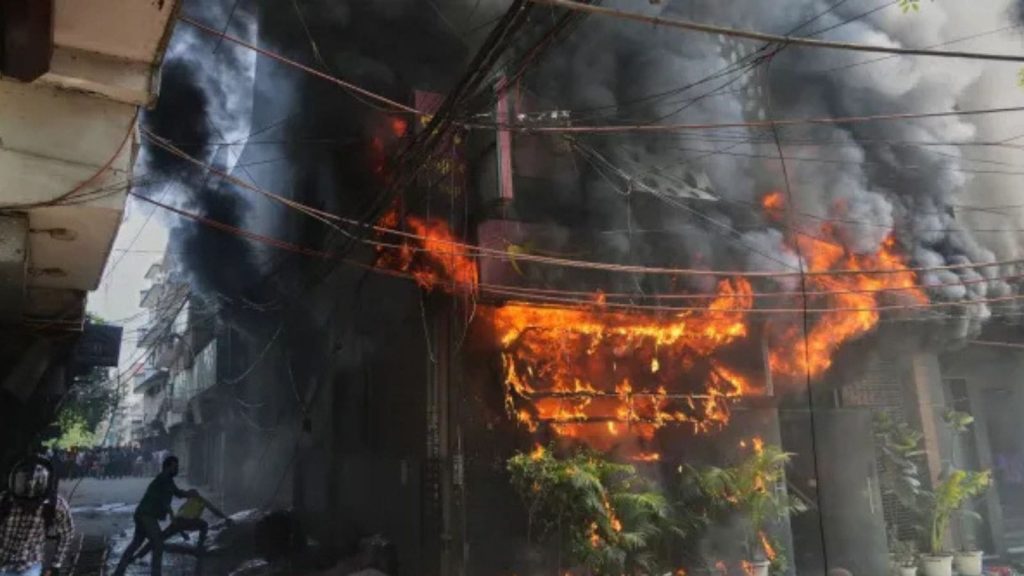
delhi fire reveals shocking:
An FIR related to a recent fire incident in Delhi has uncovered serious safety violations, including a lack of ventilation, a locked basement door, and illegal structural changes. Authorities allege that a property originally meant for far fewer rooms was converted into 28 units, significantly increasing risk during emergencies. The findings have intensified scrutiny over building safety compliance and enforcement lapses in the capital.
A recently filed First Information Report (FIR) in connection with a fire incident in Delhi has revealed disturbing details about alleged building code violations and safety lapses that may have significantly worsened the severity of the emergency.
According to the FIR, the structure in question suffered from multiple critical deficiencies, including the absence of proper ventilation, a locked basement exit, and unauthorized structural modifications that transformed a building originally designed for a limited number of rooms into a densely packed residential or commercial space containing as many as 28 rooms instead of the permitted six.
These findings have raised serious concerns among investigators, fire safety officials, and urban governance experts, highlighting systemic issues in enforcement of building regulations in densely populated urban areas like Delhi.
What the FIR Alleges: A Breakdown of Violations
The FIR lays out a series of alleged violations that paint a troubling picture of negligence and regulatory failure. Among the key issues identified are:
1. Absence of Proper Ventilation
One of the most critical safety concerns highlighted in the FIR is the lack of adequate ventilation within the premises. In fire safety engineering, ventilation plays a crucial role in controlling smoke accumulation, maintaining breathable air pockets, and enabling safe evacuation.
Without proper airflow systems, smoke from a fire can rapidly fill enclosed spaces, reducing visibility to near zero and causing suffocation even before flames reach occupants. Investigators noted that the building lacked sufficient windows, exhaust systems, or designed airflow channels, making evacuation extremely difficult during the incident.
This violation alone significantly increases the lethality of fire incidents, particularly in multi-room structures with high occupancy.
2. Locked Basement Exit and Restricted Escape Routes
Another major allegation in the FIR is that a basement exit was locked at the time of the incident. Emergency exits are a fundamental requirement under building safety norms, designed to provide alternative escape routes when primary exits are blocked by fire or smoke.
A locked or obstructed exit can turn a manageable emergency into a deadly trap. In densely occupied buildings, such as the one described in the FIR, the absence of accessible escape routes can lead to panic, stampedes, and delayed evacuation.
Authorities are now examining whether negligence or deliberate cost-cutting measures contributed to the blocked exit.
3. Illegal Conversion: 6 Rooms Expanded to 28
Perhaps the most alarming revelation in the FIR is the alleged unauthorized conversion of the property. According to the report, the building was originally approved for a significantly smaller number of rooms—reportedly around six—but was later modified to accommodate approximately 28 rooms.
Such a drastic increase in occupancy capacity without corresponding structural redesign or safety upgrades poses severe risks. Overcrowding not only increases fire load (combustible materials and human density) but also overwhelms evacuation capacity.
In many such cases, stairwells, corridors, and exits remain unchanged while occupancy multiplies several times, creating choke points during emergencies.
Investigators believe this illegal expansion may have played a central role in worsening the impact of the fire.
Fire Safety Norms and Urban Violations in Delhi
Delhi, like many rapidly urbanizing cities, faces ongoing challenges in enforcing building codes. Fire safety regulations typically require:
- Adequate ventilation systems
- Multiple accessible emergency exits
- Fire-resistant materials in construction
- Proper spacing between rooms and corridors
- Functional fire extinguishers and alarm systems
- Occupancy limits aligned with structural design
However, enforcement gaps, unauthorized construction, and lack of periodic inspections often lead to violations going unchecked.
The FIR highlights how deviations from these norms can turn routine incidents into major disasters.
Investigation Focus: Establishing Accountability
Authorities are expected to focus on several key questions:
- Who authorized or carried out the structural modifications?
- Were municipal approvals obtained for expansion?
- Did building owners violate occupancy limits knowingly?
- Were safety inspections conducted before or after modifications?
- Did negligence contribute directly to casualties or damage?
The FIR serves as the starting point for a deeper investigation into regulatory compliance and possible criminal liability.
The Delhi fire FIR presents a stark reminder of how building safety violations can transform a preventable incident into a potentially catastrophic event. Allegations of no ventilation, a locked basement exit, and illegal expansion from 6 to 28 rooms point to serious lapses in both compliance and enforcement.
As investigations continue, the case is likely to reignite debate over urban safety standards, regulatory accountability, and the urgent need for stricter enforcement mechanisms in rapidly growing cities like Delhi.
This FIR reflects a systemic urban governance failure pattern rather than an isolated incident. The combination of unauthorized structural expansion, blocked emergency exits, and inadequate ventilation is a classic risk convergence scenario in high-density cities. From a risk engineering perspective, such environments drastically reduce “time-to-escape” thresholds while increasing fire load and smoke toxicity exposure. The key policy gap is not the absence of rules but weak enforcement and post-construction monitoring. Unless building lifecycle governance shifts from approval-based compliance to continuous inspection and digital occupancy tracking, similar incidents will remain structurally likely rather than exceptional.