A Critic of Beijing Falls Short in Taiwan’s Key Mayoral Election
 EPA says no rise in contamination after Army detonates lead azide stockpile in Iowa
 Israeli Strike Kills 2 Workers at Gaza Clinic, Doctors Without Borders Says
 McQueen Pre-Fall 2027
 Mushfiqur Rahim to retire from Test cricket in February 2027
Delimitation row: Centre approves bill for 50% more Lok Sabha seats for every state, freeze on representation till 2051
**
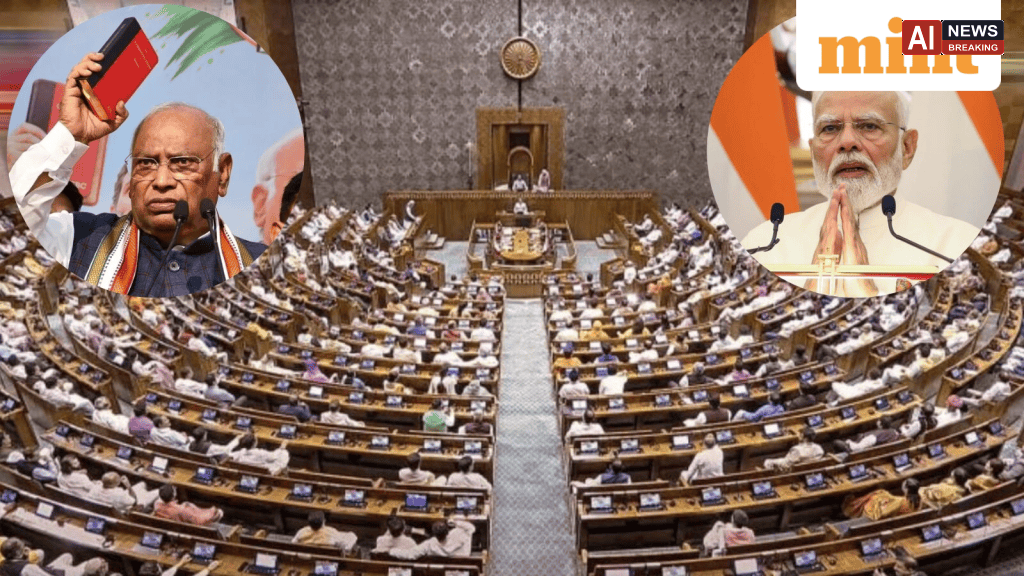
Delimitation row: Centre approves bill for 50% more Lok Sabha seats for every state, freeze on representation till 2051 - AI News Breaking
delimitation centre approves bill:
The Union Cabinet’s approval of a new bill marks a decisive moment in India’s political landscape, as it proposes to increase Lok Sabha seats by roughly 50 per cent for every state based on the 2011 Census, while simultaneously freezing the representation of all states and union territories until the year 2051. The measure, which has sparked widespread debate across political, academic, and civil society circles, seeks to recalibrate the balance of power within the nation’s lower house, but it also about democratic representation, the timing of census data, and the long‑term implications of a frozen electoral map.The bill’s core idea is straightforward: each state’s share of the 543‑seat Lok Sabha would grow proportionally to its population as recorded in the 2011 Census, the last national enumeration conducted before the 2021 Census. This would result in a significant increase in seats for populous states such as Uttar Pradesh, Maharashtra, and West Bengal, while smaller states would see modest gains..
The proposal is aimed at correcting perceived disparities in representation that have persisted for decades, where some states have been over‑represented relative to their population, whereas others have been under‑represented.Parliamentary debates over the bill have revealed divergent perspectives. Proponents, predominantly from the ruling coalition, argue that the increase is a necessary step toward a more equitable distribution of parliamentary seats. They contend that the current allocation, derived from an earlier census, has become increasingly obsolete as demographic shifts have favored a few states..
In their view, a 50 per cent boost would align seat distribution more closely with actual population figures, thereby strengthening the legitimacy of the Lok Sabha.Opponents, however, have raised concerns that the proposed increase would entrench a status quo that favors larger states at the expense of smaller ones, potentially marginalising regional voices. Critics also highlight the use of the 2011 Census data, pointing out that it is already a decade old. The absence of a more recent census could lead to inaccuracies, particularly in rapidly growing urban centres and emerging industrial hubs..
Moreover, the decision to freeze representation until 2051, a period that would extend over several election cycles, has been viewed as a political strategy designed to lock in the current power dynamics, thereby limiting the capacity of emerging regions to gain representation over time.The freeze component of the bill is perhaps the most contentious. By locking seat numbers in place, the government effectively prevents any adjustments that might arise from future demographic changes or from the completion of a new census. Proponents claim that this measure would provide stability and predictability for political parties, allowing them to focus on governance rather than on constantly shifting electoral boundaries..
Critics, on the other hand, see it as a move to cement the advantages of certain states, thereby potentially stifling democratic competition and disenfranchising voters in less‑represented regions.From a constitutional standpoint, the bill’s provisions raise several questions. Article 81 of the Constitution outlines the composition of the Lok Sabha, and any alteration to the number of seats must be enacted through a constitutional amendment. The current proposal would therefore require a two‑thirds majority in both houses of Parliament, as well as ratification by a majority of state legislatures..
While the cabinet has given preliminary approval, the bill still faces a complex legislative process, and it remains to be seen whether it will secure the necessary support.The broader context of the bill also intersects with ongoing discussions about the next census. The 2021 Census, postponed due to the COVID‑19 pandemic, was delayed until 2023, with a projected completion in 2024. Yet the government has indicated a reluctance to use the forthcoming data for redrawing electoral boundaries..
Critics argue that waiting for more recent population figures would provide a fairer basis for seat allocation and could mitigate the perceived inequities that the bill attempts to address. The decision to rely on the older census data, therefore, is seen by some as a shortcut that bypasses a thorough, data‑driven approach.Beyond the immediate political ramifications, the bill also carries socio‑economic implications. A larger Lok Sabha could lead to a more diverse set of representatives, potentially improving the visibility of under‑represented communities in national policymaking..
However, an enlarged parliament also poses logistical challenges, including increased costs of operation, higher demands on administrative resources, and the need for expanded facilities to accommodate more members. These practical considerations will likely factor into the debate as lawmakers weigh the benefits against the operational feasibility.The freeze until 2051 also brings up concerns about the adaptability of India’s democratic institutions. As the country undergoes rapid urbanisation, migration, and economic transformation, the demographic profile of many states is expected to change significantly..
By preventing adjustments for the next thirty‑plus years, the bill could lock in a representation model that becomes increasingly misaligned with the evolving reality. This has led some scholars to warn that the freeze could undermine the principle of “one person, one vote” if certain populations become disproportionately under‑represented.Regional political parties have offered varied responses. In states such as Gujarat and Karnataka, where the opposition parties hold significant influence, the bill has been met with skepticism..
These parties argue that a larger Lok Sabha would dilute their influence further, as seats would be redistributed in favour of states with larger populations. Conversely, parties in highly populated states have generally welcomed the proposal, seeing it as a chance to increase their share of parliamentary power and thereby enhance their bargaining position in national policy discussions.The bill also has implications for the process of delimitation, the technical exercise of redrawing constituency boundaries to reflect population changes. Delimitation has traditionally been undertaken by an independent commission after each census..
By freezing the number of seats, the government is effectively suspending the need for periodic delimitation exercises, which could reduce the frequency of constituency reorganisation. This could lead to constituencies becoming increasingly unrepresentative of current demographic realities, potentially impacting electoral fairness.Another dimension of the debate concerns the timing of the next general election. If the current election cycle occurs before the freeze takes effect, the new seat allocation would be implemented immediately, altering the electoral map for the upcoming contest..
However, if the election is scheduled later, the implementation would coincide with the 2051 deadline, meaning the current representation would remain unchanged until then. The strategic calculation of election timing could therefore become an essential factor in the political negotiation over the bill.Public opinion, as gauged through opinion polls and media commentary, is divided. While a sizeable segment of the electorate perceives the proposal as a step toward fairer representation, another significant proportion fears that it could exacerbate regional disparities..
The debate has also highlighted a broader societal conversation about how best to balance national unity with regional autonomy—a conversation that has played out over decades in the Indian political arena.In conclusion, the Union Cabinet.
Updated: November 27, 2026
Union Cabinet greenlights a bill that would boost Lok Sabha seats by roughly 50 % for each state using 2011 Census data, while simultaneously freezing representation until 2051. The move has sparked fierce debate over fairness, demographic accuracy and the risk of entrenching larger states at the expense of smaller ones.
By anchoring seat‑allocation to a decade‑old census and freezing it for thirty years, the government is trading demographic accuracy for political certainty—essentially betting that stability will outweigh the erosion of “one‑person‑one‑vote” equity.
If the freeze locks in today’s