Europe warns of Russia’s hybrid attacks but struggles to counter them
  Former chief election commissioner calls SIR scheme illegal.
  A Corruption Scandal Is Reshaping Brazil’s Presidential Election
  US citizen injured in Illinois after ICE agents mistook him for fugitive, tried to arrest him
  At 10 years old, Smithsonian’s Black museum is undaunted amid pressure from Trump administration
 Delta Flight Bound for New York Diverted to Boston as Heavy Rain and Storms Disrupt Travel Across Northeast
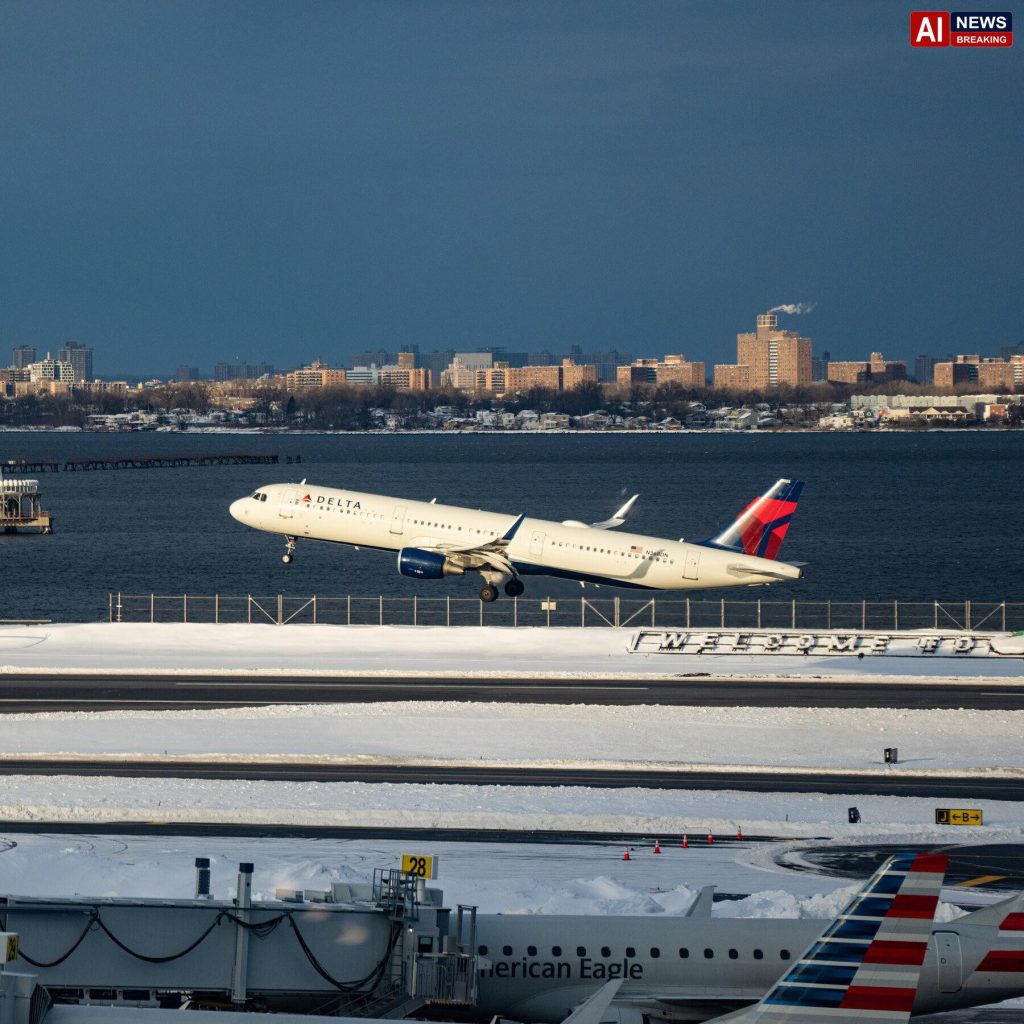
Delta Flight Bound for New York Diverted to Boston as Heavy Rain and Storms Disrupt Travel Across Northeast - AI News Breaking
delta flight bound york:
A Delta Air Lines flight traveling from San Francisco to New York was diverted to Boston after severe weather and heavy rainfall swept across the Northeastern United States. The incident was part of broader travel disruptions affecting airports across the region as thunderstorms, flooding concerns and air traffic delays impacted thousands of passengers.
Key Highlights
- A Delta Air Lines flight from San Francisco to New York diverted to Boston due to severe weather.
- Heavy rain and thunderstorms affected multiple states across the Northeast.
- Airports in New York experienced delays and air traffic restrictions.
- Boston Logan International Airport accommodated several diverted flights.
- Authorities issued flood warnings as intense rainfall impacted the region.
A Delta Air Lines flight bound for New York was forced to divert to Boston on Wednesday as heavy rain, thunderstorms and deteriorating weather conditions disrupted air traffic throughout the Northeastern United States.
The flight, which departed from San Francisco and was scheduled to land in New York, was unable to reach its intended destination after severe weather prompted air traffic restrictions across the region. Instead, the aircraft safely landed at Boston Logan International Airport, joining a growing list of flights affected by the storm system.
The diversion came as meteorologists warned of flash flooding, torrential rainfall and widespread travel disruptions stretching from New York to New England.
Heavy Rain Batters the Northeast
A slow-moving weather system brought intense rainfall to several states on Wednesday, prompting weather alerts and causing significant disruptions to transportation networks.
Authorities issued flood warnings and watches across portions of:
- Massachusetts
- Connecticut
- New York
- Rhode Island
- New Jersey
- Pennsylvania
In some areas, rainfall rates exceeded two inches per hour, raising concerns about flash flooding and dangerous road conditions. Several communities reported localized flooding and temporary road closures as emergency crews responded to weather-related incidents.
The National Weather Service warned residents to remain alert as additional bands of rain moved through the region.
Airports Face Delays and Diversions
The severe weather created a ripple effect throughout the nation’s air transportation system.
New York-area airports, including:
- John F. Kennedy International Airport (JFK)
- LaGuardia Airport (LGA)
- Newark Liberty International Airport (EWR)
experienced delays due to thunderstorms and reduced visibility. Air traffic controllers implemented spacing measures and holding patterns to maintain safety amid challenging conditions.
Flight tracking data indicated that several aircraft destined for New York were forced to divert, with Boston Logan serving as a key alternative airport.
Passengers aboard the diverted Delta flight reportedly remained on the ground in Boston while awaiting further travel arrangements.
Boston Logan Becomes Temporary Hub
Boston Logan International Airport saw increased activity as diverted aircraft arrived throughout the day.
Weather-related diversions are not uncommon during major storm events in the Northeast, where the close proximity of major airports often leads to cascading disruptions across the aviation network.
Transportation officials noted that Boston’s comparatively better conditions made it a practical diversion destination despite the broader regional weather challenges.
Airlines encouraged travelers to monitor flight status updates and remain in contact with carriers regarding potential itinerary changes.
Weather Continues to Impact Travelers
The latest disruption highlights the vulnerability of air travel to extreme weather events.
According to aviation experts, thunderstorms present multiple challenges for flight operations, including:
- Reduced visibility.
- Wind shear risks.
- Lightning activity.
- Air traffic congestion.
- Ground delays.
Safety regulations require aircraft to avoid severe weather cells, often resulting in rerouting or diversions when storms affect major airports.
The Federal Aviation Administration (FAA) routinely coordinates with airlines and air traffic control facilities to manage traffic flow during such events.
Climate and Infrastructure Concerns
Meteorologists have noted an increase in extreme rainfall events across parts of the United States in recent years, raising concerns about the resilience of transportation infrastructure.
Heavy precipitation has increasingly affected:
- Airports.
- Rail networks.
- Highways.
- Public transit systems.
- Utility infrastructure.
Transportation experts warn that as weather patterns become more unpredictable, airlines and airports may need to invest further in resilience planning and operational flexibility.
The Northeast corridor, home to some of the busiest airports in the world, remains particularly susceptible to cascading disruptions due to the high volume of daily air traffic.
Travelers Advised to Check Flight Status
Airlines operating in the affected region have urged passengers to check flight information before heading to the airport.
Travelers are advised to:
- Monitor airline websites and mobile applications.
- Sign up for flight alerts.
- Allow additional travel time.
- Consider alternative arrangements if necessary.
- Stay informed about weather advisories.
While conditions are expected to improve as the storm system moves eastward, delays and operational impacts may continue as airlines work to reposition aircraft and crews.
A Reminder of Aviation’s Dependence on Weather
For passengers aboard the diverted Delta flight, the unexpected stop in Boston was an inconvenience. For the aviation industry, however, it serves as another reminder that despite advances in technology, weather remains one of the most significant factors affecting air travel.
As millions of Americans continue to fly each day, maintaining safety remains the highest priority—even when it means changing destinations mid-flight.
The diversion of a single flight may seem like an isolated event, but it reflects the interconnected nature of modern transportation systems. Severe weather in one metropolitan area can quickly disrupt travel across an entire region. As climate patterns continue to evolve, airlines, airports and policymakers will increasingly need to adapt to a future in which operational flexibility and infrastructure resilience are essential components of transportation planning.