 Australia probes AI‑driven breach of My Health Record portal
  Engineering student’s ‘suicide’ turns out to be murder; two arrested
  Canada’s Capital Bids Good Riddance to Trump Avenue as Tensions With U.S. Rise
  Pentagon investigates after China obtains parts from F-35 stealth fighter jet
 Rajya Sabha passes Bill to make insult to Vande Mataram a criminal offence
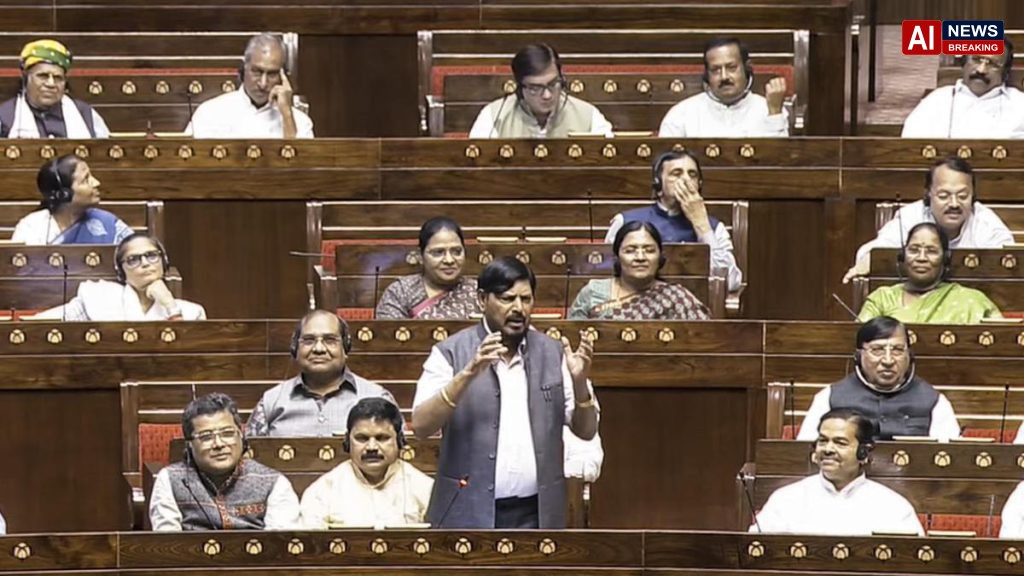
Rajya Sabha passes Bill to make insult to Vande Mataram a criminal offence - AI News Breaking
Rajya Sabha passes Bill to make insult to Vande Mataram a criminal offence The Rajya Sabha has passed The Prevention of Insults to National Honour (Amendment) Bill, 2023, despite fierce opposition from a large section of members. The legislation aims to amend the Prevention of Insults to National Honour Act, 1971, to make the insult to Vande Mataram, the national song of India, a criminal offence. The Bill seeks to insert a new provision under Section 3 of the Act, making it an offence to insult the national song, the details of which are yet to be worked out..
According to the proposed law, a person found guilty of insulting the national song could face up to three years of imprisonment and/or a fine of up to 250,000 rupees. The Bill was introduced by Union Minister for Social Justice and Empowerment, Virendra Kumar, who said it was aimed at strengthening the nation’s pride and dignity. Kumar argued that since 1971, there has been an increasing trend of disrespect and negligence towards national symbols, which is detrimental to the overall national pride and social values..
The proposed provision aims to deter individuals and groups from using derogatory terms or language that disrespects the national song, Kumar said. However, the move has sparked criticism and debate from several opposition members. Congress MP, Jairam Ramesh, questioned the government’s motive behind the proposed legislation, saying that it was an attempt to impose a particular ideology on people..
Ramesh also pointed to the lack of clarity on what would be considered an insult to the national song. Several members from across the political divide raised concerns that the proposed law could be used to muzzle dissent and freedom of speech. The opposition has been critical of the government’s move to expand the scope of the existing Act at a time when there is already a growing concern over the misuse of laws to curb individual freedoms..
The opposition’s concerns have been echoed by several civil society groups, who have expressed alarm over the potential implications of the Bill. According to them, the move could have a chilling effect on free speech and artistic expression, potentially allowing the government to silence critics through the legal route. Union Minister for Information and Broadcasting, Anurag Thakur, defended the Bill, saying it was an effort to instill a sense of patriotism among citizens..
Thakur insisted that the government was not trying to curb individual freedoms, but rather to promote a sense of national pride and unity. Rajya Sabha Chairman, Vaishnaw, however, assured members that the proposed legislation was aimed at strengthening the nation’s pride and dignity, and sought clarification on several aspects of the Bill. The opposition, however, continued to protest, seeking a response from Union Home Minister Amit Shah over the alleged police force used against NEET paper ‘leak’ demonstrators in the national capital..
The opposition members are demanding a thorough probe into the police action and questioning the Union Home Minister’s claim that the police force was used only in areas where protesters clashed with the crowd. Meanwhile, the Congress party has moved a privilege notice against Amit Shah for allegedly making a false statement in the House about the NEET protest. The Rajya Sabha continued to witness heated debates and arguments over the proposed Bill with several members expressing their reservations about the potential implications of the legislation..
The Congress and other opposition parties, along with some NDA allies, have decided to oppose the Bill. Union Minister Virendra Kumar maintained that the proposed Bill was intended to promote respect for the national song and that it was essential to strengthen national pride. However, the opposition’s adamant refusal to support the Bill has made it clear that a long and contentious debate lies ahead..
A section of the opposition continues to argue that India is a democratic country where citizens should be free to express their opinions and voice their dissent. Meanwhile, supporters of the Bill argue that promoting national unity and pride is essential for the country’s development. As the contentious debate over the proposed Bill continues, experts have raised concerns about the potential consequences of expanding laws to regulate dissent and individual freedom..
The Bill is likely to return to the Joint Committee on the issue after heated debates, setting the stage for a larger discussion on the balance between national pride and individual freedom. Amid the ongoing debate, many citizens in India seem to be unaware of the implications of the proposed legislation. With both sides dug in their positions, there is likely to be no respite from the contentious debate for some time to come..
The Rajya Sabha Chairman announced that the Bill will be sent to the Joint Committee for further scrutiny, amid the continuing opposition protests. With the matter unlikely to be resolved soon, the controversy surrounding the proposed Bill is set to dominate India’s national discourse..
Updated: July 29, 2026
This legislation threatens to blur the thin line between patriotism and censorship, potentially stifling voices of dissent and artistic expression in the name of national unity. The implications of this move will be far-reaching, with its impact on India’s democratic fabric and the very concept of free speech hanging precariously in the balance.