
 Supreme Court questions whether BCCI must follow National Sports Governance Act
  Dutch town uses Netflix series in school curriculum for media literacy
  FDA suspends food licenses of IRCTC supplier and three ISKCON outlets
  Delhi Building Collapse LIVE Updates: Demolition Starts Next to Ruined PG, Contractor Taken Into Custody
  1,083 UK flights cancelled after NATS technical failure
 Dutch town uses Netflix series in school curriculum for media literacy
In Oosterwolde, Friesland, educators have woven Netflix’s drama “Adolescence” into lessons to teach media literacy, gender identity, and online safety, prompting community dialogue and showing early signs of reduced cyberbullying.
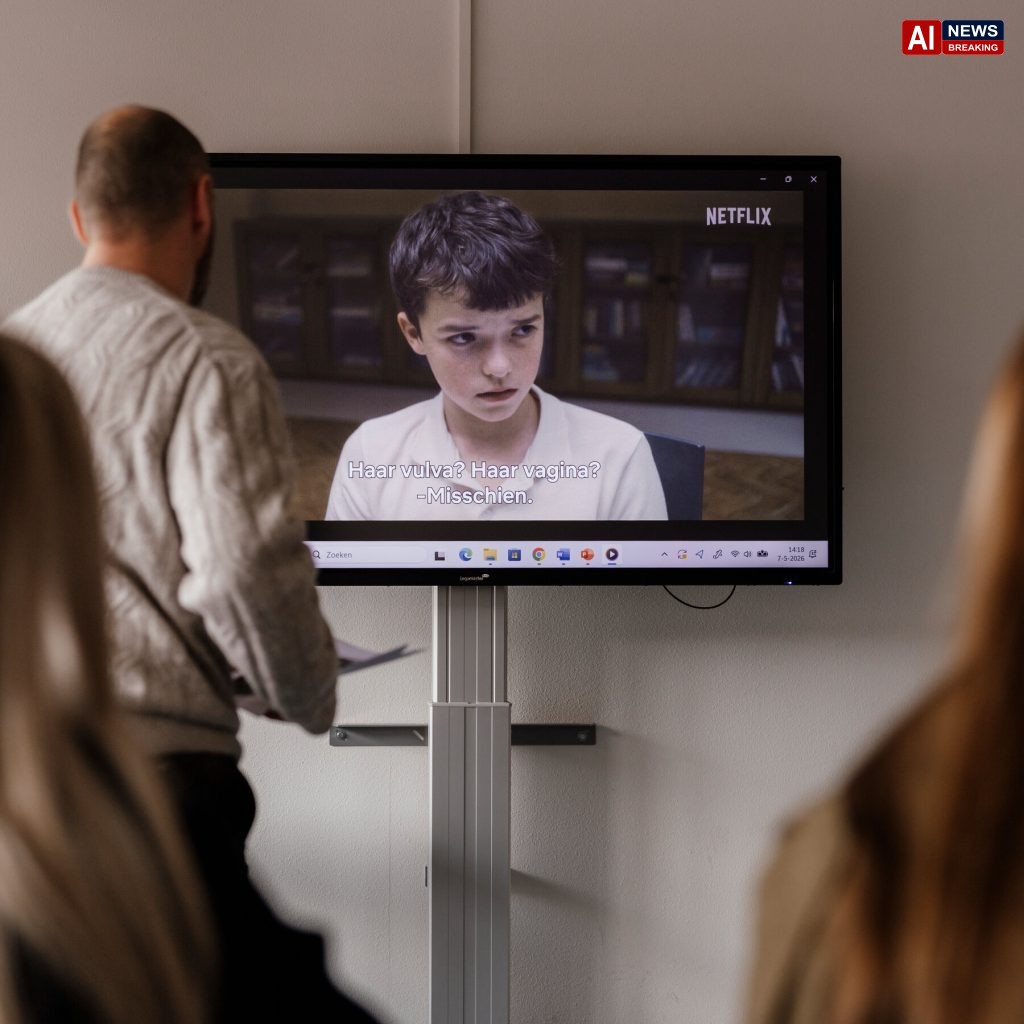
Dutch town uses Netflix series in school curriculum for media literacy - AI News Breaking
Why This Small Dutch Town Is Teaching ‘Adolescence’ in School In the quiet municipality of Oosterwolde, a modest town in the Dutch province of Friesland, a bold educational experiment is underway. Local schools have introduced the Netflix series “Adolescence” into their curricula, a move that has attracted national attention. The series, a dramatized exploration of teenage life, touches on gender identity, digital harassment, and the pressures of modern adolescence..
By integrating it into classroom discussion, educators aim to spark critical thinking among students, encouraging them to question entrenched stereotypes and to develop empathy for peers facing online abuse. The decision to use a streaming platform for pedagogical purposes stems from a broader shift in Dutch education policy, which now emphasizes media literacy as a core competency. The Ministry of Education has advocated for curricula that reflect the lived realities of young people, recognizing that traditional textbooks often lag behind rapid cultural change..
Oosterwolde’s school board, after consulting with child psychologists and teachers, concluded that “Adolescence” offered a relatable, narrative-driven entry point for complex topics that textbooks struggle to address in an engaging manner. Critics, however, have voiced concerns about the appropriateness of using popular entertainment in an academic setting. Some parents argue that the series’ frank portrayal of sexuality and mental health issues could be unsettling for younger students..
In response, school officials have instituted a parental consent form and structured the viewing into age‑appropriate segments, accompanied by guided discussions led by trained facilitators. This approach seeks to balance freedom of expression with safeguarding, ensuring that the material serves an educational purpose rather than mere consumption. The series itself, produced by an international team of writers, follows a group of Dutch teenagers navigating the turbulent waters of high school, social media, and family expectations..
Its storylines are interwoven with real‑world statistics on cyberbullying, gender dysphoria, and substance use, providing a factual backbone to the fictional narrative. By presenting these issues within a familiar cultural context, the series resonates deeply with the local youth, many of whom see their own experiences reflected on screen. Research conducted by the University of Groningen indicates that adolescents who engage with media that mirrors their own challenges demonstrate higher levels of self‑awareness and reduced incidences of bullying..
The university’s study, which surveyed over 1,500 high school students across the Netherlands, found a 12 percent drop in reported online harassment in schools that incorporated media‑based discussions into their lessons. Oosterwolde’s educators cite these findings as a key justification for their adoption of “Adolescence,” hoping to replicate the positive outcomes on a smaller scale. Teachers report that the series has already catalysed conversations that would otherwise remain dormant..
In one classroom, a discussion about a character’s coming‑out journey led a student to share their own experiences of gender questioning, prompting peers to ask supportive questions rather than resorting to ridicule. Such moments, according to lead teacher Marijke de Vries, illustrate the power of narrative to humanise abstract concepts, turning statistics about bullying into personal stories that demand empathy. Beyond classroom walls, the initiative has sparked community dialogue..
Local parents’ associations have organised town‑hall meetings where educators, mental‑health professionals, and students exchange perspectives on the series’ impact. These gatherings have revealed a generational shift: many older residents, previously sceptical of digital culture, now acknowledge the necessity of confronting online aggression head‑on. The town council, observing the constructive discourse, has pledged additional funding for mental‑health counsellors to support students navigating the themes presented in the series..
The broader Dutch media landscape has taken note of Oosterwolde’s experiment, with several regional newspapers featuring op‑eds that praise the town’s proactive stance. At the same time, national broadcasters have scheduled debates on the role of streaming services in education, inviting policymakers, educators, and content creators to weigh in. This heightened visibility underscores a growing consensus that the boundaries between entertainment and education are increasingly porous, especially when addressing issues that directly affect young people’s wellbeing..
International observers are also watching closely. Educational think‑tanks in the United Kingdom and Canada have cited Oosterwolde as a case study in their reports on innovative curriculum design. They argue that the integration of contemporary media can bridge the gap between students’ out‑of‑school experiences and formal learning environments, fostering a more holistic approach to personal development..
As other municipalities contemplate similar programmes, Oosterwolde’s outcomes will likely serve as a benchmark for success or caution. Nevertheless, the experiment is not without challenges. Technical logistics, such as securing reliable internet access for all classrooms, have required additional municipal investment..
Moreover, teachers must undergo specialized training to facilitate sensitive discussions without imposing personal biases. The school board has therefore partnered with a Dutch NGO dedicated to digital rights, ensuring that facilitators receive up‑to‑date guidance on best practices for handling disclosures of harassment or mental‑health crises during class. Looking ahead, Oosterwolde plans to expand the programme beyond “Adolescence” to include documentaries and podcasts that explore related themes..
The overarching goal is to cultivate a generation of students who are not only media‑savvy but also socially responsible, capable of navigating the complexities of identity and interaction in a hyper‑connected world. By embedding these conversations within the school day, the town hopes to normalize dialogue about gender, bullying, and mental health, reducing stigma and fostering resilience. As the first semester draws.
Updated: September 9, 2026