 Australia Investigates OpenAI Hack on Public Health Care Site
  Tech leaders to UN: For the sake of humanity, please control the AI technology we created
  Gulf nations have found ways to keep oil flowing
  France deploys patrol fleet to curb Channel migrant crossings
  From a Nepal in Pain, a Young Leader Makes a Case for Climate Reparations
 England’s Rail Network Faces Fresh Disruptions as Persistent Drought Forces Speed Restrictions and Timetable Changes
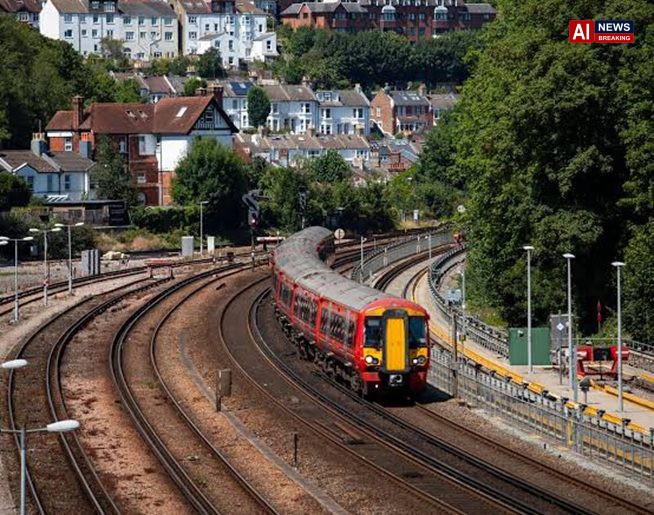
England's Rail Network Faces Fresh Disruptions as Persistent Drought Forces Speed Restrictions and Timetable Changes - AI News Breaking
englands rail network faces:
Persistent drought exacerbates rail disruptions Persistent drought conditions caused by the climate crisis are expected to cause further disruption to trains across England, as the lack of rainfall affects the ground supporting railway embankments. On Tuesday, South Western Railway (SWR) became the latest large rail company to announce timetable changes and reduced speeds to cope with the effects of hot and dry weather. South Western Railway reduces train speeds and changes timetables South Western Railway joins operators in the east of England in reducing train speeds and changing timetables.
Key Highlights
- South Western Railway has introduced speed restrictions due to drought-related ground instability.
- Timetable changes may result in longer journeys and reduced services.
- Greater Anglia and Stansted Express have implemented similar measures.
- Network Rail has warned about weakened railway embankments across parts of England.
- Climate experts say extreme weather is increasingly impacting transportation infrastructure.
The company has issued guidance to its drivers, instructing them to slow down on affected lines. The reduced speeds will be in place until further notice, and SWR has asked passengers to check before they travel. Timetable changes have also been implemented, which may mean longer journeys and reduced services..
Other rail operators also affected Other rail operators in England have already taken similar measures to mitigate the impact of the drought. In the east of England, Greater Anglia and Stansted Express have announced reduced speeds and revised timetables. Network Rail, responsible for maintaining the country’s rail network, has also issued warnings about weakened ground on certain lines..
The situation is being closely monitored across the country, with more operators expected to make announcements in the coming days. Climate crisis contributes to drought The drought in England is a consequence of the climate crisis. A prolonged period of dry weather has led to a significant decrease in water levels, exacerbating the situation..
The lack of rainfall affects not only the railway infrastructure but also the overall health of the country’s ecosystems. Experts warn that the situation may worsen if action is not taken to address the root causes of the drought. Network Rail’s response Network Rail, the organisation responsible for maintaining the country’s rail network, has stated that it is working to mitigate the impact of the drought..
The company has implemented a range of measures to protect the network, including monitoring soil moisture levels and strengthening embankments. However, the scale of the problem means that some line closures may be unavoidable. Passenger impact felt across the country The disruptions caused by the drought will be felt by passengers across the country..
Many will face longer journeys and reduced services, while some may even experience line closures. The situation is particularly challenging for those who rely on the rail network for daily commutes. Some passengers have expressed frustration with the lack of advance notice and the impact on their daily routines..
Operators urged to increase transparency Operators have been urged to increase transparency and provide more information to passengers about the disruptions caused by the drought. Passengers’ organisations have called for clear communication about planned changes and the reasons behind them. This will help ensure that passengers are prepared and able to plan their journeys accordingly..
Drought impact on rail infrastructure The drought has highlighted the vulnerability of the rail network to extreme weather conditions. The prolonged period of hot and dry weather has weakened the ground supporting the railway embankments, making them more prone to landslides and subsidence. Network Rail will need to work to repair and reinforce the affected areas, which may be a time-consuming and expensive process..
Government funding pledged to support rail infrastructure The government has pledged funding to support the repair and maintenance of the rail network. A new £2 billion scheme has been announced, which will help to strengthen embankments and protect the network from extreme weather conditions. However, critics argue that the funding is insufficient to address the scale of the problem..
Rail industry calls for immediate action The rail industry is calling for immediate action to address the root causes of the drought. The industry has warned that failure to address the issue could lead to more frequent and severe disruptions to rail services. The government has been urged to take swift action to reduce carbon emissions and mitigate the impact of the climate crisis..
South Western Railway’s guidance to passengers Passengers affected by the restrictions can check the SWR website for up-to-date information. The company has issued guidance on how to plan their journeys and what to expect during the disruptions. Passengers are advised to check before travelling and to consider alternative routes where possible..
Regional variations in disruption While the majority of the country’s rail network is affected by the drought, some regions are experiencing more significant disruptions than others. The east of England has been particularly hard hit, with Greater Anglia and Stansted Express among those implementing reduced speeds and revised timetables. Industry and government collaboration The rail industry and the government are working closely to address the challenges posed by the drought..
Collaboration between operators, Network Rail, and government agencies will be essential in finding solutions and mitigating the impact of the drought on the rail network. However, the situation remains fluid, and further announcements are expected in the coming days. The long-term impact on the rail network The drought has highlighted the long-term vulnerabilities of the rail network..
The prolonged period of hot and dry weather has weaknesses in the infrastructure, which will require significant investment to address. The rail industry will need to work with the government to develop a comprehensive plan to repair and upgrade the network, ensuring that it is better equipped to withstand extreme weather conditions in the future..
The recent drought in England, exacerbated by the climate crisis, has laid bare the rail network’s vulnerability to extreme weather conditions, highlighting an urgent need for the industry and government to work together to invest in infrastructure resilience and mitigate the impact of future events.