 Russians across
  Jagan to move Supreme Court again over ‘obstruction’ of YSRCP nominees in Andhra local body polls
  Pentagon directive bans troops from using nonpublic info to bet in prediction markets
  Plaintiffs in Trump arch project seek injunction to stop administration from beginning work Nov. 5
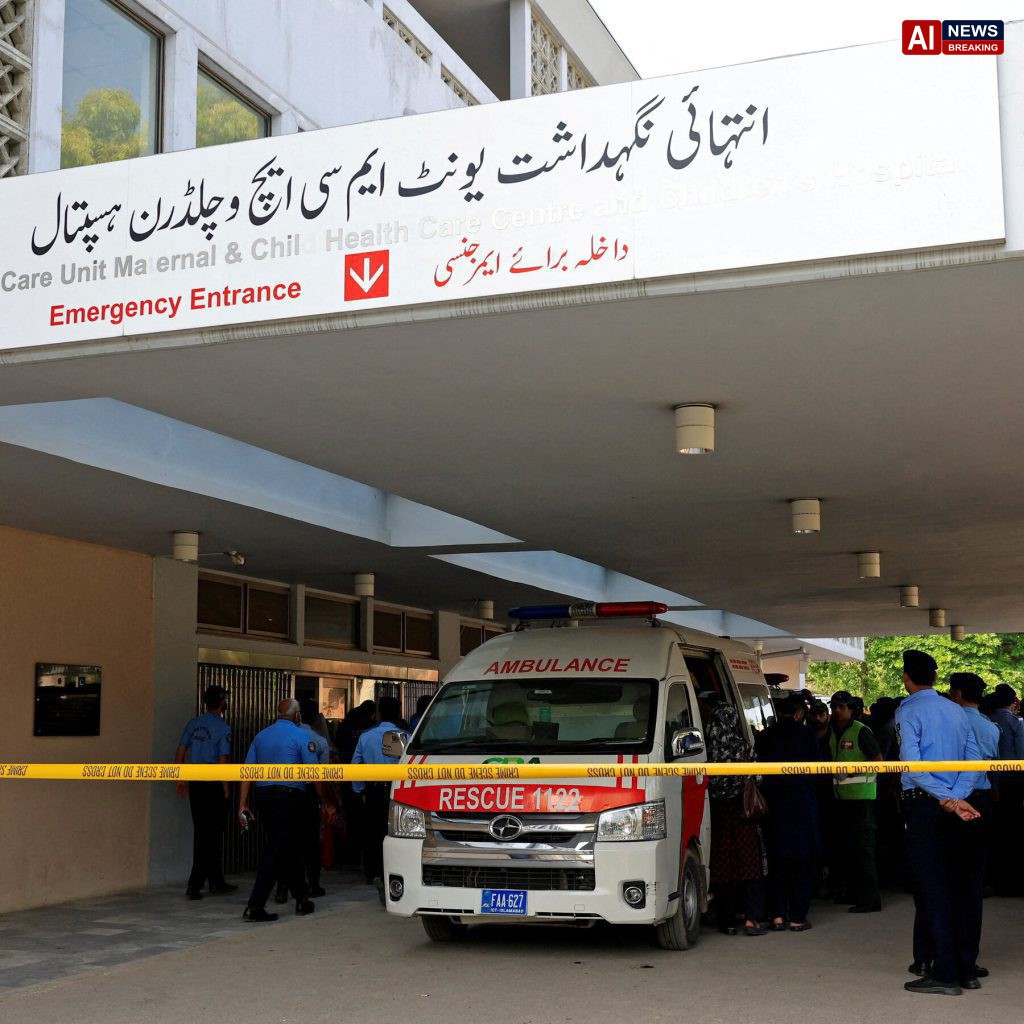
 Fourteen babies die in hospital fire in Islamabad
**
Fourteen babies die in hospital fire in Islamabad - AI News Breaking
fourteen babies hospital fire:
A catastrophic fire engulfed the neonatal intensive care unit of Islamabad’s largest public hospital early Thursday morning, resulting in the tragic deaths of at least fourteen newborns and injuring several others. The blaze broke out on the third floor of the Pakistan Institute of Medical Sciences, a sprawling facility that serves as a critical healthcare hub for the nation’s capital and its surrounding regions. Emergency services were dispatched immediately to the scene, but prevailing winds and the densely packed nature of the medical equipment reportedly hindered initial containment efforts, allowing the flames to spread rapidly through the newborn care ward.Witnesses inside the hospital described a scene of utter chaos as smoke began to billow from the windows of the third floor shortly before dawn..
Nurses and doctors attempted to evacuate the vulnerable infants, many of whom were connected to life-support systems and incubators that could not be easily moved. Ambulances arrived at regular intervals, ferrying critically injured babies and staff members to nearby referral hospitals. However, officials confirmed that despite the frantic rescue operations, fourteen infants succumbed to their injuries, primarily due to smoke inhalation and burns sustained during the evacuation process..
Their parents, many of whom had been sleeping in adjacent waiting areas or nearby accommodations, rushed to the scene in a state of shock and devastation, desperately searching for their children.The Pakistan Institute of Medical Sciences is the largest tertiary care hospital in the country, handling thousands of patients daily across its various specialized departments. The neonatal unit, located on the third floor, is equipped to handle premature and critically ill neonates who require constant monitoring and advanced medical support. Security camera footage released by preliminary investigators shows sparks igniting near the electrical panel of the ward’s oxygen supply room, though authorities have cautioned that a thorough forensic examination is required to definitively determine the cause..
Initial reports suggest that faulty wiring or an electrical short circuit may have sparked the incident, a recurring issue in Pakistan’s aging healthcare infrastructure.Local authorities have launched a comprehensive inquiry into the disaster, with the Islamabad Capital Territory government declaring a day of mourning for the deceased infants. The Health Department has suspended the operations of the neonatal wing pending a safety audit of the entire facility. Inspectors are currently examining the fire suppression systems, alarm mechanisms, and electrical grids to identify any lapses in maintenance or regulatory compliance..
The tragedy has reignited fierce debate over the adequacy of safety standards in public hospitals across the nation, where overcrowding and underfunding have long plagued service delivery.Medical experts argue that the high casualty count was exacerbated by the delayed activation of the fire alarm system, which reportedly failed to trigger automatically. Staff members stated that they only became aware of the fire after seeing smoke through the corridor windows, which wasted precious minutes during the critical initial phase of the emergency. This delay prevented a more organized evacuation protocol, forcing staff to make split-second decisions in increasingly hazardous conditions..
The lack of functional automatic sprinklers in the ward further compounded the disaster, allowing the fire to grow unchecked before the arrival of the fire brigade.The emotional toll on the families involved has been devastating. Relatives of the deceased have gathered outside the hospital gates, weeping and demanding justice from officials who they accuse of negligence and indifference. Protesters have chanted slogans against the government, holding up photographs of their lost children and demanding the resignation of senior health administrators..
The atmosphere in the capital has been one of profound grief and anger, with citizens taking to social media to share stories of the victims and condemn the systemic failures that led to such a preventable tragedy.Political figures from across the ideological spectrum have condemned the incident, calling it a national shame. Opposition parties have seized upon the disaster to criticize the ruling authorities, accusing them of mismanagement and a lack of accountability in the public health sector. The Interior Minister visited the hospital later in the day, offering condolences to the bereaved families and promising a swift and transparent investigation..
He assured the public that those found responsible for the accident, whether through negligence or criminal intent, would face the full force of the law. However, skeptics remain unconvinced, citing previous incidents where similar tragedies resulted in little more than token inquiries and minor fines.International medical organizations have expressed their shock and sorrow at the news, offering assistance in reviewing Pakistan’s hospital safety protocols. The World Health Organization has stated that it stands ready to provide technical support to improve fire safety measures in healthcare facilities globally, emphasizing the importance of robust emergency preparedness..
Aid agencies have also begun collecting donations to support the affected families and to help rebuild the damaged facilities. The global medical community has highlighted this incident as a stark reminder of the vulnerabilities inherent in healthcare systems that lack adequate resources and regulatory oversight.In the aftermath of the fire, the surviving infants are being treated in various hospitals across Islamabad, with their conditions ranging from stable to critical. Pediatricians have reported that many of the surviving children suffer from severe burn injuries and respiratory complications, requiring prolonged intensive care..
The psychological trauma for both the survivors and the healthcare staff involved has been significant, prompting hospital management to offer counseling services to those affected. Donations of medical supplies, blankets, and clothing have poured in from local communities, reflecting a national outpouring of sympathy for the victims.The incident has prompted immediate calls for legislative reform regarding building safety codes for public institutions. Lawmakers have proposed stricter enforcement of fire safety regulations, mandatory regular inspections, and heavier penalties for non-compliance..
Industry experts argue that without significant investment in infrastructure and staff training, similar tragedies are likely to occur in the future. The debate has extended beyond the healthcare sector, sparking a broader discussion about the state of public infrastructure in Pakistan, where aging buildings and outdated systems pose significant risks to public safety.As the sun set on the first day of the tragedy, the hospital grounds remained a somber scene of mourning. Candles were lit in memory of the fourteen newborns whose lives were cut short, their parents clutching small blankets and uniforms as the only remnants of their children..
The community has united in grief, with local mosques holding special prayers for the souls of the deceased. The hospital administration has promised to cooperate fully with the investigation and to implement immediate safety upgrades to prevent such a catastrophe from happening again.The road to recovery for the families and the institution will be long and painful. While the physical structures can be rebuilt, the trust of the public in the healthcare system has been severely tested..
The government faces immense pressure not only to deliver justice for the victims but also to demonstrate a genuine commitment to improving public safety standards. For now, the capital remains in a state of shock, grappling with the reality that a fire in a place meant for healing became a site of profound loss. The fourteen newborns will be remembered not just as statistics, but as innocent lives lost due to systemic failures that many believed had been addressed..
The outcome of this tragedy may serve as a catalyst for much-needed reform, but for the grieving families,.
Updated: August 26, 2026
Fourteen newborns died and others were injured after an electrical blaze swept through Islamabad’s top public hospital, forcing a frantic evacuation.
The disaster has triggered a government inquiry and widespread outrage over systemic safety failures in the nation’s healthcare infrastructure.
Insight: This catastrophe exposes how systemic neglect in public infrastructure transforms regulatory compliance into a lethal afterthought. Without enforced accountability over aging facilities, such preventable tragedies will persist as the default cost of care.