Europe warns of Russia’s hybrid attacks but struggles to counter them
  Former chief election commissioner calls SIR scheme illegal.
  A Corruption Scandal Is Reshaping Brazil’s Presidential Election
  US citizen injured in Illinois after ICE agents mistook him for fugitive, tried to arrest him
  At 10 years old, Smithsonian’s Black museum is undaunted amid pressure from Trump administration
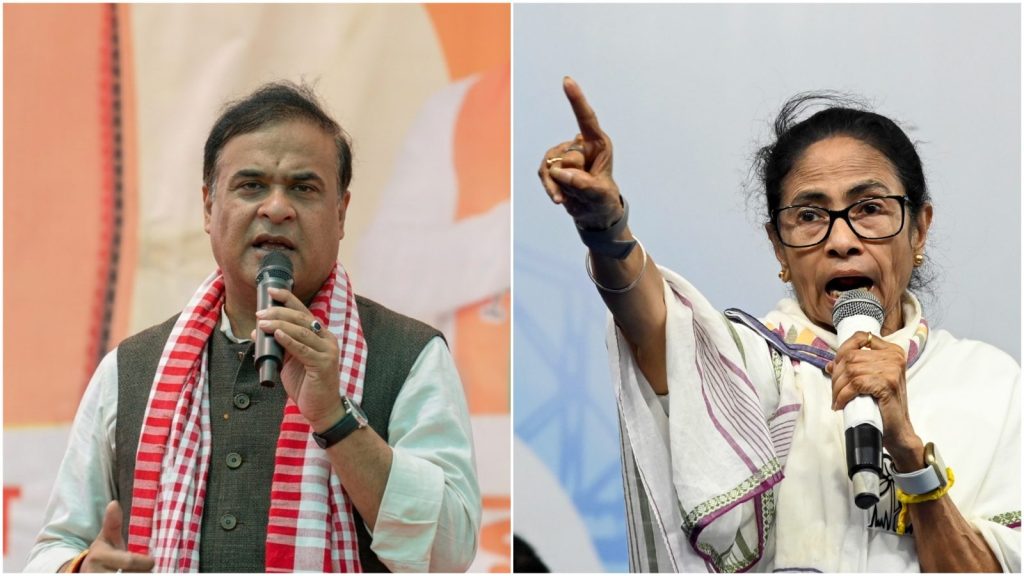
 Himanta Biswa Sarma’s ‘Jai Shri Ram’ Remark Targets Mamata Banerjee, Intensifies West Bengal Election Battle 2026
himanta biswa sarmas shri:
The political temperature in West Bengal has surged dramatically on the eve of the crucial 2026 Assembly elections, with Assam Chief Minister Himanta Biswa Sarma launching a fresh verbal attack on Chief Minister Mamata Banerjee. His remark — urging her to “learn to say Jai Shri Ram” — has added another layer of intensity to an already polarised electoral contest between the Bharatiya Janata Party (BJP) and the ruling Trinamool Congress (TMC).
A Charged Political Atmosphere Before Voting
West Bengal is heading into a high-stakes election, with voting scheduled in phases amid tight security and intense campaigning. The BJP, determined to unseat Mamata Banerjee after multiple failed attempts, has deployed several of its top leaders across the state. Himanta Biswa Sarma, known for his sharp rhetoric and aggressive campaign style, has emerged as one of the party’s most vocal faces in Bengal.
His latest remark comes at a time when both parties are trying to consolidate their core voter bases while appealing to undecided voters. Sarma’s statement is not an isolated comment but part of a broader political narrative that the BJP has consistently pushed in Bengal — one that blends religious symbolism, identity politics, and governance critiques.
The “Jai Shri Ram” Remark and Its Context
Speaking during a campaign rally, Sarma took a dig at Mamata Banerjee, claiming that she has never publicly embraced the slogan “Jai Shri Ram.” He suggested that doing so would reflect alignment with what he implied are the cultural sentiments of a large section of voters.
The slogan “Jai Shri Ram” has evolved beyond a religious chant into a powerful political symbol in India, particularly associated with the BJP and its ideological ecosystem. Over the years, it has frequently been used in West Bengal as a political chant, often triggering strong reactions from Mamata Banerjee.
In past instances, Banerjee has expressed anger when the slogan was raised at her events, framing it as a politically motivated provocation rather than a spontaneous expression of faith. This dynamic has turned the slogan into a flashpoint in Bengal politics, symbolising the broader ideological clash between the BJP and TMC.
BJP’s Strategy: Identity and Polarisation
Sarma’s comment fits into the BJP’s broader election strategy in Bengal, which includes highlighting issues such as illegal immigration, demographic changes, and cultural identity. In recent rallies, he has repeatedly accused the TMC government of appeasing certain communities and compromising the interests of native citizens.
Alongside Sarma, other BJP leaders, including Uttar Pradesh Chief Minister Yogi Adityanath, have also targeted the TMC on similar themes, alleging “infiltration” and “mafia raj” in the state.
The BJP’s campaign has also prominently featured slogans like “Jai Shri Ram,” which have been heard at rallies and political events across key constituencies such as Nandigram. These slogans are intended not only to energize the party’s base but also to create a sharp ideological contrast with the TMC.
TMC’s Counter-Narrative
On the other side, Mamata Banerjee has projected herself as a defender of Bengal’s inclusive identity and regional pride. She has consistently accused the BJP of trying to divide society along religious lines and impose an external cultural narrative on the state.
Banerjee remains confident about her electoral prospects, asserting that the TMC will return to power for a fourth consecutive term. Her campaign has focused on welfare schemes, governance record, and the need to protect Bengal’s social harmony.
Support for Banerjee has also come from opposition leaders across India. Figures like Arvind Kejriwal and Uddhav Thackeray have publicly expressed solidarity with her, framing the Bengal election as part of a larger national political battle.
Escalating War of Words
Sarma’s “Jai Shri Ram” remark is just the latest in a series of sharp exchanges between BJP and TMC leaders. In recent days, he has made several controversial statements, including warnings about demographic changes and calls for removing Mamata Banerjee from power.
These remarks have drawn criticism from the TMC, which has accused BJP leaders of using divisive language to polarise voters. Complaints have even been filed with the Election Commission over allegedly “inciting” speeches made during the campaign.
The escalating rhetoric underscores how fiercely contested the Bengal election has become, with both sides leaving little room for moderation.
Symbolism vs Governance
At the heart of this political battle lies a deeper contest between symbolism and governance narratives. While the BJP is leveraging religious and cultural symbols to mobilize support, the TMC is emphasizing development and welfare achievements.
For voters, the choice is being framed in stark terms:
- BJP’s pitch: Cultural assertion, national security, and change in governance
- TMC’s pitch: Stability, welfare delivery, and preservation of Bengal’s identity
This divergence is reflected in campaign messaging, public rallies, and political discourse across the state.
High Stakes for Both Parties
The outcome of the Bengal election carries significant implications beyond the state. For the BJP, a victory would mark a major breakthrough in eastern India and strengthen its national political position. For Mamata Banerjee, retaining power is crucial to maintaining her status as one of the most prominent opposition leaders in the country.
Opinion polls have suggested a competitive contest, with the TMC maintaining an edge but the BJP closing the gap in several regions.