Europe warns of Russia’s hybrid attacks but struggles to counter them
  Former chief election commissioner calls SIR scheme illegal.
  A Corruption Scandal Is Reshaping Brazil’s Presidential Election
  US citizen injured in Illinois after ICE agents mistook him for fugitive, tried to arrest him
  At 10 years old, Smithsonian’s Black museum is undaunted amid pressure from Trump administration
 India Assembly Elections 2026: Results Due Tomorrow Re-Poll Announced in One West Bengal Seat
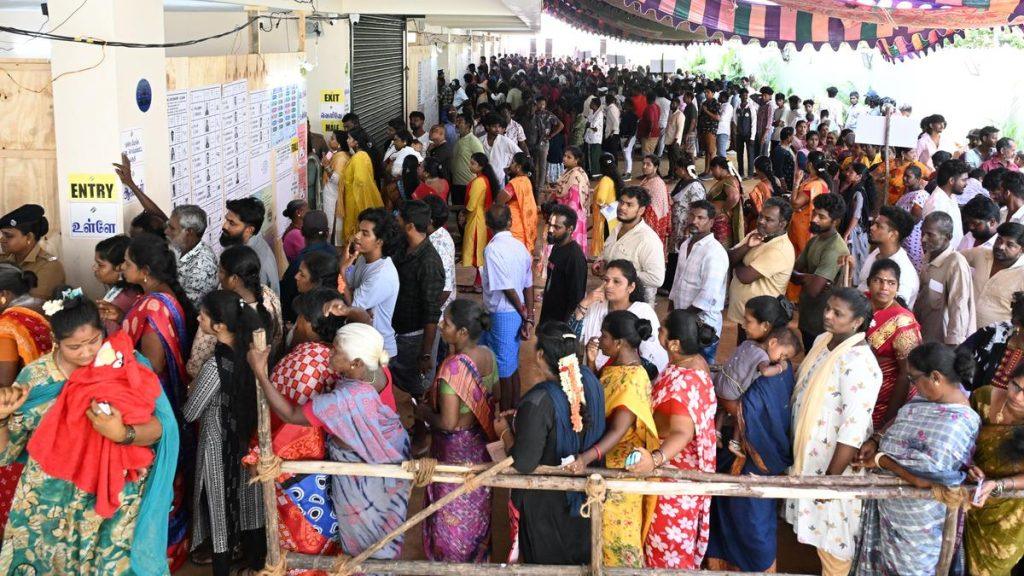
As India awaits the outcome of the 2026 Assembly Elections, counting of votes is scheduled for tomorrow, with political parties, candidates, and voters across multiple states bracing for decisive results. In a parallel development, the Election Commission has ordered a re-poll in one constituency in West Bengal, delaying the final outcome for that seat.
India stands on the cusp of a decisive political moment as vote counting for the 2026 Assembly elections is set to take place tomorrow, with results expected to shape the country’s political trajectory ahead of future national contests. While polling has concluded across most constituencies, one seat in West Bengal will go to re-poll later, adding a final layer of complexity to an already high-stakes election cycle.
This multi-state electoral exercise has seen intense campaigning, high voter engagement, and heightened political polarization, making the outcome crucial for both ruling parties and the Opposition.
Counting Day: What to Expect
The counting of votes will begin early tomorrow morning, typically around 8:00 AM, under the supervision of the Election Commission of India (ECI).
Counting Process
- Postal ballots will be counted first
- Followed by Electronic Voting Machine (EVM) votes
- VVPAT slips may be verified in selected booths as per norms
Timeline
- Early trends expected by 9:00–10:00 AM
- Clear leads likely by noon
- Final results in most constituencies by afternoon or evening
Authorities have ensured that counting centers are equipped with:
- Multi-layer security
- CCTV surveillance
- Authorized personnel access only
West Bengal: Re-Poll in One Seat
In West Bengal, the Election Commission has ordered a re-poll in one विधानसभा constituency due to reported irregularities during voting.
Key Points:
- Re-poll date to be scheduled shortly
- Result for this seat will be declared after fresh voting and counting
- The rest of Bengal’s results will be announced along with other states
The state has already been a political flashpoint, with allegations over voter roll deletions, counting transparency, and sporadic violence.
State-Wise Voting Percentage and Trends
West Bengal
- High voter turnout, estimated in the mid-to-high 70% range
- Intense contest primarily between:
- Trinamool Congress (TMC)
- Bharatiya Janata Party (BJP)
- Rural participation remained strong despite isolated incidents
Tamil Nadu
- Turnout reported around 70–75%
- Contest dominated by:
- DMK alliance
- AIADMK-led bloc
- Urban voter participation slightly lower than rural areas
Kerala
- Among the highest turnout states, often exceeding 75%
- Tight race between:
- LDF (Left Democratic Front)
- UDF (Congress-led)
- High political awareness and consistent voter engagement
Assam
- Turnout estimated at 75%+
- Key contest between:
- BJP-led NDA
- Congress-led alliance
- Regional parties may play a kingmaker role
Exit Poll Predictions: Mixed Signals
Exit polls released after the final phase suggest closely contested battles in several states, with no uniform wave across regions.
Broad Trends:
- West Bengal: Slight edge projected for TMC, but within a competitive margin
- Tamil Nadu: DMK alliance seen ahead, though margins vary across polls
- Kerala: Neck-and-neck contest; some polls indicate a slight LDF advantage
- Assam: BJP-led alliance projected to retain edge, but Opposition gaining ground
Key Takeaways:
- Fragmented mandate possible in some states
- Regional parties could play decisive roles
- Exit polls show variation, indicating uncertainty
Note: Exit polls are indicative and have historically been wrong in several instances, especially in closely fought elections.
Security Arrangements: Massive Deployment
Given the scale and sensitivity of the elections, extensive security measures have been put in place:
At Counting Centers:
- Multi-tier security with central armed police forces (CAPF)
- Strict entry protocols with ID verification
- CCTV monitoring and real-time surveillance
Across States:
- Deployment of tens of thousands of security personnel
- Quick response teams to handle unrest
- Section 144 imposed in sensitive areas to prevent gatherings
Authorities have emphasized zero tolerance for disruptions during counting.
Key Issues That Shaped the Election
Across states, voters were influenced by a mix of local and national issues:
- Inflation and cost of living
- Employment and economic growth
- Welfare schemes and subsidies
- Law and order
- Identity and regional politics
In states like West Bengal, electoral integrity and governance also became central themes.
Political Stakes
For the Ruling Parties:
- Retaining power would reinforce governance mandates
- Losses could signal voter dissatisfaction
For the Opposition:
- Gains would boost momentum ahead of national elections
- Opportunity to consolidate alliances
National Implications:
- Results may influence future coalition strategies
- Could reshape political narratives heading into 2029
What Happens After Results
- Winning parties/alliances will stake claim to form government
- Governors will invite majority leaders
- Swearing-in ceremonies likely within days
In case of hung assemblies, coalition negotiations could become crucial.
AI Insights
As India awaits the 2026 Assembly election results, the stakes are exceptionally high. With tight contests, varied exit poll projections, and strong voter participation, tomorrow’s counting will not just decide state governments—it will also offer a snapshot of the country’s evolving political mood.
All eyes are now on the counting centers as the democratic process reaches its निर्णायक moment.