
 Tao Tokyo Spring 2027
  Karnataka SIR: Teaching on the back burner
  Trump administration offers mixed messages on limits to Ukraine’s Starshield access
  US Treasury proposes a rule to crack down on high-tech investments in China, other adversaries
  Calley Means, a key MAHA advocate, resigns as a top RFK Jr. adviser
 India Boosts Navy’s Maritime Surveillance With 1,943 Crore MQ-9B Sea Guardian Drone Deal With US
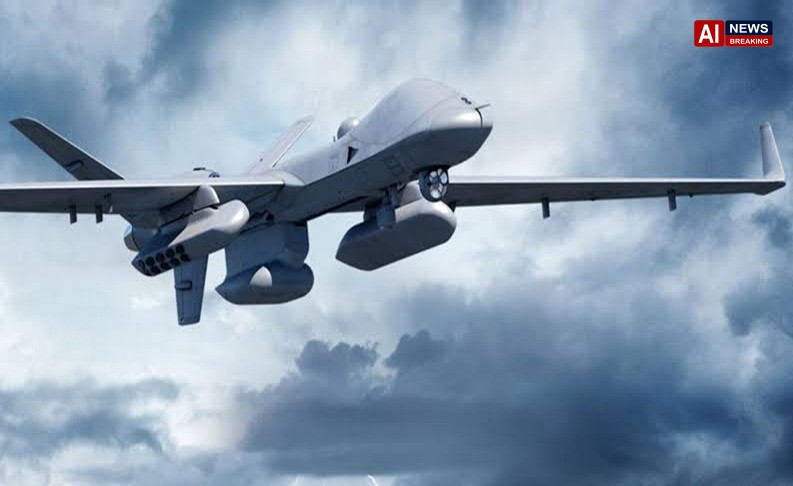
India Boosts Navy's Maritime Surveillance With 1,943 Crore MQ-9B Sea Guardian Drone Deal With US - AI News Breaking
india boosts navys maritime:
India has signed a ₹1,943 crore agreement with U.S.-based General Atomics Aeronautical Systems to lease two MQ-9B Sea Guardian high-altitude, long-endurance remotely piloted aircraft for the Indian Navy for 30 months. The deal is aimed at strengthening persistent maritime surveillance and Maritime Domain Awareness across the Indian Ocean Region.
The two aircraft will supplement the Navy’s existing leased Sea Guardians while India awaits deliveries under its larger procurement of 31 MQ-9B drones for the three services. The move comes as India places greater emphasis on monitoring the Indian Ocean and responding to expanding maritime security challenges.
India Expands Navy’s Long-Range Drone Fleet
New Delhi: India has strengthened the Indian Navy’s maritime surveillance capabilities by signing a ₹1,943 crore agreement with U.S. defence company General Atomics Aeronautical Systems for the lease of two MQ-9B Sea Guardian unmanned aircraft.
The Ministry of Defence signed the 30-month contract on Monday, August 17, with the two remotely piloted aircraft expected to provide additional high-endurance surveillance capability across the Indian Ocean Region.
The agreement is significant because it gives the Navy additional access to a long-endurance maritime surveillance platform while India moves ahead with its broader acquisition programme for MQ-9B drones.
The Navy already operates two Sea Guardian aircraft under an earlier lease arrangement. The new agreement will therefore expand the immediate availability of the platform while the larger fleet ordered by India moves through its delivery schedule.
The Ministry of Defence has described the latest lease as a step aimed at improving the Navy’s ability to maintain persistent surveillance over vast maritime areas.
What Is the MQ-9B Sea Guardian?
The MQ-9B Sea Guardian is a high-altitude, long-endurance remotely piloted aircraft system designed specifically for wide-area maritime surveillance.
Unlike smaller tactical drones that are generally used for shorter-range missions, the Sea Guardian is designed to remain airborne for extended periods and cover large areas of ocean.
General Atomics describes the platform as a multi-role maritime unmanned aircraft capable of supporting persistent maritime domain awareness. Its mission systems can include a 360-degree maritime surface-search radar, electro-optical and infrared sensors, Automatic Identification System capabilities and other intelligence-gathering equipment.
The aircraft can also be configured for missions including anti-surface warfare, anti-submarine warfare, search and rescue, humanitarian assistance and disaster response.
That versatility is particularly relevant to the Indian Navy, whose operational area covers a vast expanse of the Indian Ocean and surrounding maritime approaches.
40-Hour Endurance and High-Altitude Operations
One of the Sea Guardian’s most important characteristics is its endurance.
General Atomics lists the MQ-9B’s maximum endurance at around 40 hours, with an operating altitude of more than 40,000 feet and a maximum airspeed of approximately 210 knots. Its published specifications also list a range of up to 6,000 nautical miles, depending on configuration.
The combination of altitude, endurance and sensors gives the platform an important advantage for maritime surveillance.
A conventional manned patrol aircraft can cover large areas but requires crew rotations, fuel and other logistical support. A long-endurance remotely piloted aircraft can remain over an area for much longer periods while sending surveillance data to operators.
For the Navy, this means the aircraft can potentially provide a continuous picture of shipping movements and other activity across large stretches of ocean.
Strengthening Maritime Domain Awareness
The central objective of the new lease is to improve India’s Maritime Domain Awareness, or MDA.
MDA refers to the ability to understand what is happening across a country’s maritime environment, including the movement of commercial vessels, naval ships, suspicious craft and other activity.
The Indian Ocean is one of the world’s most important maritime regions.
It carries major international trade routes and a significant share of global energy shipments. It is also an increasingly contested strategic environment involving major naval powers.
Persistent surveillance is therefore becoming increasingly important for India.
The Sea Guardian can contribute to that surveillance by combining long endurance with sophisticated sensors and communications systems.
The Ministry of Defence said the new lease will strengthen the Navy’s ability to maintain persistent surveillance across the Indian Ocean Region.
Why India Needs More Maritime Surveillance
India’s geography makes maritime surveillance particularly important.
The country has a long coastline and sits alongside major sea lanes connecting the Middle East, Africa, Europe and East Asia.
The Indian Ocean is also becoming more strategically important as China’s naval presence expands beyond the western Pacific.
For India, monitoring activity around critical sea lanes is increasingly considered a core national-security requirement.
The Navy therefore needs a combination of satellites, manned maritime patrol aircraft, surface ships, submarines, coastal surveillance systems and unmanned aircraft.
The MQ-9B Sea Guardian is intended to complement those existing capabilities rather than replace them.
Its greatest value lies in its ability to remain airborne for long periods while covering large areas.
Sea Guardian’s Advanced Sensor Package
The platform’s surveillance capability comes from its combination of sensors.
General Atomics lists high-definition electro-optical/infrared systems, maritime surveillance radar and Automatic Identification System capabilities among its features and mission options.
The maritime radar can help detect and track surface contacts over large areas.
AIS information, meanwhile, can provide information about vessels broadcasting their identity and location.
Electro-optical and infrared sensors can provide additional imagery and observation capability.
Together, these systems can give operators a more comprehensive picture of maritime activity.
The aircraft can also support intelligence, surveillance and reconnaissance missions, commonly referred to as ISR.
Potential Anti-Submarine Warfare Role
Another important capability associated with the Sea Guardian family is anti-submarine warfare.
General Atomics has developed mission configurations involving sonobuoys and other systems for detecting and tracking submarines. In January 2026, the company and the U.S. Navy conducted testing involving an expanded sonobuoy dispensing system for the MQ-9B Sea Guardian.
Sonobuoys are sensors deployed into the ocean that can help detect underwater activity.
For a country increasingly concerned about submarine movements in the Indian Ocean, such capabilities could become strategically important.
However, the exact configuration and equipment included in India’s newly leased aircraft should not be assumed to include every optional MQ-9B mission capability advertised by the manufacturer.
The immediate confirmed purpose of the lease is to strengthen maritime surveillance and reconnaissance.
Existing Sea Guardian Experience
India is not new to operating the MQ-9B platform.
The Indian Navy began leasing two Sea Guardian drones from General Atomics in 2020 for surveillance missions in the Indian Ocean Region. The lease was subsequently extended.
This previous experience is important because it means the Navy has already developed operational familiarity with the platform.
The existing leased aircraft have been used for surveillance missions over the Indian Ocean.
India’s decision to lease two more therefore represents an expansion of an already established capability rather than an entirely new experiment.
The operational experience gained from the earlier lease can also help the Navy integrate additional aircraft into its surveillance architecture.
The Larger 31-Drone Procurement
The new lease should also be viewed alongside India’s much larger MQ-9B procurement programme.
India signed a deal in 2024 to acquire 31 MQ-9B drones from General Atomics in a package valued at around $3 billion.
Under that acquisition, the Indian Navy is to receive 15 Sea Guardian variants, while the Army and Air Force are to receive eight MQ-9B SkyGuardian variants each.
The distinction between the two versions is important.
The Sea Guardian is optimised for maritime missions, while the Sky Guardian is configured for broader land-based intelligence, surveillance and reconnaissance requirements.
The larger procurement is expected to provide the Indian armed forces with a substantial long-endurance unmanned surveillance fleet.
Why Lease More Drones if India Has Already Ordered 31?
The decision to lease two additional aircraft may raise an obvious question: why spend ₹1,943 crore on a 30-month lease when India has already ordered MQ-9B drones?
The answer is largely about timing and operational availability.
Major defence procurements can take years between contract signing, production and delivery.
A lease can provide an immediate or relatively rapid increase in capability while a larger acquisition programme progresses.
The latest agreement therefore appears to serve as a bridge between India’s current surveillance requirements and the eventual arrival of the larger MQ-9B fleet.
It also allows the Navy to expand its operational experience with the platform while waiting for the new aircraft under the procurement programme.
Strategic Importance Amid Indian Ocean Competition
The Indian Ocean has become a major arena of strategic competition.
China has expanded its naval operations in the region and strengthened relationships with several countries around the Indian Ocean.
India has responded by increasing maritime surveillance, strengthening partnerships with regional countries and expanding its naval capabilities.
Long-endurance drones are particularly useful in this environment because they can monitor large areas without requiring the deployment of a manned aircraft for every surveillance mission.
The ability to maintain a persistent aerial presence can also improve the Navy’s understanding of unusual or potentially threatening maritime activity.
The Sea Guardian’s long endurance makes it well suited to this requirement.
Monitoring the Western and Eastern Maritime Approaches
India’s maritime security challenge extends across both its western and eastern approaches.
On the western side, the Navy monitors the Arabian Sea and approaches toward the Persian Gulf and Gulf of Aden.
On the eastern side, it monitors the Bay of Bengal and approaches toward Southeast Asia and the Malacca Strait.
These are enormous geographic areas.
A small number of manned aircraft cannot maintain continuous coverage across all of them.
Long-endurance drones can fill some of those surveillance gaps.
The additional two Sea Guardians could therefore provide greater flexibility to the Navy in allocating surveillance assets between different areas of strategic interest.
Not Just a Military Platform
Although the MQ-9B is a military aircraft, its capabilities can also support non-combat missions.
General Atomics lists search and rescue, humanitarian assistance and disaster relief among the potential maritime mission sets for the Sea Guardian.
For India, this could be useful during cyclones, maritime emergencies and other disasters affecting the country’s coastline or surrounding waters.
The platform’s ability to remain airborne for extended periods can be particularly valuable during search-and-rescue missions, where persistent observation can increase the probability of locating vessels or people in distress.
Automatic Takeoff and Landing
Another important feature of the MQ-9B is its automatic takeoff and landing capability.
General Atomics lists automatic takeoff and landing among the aircraft’s features, along with a detect-and-avoid system designed to support safer operation in controlled and non-segregated airspace.
The aircraft can use beyond-line-of-sight communications, including satellite-based links, allowing operators to control and receive information from the platform over long distances.
That capability is essential for an aircraft designed to conduct missions far from its operating base.
A Major Step in India’s U.S. Defence Partnership
The deal also highlights the continuing expansion of India’s defence relationship with the United States.
The MQ-9B programme is one component of a much broader defence partnership involving aircraft, helicopters, maritime systems and other technologies.
For Washington, India is an increasingly important strategic partner in the Indo-Pacific.
For New Delhi, access to advanced American surveillance technology can help accelerate the modernisation of India’s armed forces.
At the same time, India continues to pursue domestic defence production and indigenous unmanned systems.
The MQ-9B lease should therefore be viewed as part of a broader strategy that combines foreign technology with long-term efforts to strengthen India’s domestic defence-industrial base.
India’s Growing Reliance on Unmanned Surveillance
The latest agreement also reflects a broader transformation in military operations.
Unmanned systems are becoming increasingly important for intelligence gathering, surveillance and reconnaissance.
Drones can perform missions that might otherwise require expensive manned aircraft.
They can remain in the air for extended periods and can be deployed in environments where commanders may prefer not to risk human crews.
For naval forces, unmanned aircraft are particularly valuable because oceans are enormous and difficult to monitor continuously.
The Sea Guardian’s combination of endurance and sensors makes it one of the more capable platforms available for this mission.
The Cost Question
At ₹1,943 crore for two aircraft over 30 months, the lease is a substantial defence expenditure.
However, the contract should not necessarily be interpreted as simply the cost of purchasing two airframes.
Lease agreements for sophisticated military aircraft can include operational support, maintenance, logistics, training and other services.
The precise commercial breakdown of the Indian contract has not been publicly detailed in the initial announcement.
Therefore, comparing the ₹1,943 crore directly with the sticker price of an individual drone would be misleading.
The relevant question is whether the package provides sufficient operational capability during the period before India’s larger MQ-9B fleet becomes available.
What the Deal Means for the Indian Navy
For the Navy, the immediate benefit is additional surveillance capacity.
The two Sea Guardians can supplement existing aircraft and provide additional coverage over India’s maritime areas of interest.
Their long endurance means that a single mission can potentially monitor a large area for many hours.
Their sensor systems can help identify and track vessels and other maritime contacts.
The aircraft can also provide information to naval commanders who need a broader picture of activity at sea.
In a modern maritime conflict, information can be as important as firepower.
Knowing where an opponent’s ships, submarines or other assets are located can influence decisions about how and where to deploy naval forces.
Insight: The ₹1,943 crore Sea Guardian lease should be understood primarily as a capability-gap solution and a strategic surveillance investment, rather than simply a purchase of two drones. India’s larger 31-aircraft MQ-9B procurement will eventually provide the Navy, Army and Air Force with a much broader unmanned capability, but those deliveries take time. The 30-month lease allows the Navy to add capacity now while continuing to build operational expertise with a sophisticated platform. Strategically, the decision reflects India’s shift toward persistent, networked maritime surveillance in the Indian Ocean. The most important development will not be the number of drones India operates, but how effectively their sensor data is integrated with satellites, P-8I maritime patrol aircraft, naval ships and other surveillance systems. If that integration succeeds, the Sea Guardian fleet could significantly improve India’s ability to detect, track and respond to activity across one of the world’s most strategically important oceans.