 Tao Tokyo Spring 2027
  Karnataka SIR: Teaching on the back burner
  Trump administration offers mixed messages on limits to Ukraine’s Starshield access
  US Treasury proposes a rule to crack down on high-tech investments in China, other adversaries
  Calley Means, a key MAHA advocate, resigns as a top RFK Jr. adviser
 Jharkhand: Devendra Nath Mahto Ends 16-Day Hunger Strike After Soren Government Accepts Key Student Demands
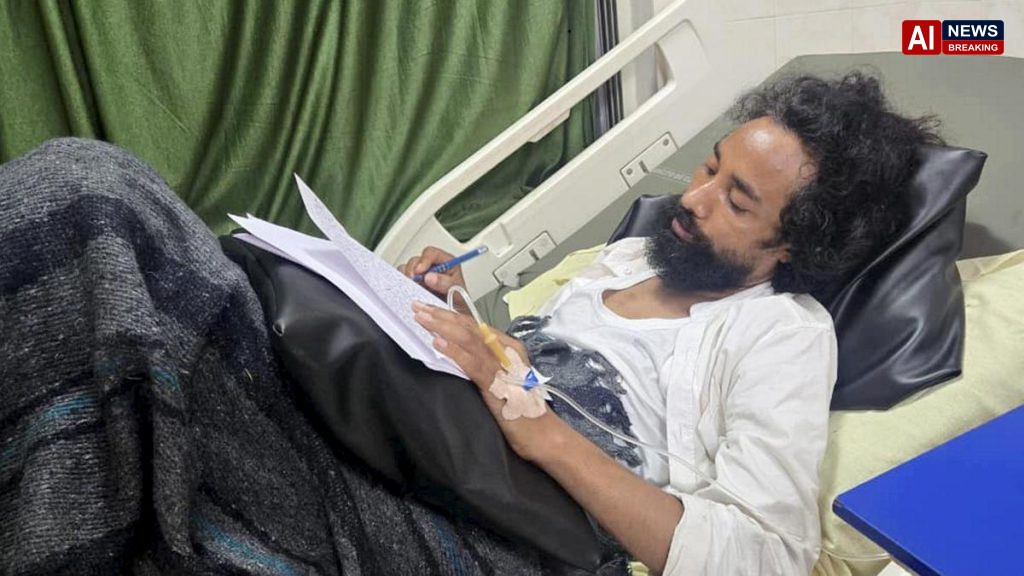
Students protest over tuition fees in Jharkhand - AI News Breaking
jharkhand devendra nath mahto:
Jharkhand student leader Devendra Nath Mahto ended his 16-day hunger strike in Ranchi after the Hemant Soren government announced the cancellation of the JSSC-CGL examination and all examinations conducted by TSR Data Processing Private Limited (TDPL). The government also ordered a wider investigation into recruitment-examination irregularities dating back to 2014 and announced steps aimed at reforming the examination system.
Mahto described the development as a “huge victory for Jharkhand” and suspended his fast. However, the resolution does not mean every demand made by the protesting students has been accepted: a section of protesters has continued to press for a CBI investigation into alleged examination irregularities.
Devendra Nath Mahto Ends 16-Day Hunger Strike
RANCHI: A prolonged student agitation in Jharkhand reached a major turning point on Monday night after student leader Devendra Nath Mahto ended his 16-day hunger strike following a series of decisions by the Hemant Soren-led state government.
Mahto, who had been fasting in protest over alleged irregularities in recruitment examinations conducted in the state, suspended his hunger strike after the government announced the cancellation of the JSSC Combined Graduate Level examination and examinations conducted through TSR Data Processing Private Limited.
The announcement came after weeks of demonstrations by students and job aspirants demanding greater transparency and accountability in the state’s recruitment system.
Following the government’s decision, Mahto hailed the development as a major achievement for students and Jharkhand.
“Today marks a huge victory for Jharkhand,” Mahto said while announcing that he was suspending his protest. He also made clear that the larger struggle for reforms in the recruitment system would continue.
His decision brought temporary relief to an agitation that had increasingly become a major political and social issue in the state.
What Did the Hemant Soren Government Announce?
The key announcement came from Chief Minister Hemant Soren on Monday after a special Cabinet meeting.
The state government decided to cancel the JSSC-CGL examination and all examinations conducted by TSR Data Processing Private Limited, or TDPL, amid allegations of irregularities surrounding the recruitment process.
The decision goes beyond simply cancelling a single examination.
The government announced that examinations, results and selections connected with TDPL would be scrapped as part of the action.
The administration also ordered a comprehensive examination of recruitment-related irregularities dating back to 2014.
The government said the investigation would examine the processes used in recruitment examinations and identify those responsible for any wrongdoing.
This was one of the most significant concessions made by the state government since the student movement began.
Why Were Students Protesting?
The agitation was driven by concerns over alleged irregularities in examinations conducted by the Jharkhand Public Service Commission and the Jharkhand Staff Selection Commission.
Students and job aspirants had raised questions about examination integrity, alleged malpractice, recruitment procedures and the credibility of the state’s competitive examination system.
For young people preparing for government jobs, recruitment examinations represent more than a routine selection process.
A government examination can determine years of career planning, financial security and professional prospects.
Any allegation that the process has been compromised can therefore have a significant impact on thousands of candidates.
The protesters argued that irregularities could undermine the prospects of candidates who had prepared honestly and competed under the assumption that the examination system was fair.
The movement subsequently expanded into a broader demand for systemic reform.
JSSC-CGL Cancellation Becomes Major Breakthrough
The cancellation of the JSSC-CGL examination became the most visible breakthrough in the negotiations.
The JSSC-CGL is a major recruitment examination for government positions in Jharkhand, making the decision politically and administratively significant.
The government had faced growing pressure to respond to students who questioned the examination process.
After the Cabinet decision, the cancellation became the central development around which the protest was brought to a temporary conclusion.
For Mahto and supporters of the agitation, the decision demonstrated that sustained pressure could force the government to reconsider controversial recruitment decisions.
The cancellation also means that affected candidates will have to wait for the government’s next steps regarding the recruitment process and any fresh examination arrangements.
All TDPL Exams Also Cancelled
The government’s decision was broader than the JSSC-CGL examination.
All examinations conducted by TDPL were included in the cancellation decision.
According to reports, the government also nullified associated results and candidate selections.
TDPL had been at the centre of allegations concerning the examination process.
By cancelling examinations conducted through the agency, the government effectively removed the disputed recruitment processes from the system and created the possibility of conducting fresh examinations under revised arrangements.
The move is expected to have consequences for candidates who had already cleared some of the affected examinations.
While protesting students welcomed the cancellations, candidates who had successfully secured positions through the examinations could face uncertainty over their selections.
That creates a new challenge for the government: ensuring that action against alleged irregularities does not unfairly affect candidates who may have cleared examinations without any wrongdoing.
Investigation Into Irregularities Since 2014
One of the most important aspects of the government’s announcement is the decision to examine recruitment-examination irregularities dating back to 2014.
The scope of the proposed inquiry makes the development considerably larger than the immediate JSSC-CGL controversy.
The government has indicated that the investigation will examine recruitment processes over a long period and identify possible irregularities.
The move could potentially bring scrutiny to multiple examinations, recruitment procedures and agencies involved in conducting competitive tests.
The government has also indicated that those found responsible for wrongdoing could face action.
For students, this is important because the protest has increasingly been about more than the cancellation of one examination.
The broader demand has been for a recruitment system in which candidates can have confidence that examinations are conducted fairly and transparently.
Mahto Calls It a Victory, But the Larger Fight Continues
Although Mahto ended his hunger strike, he did not suggest that every issue surrounding recruitment examinations had been permanently resolved.
His position has been that the protest was aimed at forcing systemic reform.
The cancellation of the disputed examinations therefore represents an important milestone rather than the end of the wider campaign for reform.
The government will now face pressure to demonstrate that its promises translate into concrete changes.
That includes establishing a transparent examination process, preventing paper leaks and malpractice, improving recruitment procedures and ensuring that candidates receive reliable information.
The government will also have to determine how fresh examinations will be conducted and how candidates affected by cancellations will be treated.
CBI Probe Remains a Point of Disagreement
One of the most important unresolved issues is the demand for a Central Bureau of Investigation probe.
Some student leaders have continued to demand a CBI inquiry into alleged examination fraud and irregularities.
The state government, however, has relied on its own investigative mechanisms and announced a wider probe into recruitment irregularities.
This distinction matters.
The government’s decision to cancel examinations and order an investigation has satisfied a major part of the protesters’ immediate demands.
But protesters who believe that an independent central agency is necessary may continue to press for a CBI investigation.
As a result, the end of Mahto’s hunger strike should not necessarily be interpreted as the complete resolution of the student movement.
Instead, it represents a major de-escalation after the government accepted several of the movement’s central demands.
Why the Hunger Strike Became a Major Issue
Mahto’s 16-day hunger strike became one of the most visible symbols of the Jharkhand student agitation.
A hunger strike places considerable physical pressure on the protester and can quickly transform an administrative dispute into a major public issue.
As Mahto’s health became a concern, pressure on the state government increased.
The protest also attracted wider political attention.
Opposition leaders criticised the government’s handling of the students’ concerns, while student organisations continued to demand action.
The situation became particularly sensitive when Mahto was reportedly stopped from participating in a Tiranga Yatra on Independence Day while he was continuing his hunger strike in hospital.
That episode added another layer to the political controversy surrounding the agitation.
Rahul Gandhi Had Also Urged Soren to Engage With Students
The student agitation also attracted attention from Congress leader Rahul Gandhi.
On August 17, Gandhi wrote to Chief Minister Hemant Soren urging him to personally engage with the protesting students and take their grievances seriously.
Gandhi expressed solidarity with the students and argued that their concerns over recruitment examinations deserved attention.
The intervention came as pressure on the Jharkhand government was intensifying.
The state government, led by Hemant Soren and supported by its alliance partners, subsequently moved toward a major decision on the disputed examinations.
The timing has already generated political debate over the extent to which political pressure contributed to the government’s eventual decision.
However, the government’s formal explanation has focused on the examination irregularities and the findings emerging from existing investigations.
Government Says Probe Has Revealed Irregularities
The government’s decision was not presented simply as a response to street pressure.
Chief Minister Hemant Soren said the ongoing CID and SIT investigations had produced initial findings and that the Cabinet had considered those developments before deciding to cancel the examinations.
According to the government’s position, the decision was therefore based on both the protesters’ concerns and information emerging from investigations.
That distinction will become important in the months ahead.
If further investigation establishes serious wrongdoing, the government will face pressure to prosecute those responsible.
If the investigation fails to establish widespread malpractice, the government will have to explain why such a sweeping cancellation was necessary.
Either way, the issue is unlikely to disappear immediately.
The Problem of Candidates Who Already Cleared the Exams
The cancellation has also created a difficult situation for candidates who successfully cleared the affected examinations.
Some candidates have already secured government positions through recruitment processes now under scrutiny.
For those candidates, the cancellation can be deeply disruptive.
They may argue that they should not lose jobs if they personally had no involvement in any alleged malpractice.
The government will therefore have to establish a legally sound and fair mechanism for dealing with existing selections.
At the same time, if an examination is conclusively found to have been compromised, maintaining selections based on that examination could undermine public confidence in the recruitment system.
This is one of the most difficult consequences of cancelling a large-scale recruitment examination.
Fresh Examinations Could Become the Next Challenge
The immediate question for thousands of candidates is what happens next.
If examinations are cancelled, the government will eventually have to conduct fresh recruitment tests.
That process will require new schedules, examination agencies, security arrangements and procedures designed to prevent the problems that triggered the original controversy.
The credibility of the new examinations will be crucial.
Students who spent years preparing for government recruitment will expect the replacement process to be demonstrably transparent.
The government will also have to communicate clearly about eligibility, age limits, application procedures and the treatment of candidates who participated in the cancelled examinations.
Any ambiguity could trigger another round of protests.
Demand for Examination Reform
The Jharkhand student agitation has now moved the issue of examination reform to the centre of political discussion.
Students have demanded stronger safeguards against paper leaks, manipulation and other forms of malpractice.
They have also called for greater transparency in recruitment.
These demands reflect a wider concern across India, where competitive government examinations attract millions of applicants.
The credibility of the examination system is critical because government recruitment is often viewed as one of the most secure career paths available to young people.
When examinations are delayed, cancelled or surrounded by allegations of malpractice, candidates can lose years of preparation.
That makes examination reform not merely an administrative issue but a major youth and employment issue.
Political Impact for Hemant Soren Government
The government’s decision carries political risks as well as potential benefits.
On one hand, cancelling disputed examinations could allow the Soren administration to demonstrate that it is willing to respond to student concerns.
The government can present the decision as evidence that it prioritises fairness and transparency.
On the other hand, cancellation of examinations and recruitment processes can create dissatisfaction among candidates who cleared the tests.
The administration must now manage two groups with competing interests.
One group wants the disputed examinations cancelled because it believes the process was compromised.
The other group may have invested years in preparing for the examinations and may fear losing selections they legitimately earned.
The government’s handling of this next stage could therefore determine whether the current decision brings lasting relief or generates another dispute.
A Major Moment for Jharkhand’s Student Politics
The end of Mahto’s hunger strike is also significant for Jharkhand’s student politics.
The movement demonstrated the ability of student organisations and job aspirants to keep recruitment irregularities at the centre of public debate.
Mahto became the face of the agitation through his prolonged fast.
The government’s decision has now given the movement a concrete outcome to point to.
However, the future of the movement will depend on how quickly the government implements the announced reforms.
If fresh examinations are conducted transparently and investigations produce credible results, the agitation could gradually lose momentum.
If implementation is delayed or students believe the promised reforms are inadequate, protests could return.
Devendra Nath Mahto’s decision to end his 16-day hunger strike marks a major turning point in Jharkhand’s prolonged student agitation.
The immediate trigger was the Hemant Soren government’s decision to cancel the JSSC-CGL examination and all examinations conducted by TDPL, along with associated results and selections. The government has also announced a wider investigation into recruitment-examination irregularities dating back to 2014 and indicated that reforms to the examination system will follow.
For Mahto and the students who supported the agitation, the cancellation represents a significant victory. Mahto himself described the development as a “huge victory for Jharkhand” before suspending his hunger strike.
But the controversy is not completely over.
The demand for a CBI investigation remains unresolved for some protesters, while candidates who cleared the cancelled examinations face uncertainty about their selections.
The real test for the Soren government will therefore begin after the protests subside. Cancelling an examination is only the first step. The administration must now establish a recruitment system that is transparent, secure and credible enough to restore the confidence of Jharkhand’s students.
Insight: The Jharkhand episode illustrates both the power and the limitations of sustained student protest. Devendra Nath Mahto’s 16-day hunger strike helped keep examination irregularities in the political spotlight, but the government’s response goes beyond simply conceding to a protest: it has effectively reset parts of the recruitment system by cancelling disputed examinations and ordering a broader investigation. The difficult phase now begins. Cancellation can address doubts about a compromised examination, but it does not automatically deliver justice to either students who feared an unfair process or candidates who may have legitimately cleared it. The government’s credibility will ultimately depend on what happens next—whether investigations are independent and credible, whether those responsible for malpractice are held accountable, and whether fresh examinations are conducted under stronger safeguards. If those reforms are implemented successfully, the protest could become a turning point for recruitment transparency in Jharkhand; if implementation fails, the same grievances could return in a different form.
Post Content