Europe warns of Russia’s hybrid attacks but struggles to counter them
  Former chief election commissioner calls SIR scheme illegal.
  A Corruption Scandal Is Reshaping Brazil’s Presidential Election
  US citizen injured in Illinois after ICE agents mistook him for fugitive, tried to arrest him
  At 10 years old, Smithsonian’s Black museum is undaunted amid pressure from Trump administration
 Iran Accuses IAEA of Politicizing Nuclear Assessments Amid Rising Tensions Over Monitoring, Enrichment, and Inspection Disputes
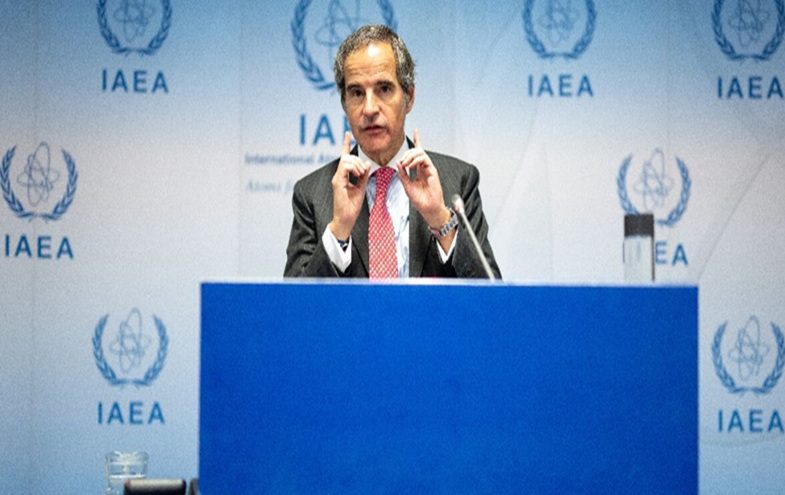
iran accuses iaea politicizing:
Iran has accused the International Atomic Energy Agency (IAEA) of politicizing its nuclear assessments, alleging that Western pressure is influencing the watchdog’s reporting. The statement comes amid heightened scrutiny of Iran’s enrichment levels and restricted access for inspectors. The dispute further strains already fragile relations between Tehran and the UN nuclear agency.
Iran has once again intensified its criticism of the International Atomic Energy Agency (IAEA), accusing the UN nuclear watchdog of politicizing its assessments of Tehran’s nuclear program. The allegation emerges during a period of heightened global concern over Iran’s uranium enrichment levels, restricted inspection access, and ongoing geopolitical friction between Iran and Western powers.
The IAEA, headquartered in Vienna, plays a central role in monitoring nuclear compliance under the Nuclear Non-Proliferation Treaty (NPT). Its mandate is to verify that member states are not diverting nuclear materials toward weapons development. Iran, meanwhile, has repeatedly insisted that its nuclear program is peaceful and civilian in nature.
This latest exchange highlights the long-standing mistrust between Tehran and the agency, which has deepened significantly over the past decade due to unresolved safeguards issues and limited inspection access in sensitive facilities.
Iran’s Core Allegation: “Politicization of Nuclear Oversight”
Iranian officials have argued that the IAEA’s reporting and resolutions are increasingly shaped by political pressure from Western governments rather than purely technical assessments.
Key elements of Iran’s position include:
- Claims that Western states are using the IAEA as a pressure tool
- Accusations that reports are influenced by geopolitical interests
- Assertion that nuclear assessments ignore Iran’s stated peaceful intent
- Rejection of resolutions that criticize Iran’s compliance record
Iran’s Atomic Energy Organization has previously stated that external political pressure is being used to justify sanctions and diplomatic coercion, framing the agency’s actions as part of a broader political strategy rather than neutral technical oversight.
These allegations are not new and have been repeated in various forms during past disputes over inspections and nuclear transparency.
IAEA Position: Compliance and Verification Concerns
The IAEA, on the other hand, has consistently maintained that its findings are based on technical verification and safeguards obligations under the NPT.
Recent agency reports and diplomatic assessments indicate several ongoing concerns:
1. Limited inspection access
The IAEA has reported difficulties in accessing key Iranian nuclear sites following periods of conflict and political restrictions.
2. Unverified uranium stockpiles
The agency has expressed concern over the lack of verified accounting for Iran’s enriched uranium stockpile, including material enriched up to near weapons-grade levels.
3. Loss of continuity of knowledge
Due to restricted monitoring, the IAEA has warned that it has lost continuity in tracking Iran’s nuclear material flows, making verification more difficult.
4. Safeguards compliance disputes
The agency has previously found Iran in breach of its safeguards obligations, citing unresolved questions about undeclared nuclear material and activities.
From the IAEA’s perspective, the issue is not political interpretation but verification gaps that undermine its ability to certify peaceful usage.
Escalating Tensions: Why This Issue Is Resurfacing Now
The timing of Iran’s accusation is closely linked to broader geopolitical and diplomatic dynamics.
1. Increased scrutiny of Iran’s enrichment program
Recent reports indicate continued enrichment activity at levels close to weapons-grade thresholds, raising international concern.
2. Reduced inspection access
Iran has limited or suspended access to certain nuclear facilities, especially those damaged or affected during periods of conflict.
3. Western diplomatic pressure
The United States and European allies have pushed for stronger resolutions at the IAEA Board of Governors to address compliance gaps.
4. Breakdown of trust post-conflict
Military strikes on Iranian nuclear infrastructure in recent years have significantly reduced cooperation between Tehran and the agency.
These factors collectively contribute to a cycle of accusation, restriction, and counter-accusation.
Historical Context: Long-Standing Nuclear Disputes
The current dispute is part of a broader historical pattern dating back decades.
Key phases include:
Early 2000s
- Discovery of undeclared nuclear sites in Iran
- Initial IAEA investigations into possible military dimensions
2015 Nuclear Deal (JCPOA)
- Temporary framework for enhanced inspections and limits
- Improved transparency mechanisms
Post-2018 Withdrawal Period
- Collapse of the JCPOA framework
- Gradual reduction in Iranian compliance with monitoring obligations
2020s escalation
- Increased enrichment levels
- Reduced inspection access
- Repeated IAEA resolutions citing non-compliance concerns
This trajectory has steadily eroded trust between Iran and the international monitoring system.
The Core Dispute: Technical Verification vs Political Interpretation
At the heart of the disagreement is a fundamental divergence in how both sides interpret nuclear oversight.
IAEA framing:
- Technical compliance verification
- Evidence-based safeguards enforcement
- Neutral inspection mandate
Iranian framing:
- Politically influenced reporting
- Western-driven pressure mechanisms
- Selective interpretation of data
This interpretive divide makes resolution difficult, even when technical discussions are ongoing.
Strategic Implications for Iran
Iran’s accusations against the IAEA have several strategic objectives:
1. Domestic political signaling
Demonstrating resistance to Western pressure strengthens internal political cohesion.
2. Negotiation leverage
Criticism of the IAEA can be used to reshape future inspection terms.
3. Narrative control
Framing the dispute as political rather than technical helps counter external criticism.
However, this approach also risks further diplomatic isolation if it leads to reduced cooperation.
Global Implications: Nuclear Non-Proliferation Stability
The Iran–IAEA dispute has broader implications for global nuclear governance:
1. Weakening of inspection regimes
If access is restricted, verification systems lose effectiveness.
2. Precedent risk
Other states may cite Iran’s approach to resist inspections.
3. Regional security concerns
Middle East tensions increase when nuclear transparency declines.
4. Diplomatic escalation cycles
IAEA resolutions often trigger countermeasures from Iran, creating feedback loops.
International Response Landscape
Global reactions typically fall into three categories:
Western governments
- Support stronger IAEA oversight
- Call for compliance with safeguards
- Push for diplomatic pressure mechanisms
Russia and China
- Often criticize politicization claims by the West
- Advocate for diplomatic de-escalation
- Resist punitive resolutions
Non-aligned observers
- Call for balanced engagement
- Emphasize de-escalation and transparency
This fragmented international stance complicates consensus-building at the IAEA Board.
Current Outlook: No Immediate Resolution in Sight
Given the entrenched positions, the dispute is unlikely to be resolved quickly. The core challenges remain:
- Lack of full inspection access
- Disagreement over interpretation of nuclear data
- Geopolitical tensions between Iran and Western powers
- Absence of a revived comprehensive nuclear agreement framework
Without structural diplomatic progress, periodic escalation at the IAEA level is likely to continue.
A Deepening Structural Conflict
Iran’s accusation that the IAEA is politicizing nuclear assessments reflects a broader breakdown in trust between Tehran and the international nuclear monitoring system. While Iran frames the issue as political bias, the IAEA maintains that its concerns are rooted in unresolved verification gaps and compliance obligations.
The dispute underscores a larger reality: nuclear oversight in politically contested environments is increasingly shaped not just by technical data, but by geopolitical interpretation and strategic mistrust.
From a systems-level governance perspective, this conflict illustrates the fragility of international verification regimes when technical institutions operate inside high-politicization environments. The IAEA’s authority depends on sustained access, data continuity, and mutual trust—three variables that degrade rapidly under sanctions, conflict, or selective compliance. Once verification continuity is disrupted, ambiguity becomes structurally embedded, allowing both sides to selectively interpret uncertainty. This transforms what should be a technical monitoring framework into a contested political narrative space, reducing the effectiveness of non-proliferation enforcement mechanisms over time.