Europe warns of Russia’s hybrid attacks but struggles to counter them
  Former chief election commissioner calls SIR scheme illegal.
  A Corruption Scandal Is Reshaping Brazil’s Presidential Election
  US citizen injured in Illinois after ICE agents mistook him for fugitive, tried to arrest him
  At 10 years old, Smithsonian’s Black museum is undaunted amid pressure from Trump administration
 Israel-Iran Exchange Fresh Strikes as Middle East Crisis Escalates Yemen Enters Conflict, Red Sea Shipping Threatened
israeliran exchange fresh strikes:
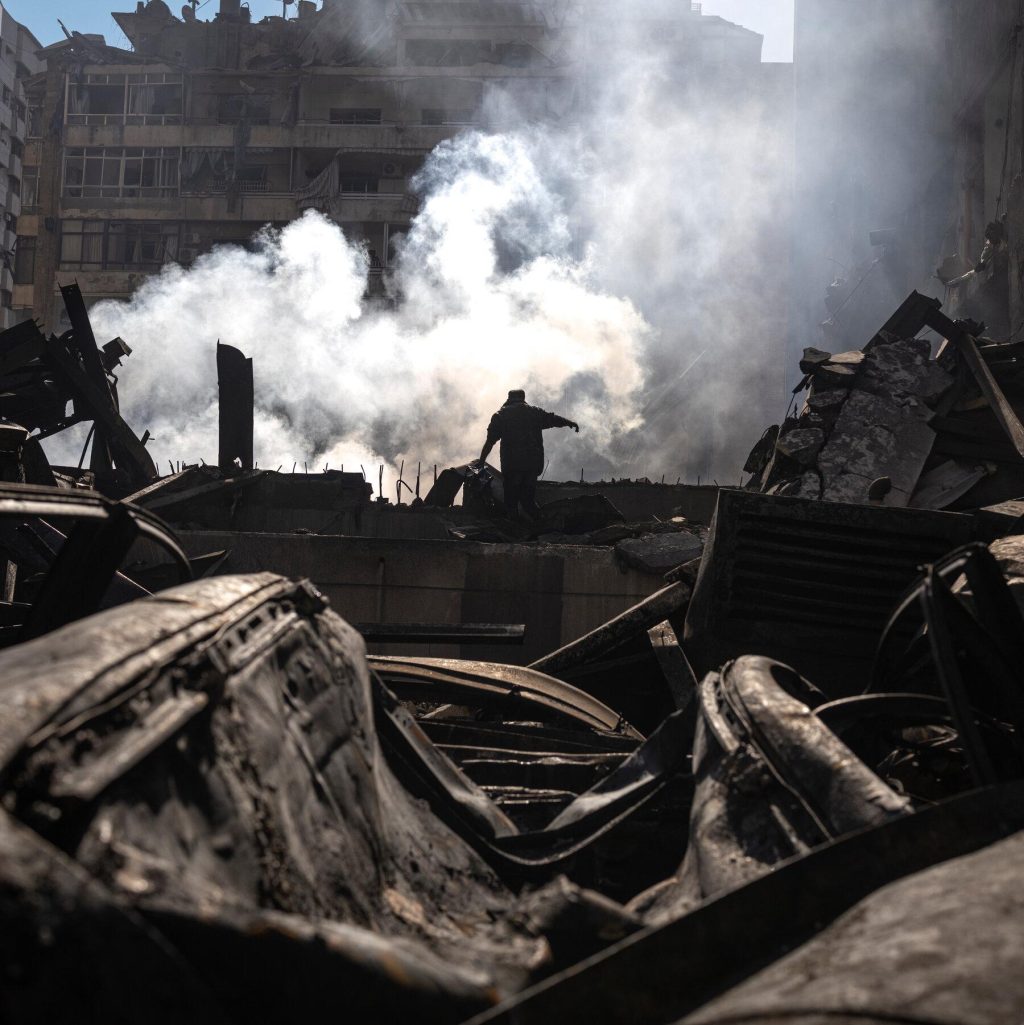
Tensions in the Middle East have sharply escalated as Israel and Iran exchange fresh rounds of strikes targeting military positions, despite calls for restraint from U.S. President Donald Trump. Yemen’s Houthi movement has also signaled deeper involvement by launching missile attacks toward Israel-linked targets and threatening Red Sea shipping routes. The widening conflict raises fears of a broader regional war involving multiple actors across the region.
The Middle East has once again entered a period of acute military escalation as Israel and Iran exchange renewed strikes targeting strategic military assets, signaling a dangerous intensification of a conflict that has already drawn in multiple regional actors. Despite repeated international calls for restraint, including appeals attributed to U.S. President Donald Trump urging de-escalation, the cycle of retaliation has continued unabated.
The Israel Defense Forces (IDF) confirmed that it carried out strikes on military targets located in central and western Iran, describing the action as a response to earlier attacks launched from Iranian territory. The strikes mark one of the most direct and openly acknowledged exchanges between the two long-standing adversaries in recent months, raising fears that the confrontation is evolving from shadow conflict into open regional warfare.
Simultaneously, Yemen’s Houthi movement announced what it described as a renewed entry into the broader conflict, launching missiles toward Israeli-linked targets near Jaffa and declaring intentions to disrupt commercial shipping in the Red Sea. The announcement has added a new maritime dimension to the crisis, threatening global trade routes already vulnerable to geopolitical instability.
Israel’s Military Position and Strategic Calculus: Israel’s latest military strikes in Iran are being framed by its defense establishment as targeted operations against specific military infrastructure. According to Israeli military statements, the strikes were conducted in central and western regions of Iran, areas believed to host logistical, command, and weapons-related facilities.
Israel has maintained that its operations are defensive in nature, aimed at deterring further attacks and preventing escalation of threats originating from Iranian territory or Iranian-backed groups across the region. The Israeli government has repeatedly argued that Iran’s regional network of allied militias poses a direct and ongoing security threat to Israeli territory.
The decision to strike deeper into Iranian territory reflects a shift in operational posture. While Israel has historically engaged in covert operations and limited strikes in neighboring countries, direct strikes within Iran’s central and western zones indicate a significant escalation in both scope and intent.
Military analysts suggest that Israel’s objective is twofold: to degrade Iran’s military capabilities and to establish a deterrent threshold that discourages further direct confrontations.
Iran’s Response and Strategic Messaging: Iranian authorities have acknowledged the Israeli strikes and indicated that they will not go unanswered. While official details remain limited, Iranian military and political leadership has framed the attacks as violations of sovereignty and part of what it describes as a broader pattern of regional aggression.
Iran’s strategic response typically operates on multiple levels:
- Direct military retaliation through missile or drone operations
- Activation of allied regional groups
- Diplomatic engagement to frame the conflict internationally
In previous escalations, Iran has relied heavily on its network of allied forces across Lebanon, Syria, Iraq, and Yemen to exert pressure indirectly while avoiding full-scale conventional war. However, the increasing frequency of direct exchanges with Israel suggests that traditional deterrence mechanisms are under strain.
The Iranian position continues to emphasize resistance against Israeli military actions, while simultaneously warning that continued escalation could lead to wider regional instability.
U.S. Position: Calls for Calm Amid Escalation: Former U.S. President Donald Trump has reportedly called for restraint and calm amid the intensifying conflict. Although the United States remains a central external actor in Middle East security dynamics, its direct role in managing this specific escalation appears limited to diplomatic messaging and strategic signaling.
Washington’s broader concern centers on preventing the conflict from spiraling into a multi-front regional war that could involve U.S. forces, allies, and critical maritime routes. The U.S. has historically maintained strong military and intelligence ties with Israel while simultaneously engaging in complex diplomatic relationships with Gulf states and, indirectly, Iran.
The challenge for U.S. policymakers lies in balancing deterrence with de-escalation—supporting allies while avoiding actions that could trigger wider conflict.
Yemen’s Entry and the Houthi Escalation: One of the most significant developments in the latest escalation is the announcement from Yemen’s Houthi movement that it is re-entering active confrontation status following a ceasefire declared earlier in April.
The Houthis stated that they have launched missiles toward Israeli-linked targets in the Jaffa area, signaling a renewed operational phase in their regional military posture. More critically, the group declared its intention to disrupt commercial shipping associated with Israel in the Red Sea.
This announcement has immediate implications for global maritime security. The Red Sea and adjacent Bab al-Mandab Strait are among the world’s most critical shipping corridors, linking the Mediterranean via the Suez Canal to the Indian Ocean and Asia.
Disruption in this region can have cascading effects on:
- Global oil prices
- Shipping insurance premiums
- Supply chain stability
- International trade routes
The Houthi leadership has further suggested that the possibility of reviving a blockade on Israeli-linked shipping through the Bab al-Mandab Strait had been under consideration, intensifying fears of sustained maritime disruption.
This escalation reflects a transition from deterrence-based confrontation to networked regional conflict dynamics, where state and non-state actors operate across interconnected theaters rather than isolated fronts. The most critical risk is not a single decisive war but a cumulative escalation cascade—where maritime disruption, proxy retaliation, and direct state strikes reinforce each other in a feedback loop. In such environments, traditional diplomacy struggles because the speed of military signaling outpaces negotiation cycles, leaving de-escalation mechanisms structurally behind the conflict curve.