Indonesia denies foreign claim to rescued orangutans
 Turkey hosts COP31 climate talks in Antalya.
 Pope meets Argentine bishops.
 APOD: 2026 November 8 – Major Fireball Meteor
 Indonesian Horror Hit ‘Pabrik Gula’ Gets 2028 Sequel as MD Entertainment Lines Up Three Imax Films
Israeli Election Authorities and Volunteers Seek to Counter Threats to Voting
**
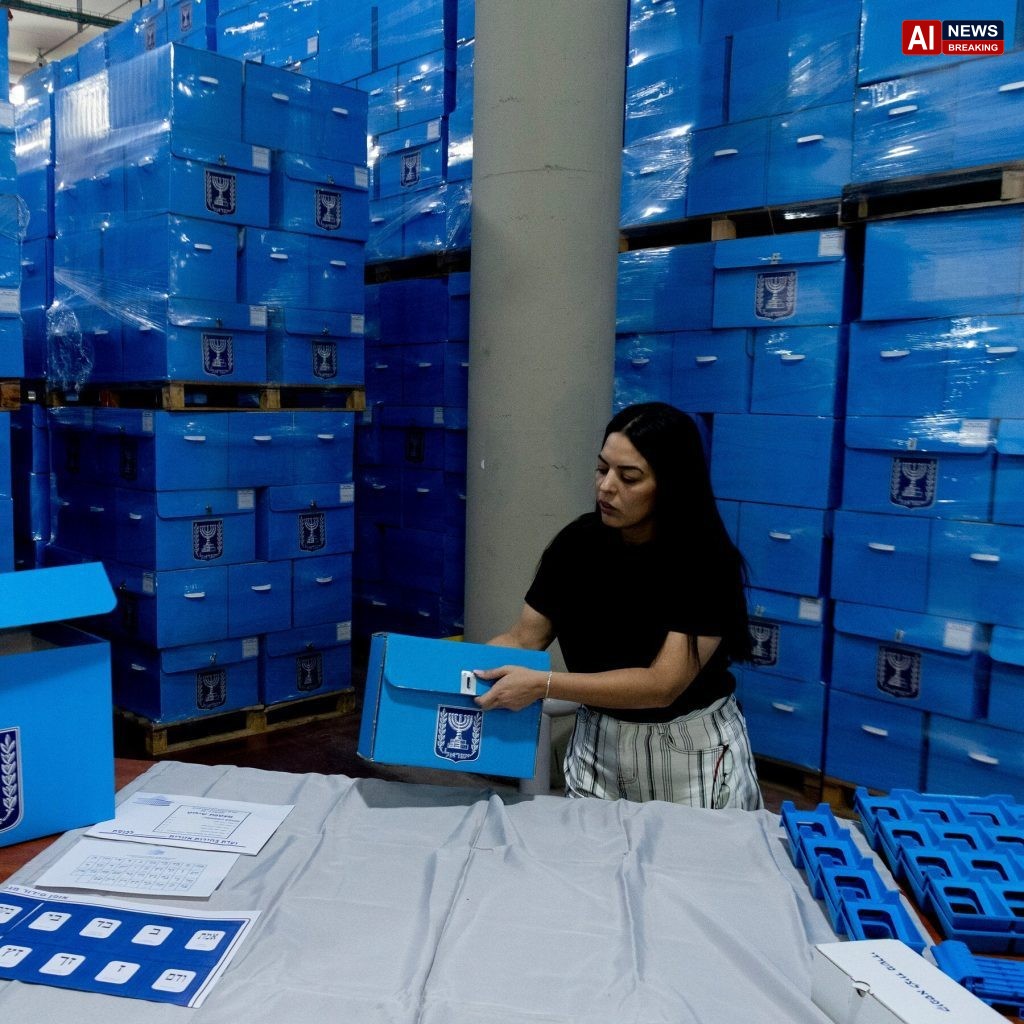
Israeli Election Authorities and Volunteers Seek to Counter Threats to Voting - AI News Breaking
israeli election authorities volunteers:
Israeli election officials and a network of volunteers are intensifying efforts to safeguard the country’s upcoming national vote amid mounting concerns over digital interference and political rhetoric that could undermine public confidence. The Israel Central Elections Committee, working in conjunction with the Ministry of Interior and several non‑governmental organisations, has launched a coordinated campaign to monitor social media, educate voters and reinforce the integrity of the ballot‑counting process. The initiative, announced last week, includes the deployment of additional polling‑station staff, the distribution of informational leaflets in Arabic, Russian and English, and the establishment of a real‑time hotline for citizens to report suspicious activity.The backdrop to these measures is a series of warnings from cybersecurity experts who say that artificial intelligence tools are increasingly being weaponised to produce deep‑fake videos, fabricated news articles and targeted disinformation campaigns..
A recent study by the Israeli Institute for National Security Studies found that, in the three months preceding the election, the volume of AI‑generated political content on popular platforms such as TikTok, X and Telegram had risen by roughly 250 per cent. Analysts argue that the sophistication of these synthetic media pieces makes them harder to detect, potentially swaying undecided voters or reinforcing existing biases through hyper‑personalised messaging.Compounding the technological threat are statements from senior members of the ruling coalition who have repeatedly hinted that the election outcome might be “manipulated” if the opposition gains a decisive lead. While the comments have been framed as political hyperbole, they have sparked anxiety among voters who fear that any perceived irregularity could be used to delegitimize the results..
The Central Elections Committee responded by reaffirming that all legal safeguards—such as paper‑based voting records, independent observers and a transparent recount protocol—remain in place and will be strictly enforced.Volunteer groups, many of which are composed of university students and former military intelligence officers, have taken a proactive role in countering misinformation. Their “Fact‑Check Together” platform aggregates claims circulating online, cross‑references them with official sources and publishes concise rebuttals within hours of a claim’s emergence. Since the platform’s launch in February, it has flagged more than 1,800 questionable posts, of which 42 per cent were identified as AI‑generated fabrications..
The volunteers also conduct workshops in community centres across Tel‑Aviv, Haifa and Beersheba, teaching participants how to recognise manipulated images, verify the provenance of video files and use browser extensions that flag deep‑fake content.Election officials have also upgraded the technical infrastructure of polling stations to reduce the risk of cyber‑attacks on the electronic components of the voting system. Although Israeli ballots are primarily paper‑based, auxiliary devices that transmit preliminary turnout figures to the central database have been fortified with end‑to‑end encryption and multi‑factor authentication. The Ministry of Defense’s cyber‑unit conducted a series of penetration tests on these systems in June, reporting no critical vulnerabilities but recommending additional monitoring during the vote‑counting period.International observers from the Organization for Security and Co‑operation in Europe (OSCE) will be present at selected polling stations, marking the first time the body has dispatched a delegation to monitor an Israeli election..
Their mandate includes evaluating the fairness of the electoral process, the transparency of the counting procedures and the adequacy of measures taken to combat disinformation. OSCE spokesperson Lina Gökhan noted that the presence of independent monitors “adds an extra layer of credibility” and can help reassure both domestic and diaspora communities that the results reflect the genuine will of the electorate.Despite the extensive preparations, some critics argue that the response remains reactive rather than preventive. A coalition of civil‑society groups submitted a petition to the Supreme Court in early August, urging the judiciary to order a comprehensive audit of all social‑media platforms operating in Israel for the weeks leading up to the election..
They contend that voluntary takedowns of false content are insufficient and that a legal framework mandating rapid removal of AI‑generated political material is required to protect democratic discourse.The government’s stance is that existing laws already empower the Israel Police to investigate and prosecute the spread of false information that incites public unrest. However, the legislation predates the current wave of AI‑driven content and lacks explicit provisions addressing synthetic media. Legal scholars at Hebrew University have drafted a proposal to amend the “Prevention of Threatening Public Harm” ordinance, introducing definitions for deep‑fakes and setting penalties for their deliberate dissemination during election cycles..
The draft is expected to be debated in the Knesset later this month.Public sentiment appears cautiously optimistic, according to a recent poll conducted by the Israel Democracy Institute. Approximately 68 per cent of respondents said they felt “reasonably confident” that their vote would be counted accurately, while 22 per cent expressed “significant concern” about potential manipulation. Among younger voters aged 18‑29, confidence was slightly lower at 61 per cent, reflecting heightened awareness of digital threats..
The poll also revealed that nearly half of those surveyed had encountered at least one piece of questionable political content online in the past week, underscoring the pervasive nature of the information environment.As the nation approaches the ballot‑day deadline, the combined efforts of election authorities, volunteer fact‑checkers and international monitors aim to demonstrate that Israel’s democratic institutions can withstand both conventional and novel challenges. While the spectre of AI‑generated misinformation and politically charged rhetoric continues to loom, officials maintain that the procedural safeguards, legal mechanisms and civic education campaigns in place constitute a robust defence. The ultimate test, they say, will be whether these measures translate into public trust on election night and preserve the legitimacy of the country’s parliamentary system..
Updated: October 27, 2026
Summary: Election officials and volunteer groups are ramping up voter education, real‑time hotlines and fortified polling‑station tech to counter a surge in AI‑generated disinformation ahead of Israel’s national vote, while OSCE monitors add an extra layer of oversight. Despite these safeguards, critics warn the response is still reactive and call for stricter legal tools to curb deep‑fake content and restore public confidence.
Israel’s scramble to harden voting against AI‑crafted lies reveals a deeper crisis: trust in democracy now hinges as much on digital literacy as on ballot boxes.
If the tech‑savvy outreach fails to convince skeptical youth, the very tools meant to safeguard the vote could