Indonesia denies foreign claim to rescued orangutans
 Turkey hosts COP31 climate talks in Antalya.
 Pope meets Argentine bishops.
 APOD: 2026 November 8 – Major Fireball Meteor
 Indonesian Horror Hit ‘Pabrik Gula’ Gets 2028 Sequel as MD Entertainment Lines Up Three Imax Films
Roberts dismiss
**
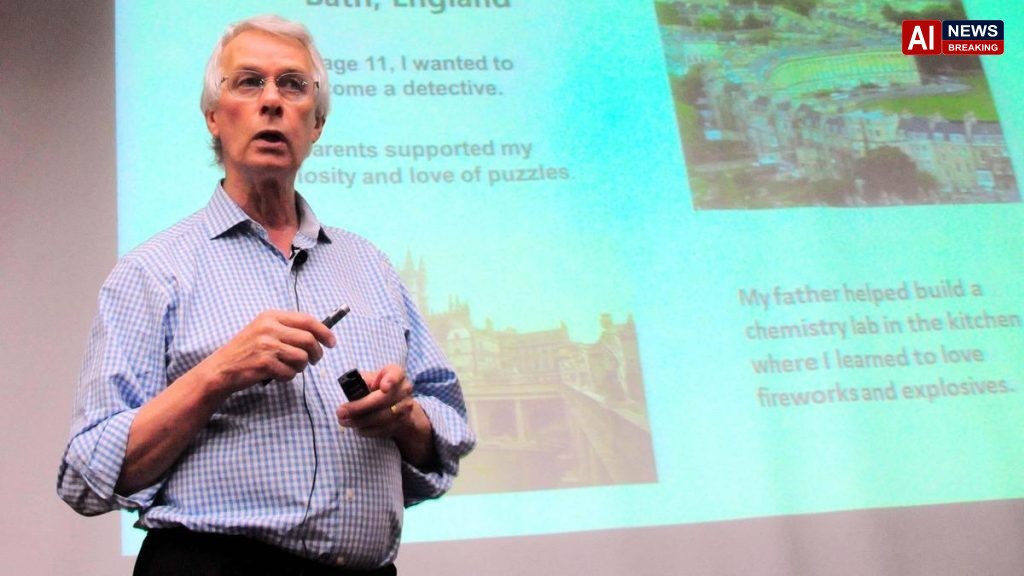
Nobel laureate Richard Roberts says it’s ‘nonsense’ to fear foreign dependence due to genetically modified crop use - AI News Breaking
Nobel laureate Richard Roberts says it’s ‘nonsense’ to fear foreign dependence due to genetically modified crop use London – In a sharply worded interview with the BBC, Nobel‑prize‑winning biochemist Professor Richard Roberts dismissed the growing alarm in India that genetically modified (GM) crops could increase the country’s reliance on foreign technology. “The idea that GM automatically means dependency is nonsense,” he said, arguing that the technology can be domestically sourced and controlled. Roberts, who received the 1993 Nobel for his work on split‑genes, stressed that the real issue for a developing nation is food and nutritional security, not geopolitical ownership of seed patents..
Roberts highlighted India’s own success story with Bt cotton, a genetically engineered variety that expresses a Bacillus thuringiensis toxin to ward off bollworms. Launched in 2002, Bt cotton quickly became the country’s dominant cotton crop, boosting yields by an estimated 20‑30 percent in many regions. “It proved that a well‑regulated, locally adapted GM crop can thrive without creating a permanent foreign grip,” he explained, noting that the seeds are now produced by Indian companies under licences that allow for technology transfer..
He warned that the debate in New Delhi has become overly politicised, with some opposition parties using “fear‑mongering” slogans to rally voters. “When you look at the data, the narrative of ‘foreign control’ collapses under the weight of evidence that Indian firms are increasingly the custodians of the technology,” Roberts asserted. He called for a “science‑first” approach, urging policymakers to separate genuine biosafety concerns from rhetoric designed to stoke nationalist sentiment..
The professor’s remarks come as India’s Ministry of Agriculture prepares to roll out field trials of a GM rice variety engineered for higher iron content. The “Golden Rice” project, originally developed by the International Rice Research Institute, has been modified to suit Indian agro‑ecological conditions. Roberts said the rice trial exemplifies how a developing country can harness GM to address micronutrient deficiencies that afflict millions, particularly in rural populations..
“It’s about saving lives, not surrendering sovereignty,” he said. Roberts also urged Indian research institutions to accelerate the development of “improved agri” in house, rather than relying on external pipelines. He praised the Indian Council of Agricultural Research (ICAR) for its recent investment in CRISPR‑based editing platforms, which can create non‑transgenic, precisely edited crops without the need for foreign gene insertion..
“If we build capacity now, we own the intellectual property and the downstream benefits,” he explained, pointing to successful home‑grown wheat lines that resist fungal blight. When asked about the patent landscape, Roberts clarified that not all GM technologies are locked behind restrictive licences. Some biotech firms have adopted “open‑source” models, offering royalty‑free licences for staple crops in low‑income countries..
He cited examples from the United States, where public‑sector research institutions have made their gene‑editing tools freely available, enabling local breeding programmes. “India can negotiate similar arrangements, ensuring that the benefits accrue domestically,” he said. The professor’s comments also addressed the environmental concerns that often accompany GM debates..
He acknowledged that any new variety must undergo rigorous field testing to assess ecological impact, but dismissed the claim that GM inherently harms biodiversity. “The science shows that properly managed GM crops can reduce pesticide use and preserve soil health,” he argued, citing meta‑analyses that compare conventional and GM farming practices across multiple continents. In response, the Indian Farmers’ Union (IFU) released a statement urging caution and demanding transparent risk assessments before any large‑scale deployment..
The union’s president, Anil Kumar, said, “We are not against technology, but we must protect our farmers from unforeseen consequences.” Roberts welcomed the call for scrutiny, noting that “robust, independent testing is essential, but it should not be wielded as a blanket ban.” He encouraged collaboration between NGOs, government bodies, and biotech firms to establish trusted oversight mechanisms. The interview also touched on the economic implications of adopting GM crops at scale. Roberts referenced a World Bank report estimating that widespread adoption of drought‑tolerant maize could increase farmer incomes by up to 15 percent in semi‑arid regions of India..
He warned that delaying adoption could cost the nation billions in lost productivity, especially as climate change intensifies water scarcity. “Strategic investment now yields long‑term resilience,” he said, urging the finance ministry to earmark funds for biotech research. Roberts’ perspective has drawn criticism from some environmental groups, who accuse him of downplaying corporate influence in the seed market..
Green India, a coalition of NGOs, argued that “big biotech still controls the narrative and the supply chain.” In reply, Roberts emphasized the need for a balanced view, pointing out that many Indian start‑ups are now entering the seed sector, fostering competition and reducing monopolistic tendencies. “A vibrant domestic ecosystem can counteract any external dominance,” he concluded. The conversation also explored the role of public education in shaping public opinion on GM..
Roberts highlighted successful outreach programmes in Kenya and Brazil, where scientists engaged directly with farming communities to demystify the technology. He suggested that India could replicate these models, using local languages and culturally relevant messaging to build trust. “When people see tangible benefits on their farms, fear gives way to informed acceptance,” he said..
In the final segment of the interview, Roberts urged the Indian government to draft a comprehensive GM policy that balances innovation, safety, and sovereignty. He recommended a multi‑stakeholder advisory board, comprising scientists, farmers, consumer.
Updated: October 27, 2026
Nobel‑winning biochemist Richard Roberts told the BBC that fears of foreign dependence from GM crops are unfounded, pointing to India’s successful Bt cotton programme and growing domestic biotech capacity. He urged a science‑first approach, tighter regulation and public outreach to harness GM for food security without surrendering sovereignty.
Insight: India’s embrace of domestically licensed GM seeds could transform biotech from a geopolitical bargaining chip into a home‑grown engine of food security, but only if policy scaffolds genuine R&D autonomy rather than merely repackaging foreign patents.
Otherwise, the promised resilience will remain a rhetorical shield, leaving farmers vulnerable to the very market monopolies the debate claims to resist.