 Australia probes AI‑driven breach of My Health Record portal
  Engineering student’s ‘suicide’ turns out to be murder; two arrested
  Canada’s Capital Bids Good Riddance to Trump Avenue as Tensions With U.S. Rise
  Pentagon investigates after China obtains parts from F-35 stealth fighter jet
 Jan Suraaj Party announces five candidates for upcoming Bihar MLC polls
**
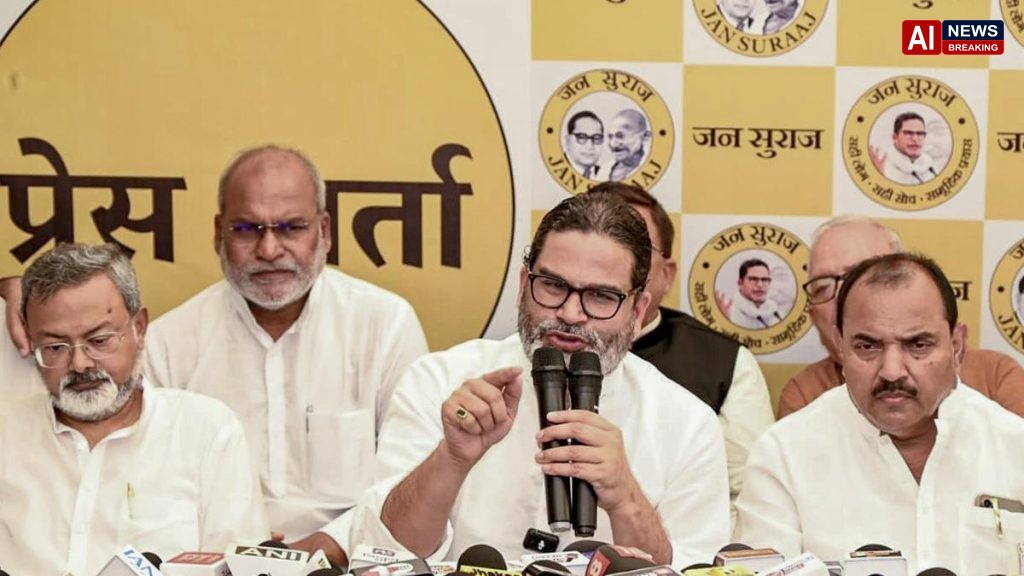
Jan Suraaj Party announces five candidates for upcoming Bihar MLC polls - AI News Breaking
Jan Suraaj Party announces five candidates for upcoming Bihar MLC polls The Jan Suraaj Party (JSP) has named five candidates to contest the upcoming Bihar Legislative Council elections, a move that could reshape the state’s political calculus ahead of the November expiry of eight council seats. Four of the seats are reserved for graduates and another four for teachers, a unique feature of the council that gives educated constituencies a direct voice. Party officials say the selections reflect a blend of seasoned legislators and fresh faces, aiming to capitalise on growing discontent with the incumbent coalition and to present a credible alternative on issues ranging from education reform to rural development..
The announcement, made at a press conference in Patna on Tuesday, was led by JSP president Ramesh Singh Thakur, who highlighted the party’s “commitment to merit‑based representation”. He introduced the five nominees – two former members of the Legislative Assembly, a veteran academic, a youth activist and a senior bureaucrat turned social worker. “Each of them brings a distinct perspective that resonates with the graduate and teacher electorates,” Thakur said, adding that the party will launch a targeted outreach programme across the eight constituencies in the coming weeks..
One of the highlighted candidates, Dr. Ananya Mishra, a former dean of Patna University’s Faculty of Arts, will contest the Graduate Constituency of Patna‑East. Mishra, known for her research on inclusive education, has been a vocal critic of the state’s recent policy roll‑backs on private school subsidies..
Her candidacy is being hailed by education lobbyists as a “potential game‑changer” for the teachers’ and graduates’ seats, where professional credentials often outweigh party affiliation. Joining her is former MLA and seasoned campaigner Vijay Kumar Chaudhary, who will stand for the Teachers’ Constituency of Muzaffarpur. Chaudhary, who lost his assembly seat in the 2020 polls, has spent the past two years leading a coalition of teachers’ unions against the government’s proposed changes to the pension scheme for public school staff..
His experience in grassroots mobilisation is expected to appeal to the constituency’s electorate, which numbers just over 40,000 registered teachers. The party’s third nominee, civil servant turned activist Sushil Kumar Yadav, is slated for the Graduate Constituency of Gaya. Yadav, who retired from the Indian Administrative Service after a 35‑year career, has been at the forefront of anti‑corruption drives in the region..
He has pledged to champion transparency in the council’s functioning, a promise that aligns with JSP’s broader anti‑establishment narrative and could attract voters disillusioned with longstanding political patronage networks. Among the fresh faces is 28‑year‑old climate activist Priya Singh, who will contest the Teachers’ Constituency of Bhagalpur. Singh, a former student leader and founder of a youth‑led environmental NGO, has garnered national attention for her campaigns against river pollution in the Ganges basin..
While her lack of formal teaching experience has raised eyebrows, JSP officials argue that her advocacy skills and commitment to sustainability make her a suitable representative for educators increasingly concerned about climate‑related curricula. The final candidate, former district magistrate Arvind Prasad, will vie for the Graduate Constituency of Darbhanga. Prasad, who oversaw several high‑profile development projects during his tenure, has pledged to focus on infrastructural gaps in higher‑education institutions, especially in the state’s rural hinterland..
His administrative background is seen as a strategic asset, offering the party a candidate who can navigate the bureaucratic intricacies of policy implementation while appealing to the educated electorate. Political analysts suggest that the JSP’s decision to field a mix of experience and novelty could be a calculated response to the fragmented nature of Bihar’s graduate and teacher electorates. “These seats have historically seen low voter turnout and are susceptible to swing votes,” said Dr..
Meera Joshi, a senior fellow at the Centre for Indian Politics. “By fielding candidates with strong professional credentials, the JSP is trying to break the usual pattern where larger parties dominate simply through party machinery.” The upcoming council elections are scheduled for late October, with voting to be conducted via a special electorate roll that includes only registered graduates and teachers. The eight seats – four for each category – will see their terms expire in November, prompting a flurry of campaign activity across the state..
While the ruling Janata Dal (United) and its allies have already announced their slates, the JSP’s entry adds a new variable that could split the anti‑incumbent vote or, conversely, consolidate it under a fresh banner. Local party workers have begun door‑to‑door canvassing in the constituencies, distributing pamphlets that stress the candidates’ professional achievements and their commitment to “transparent, accountable governance”. In addition, the JSP has launched a digital outreach platform targeting alumni networks of major universities, hoping to tap into the diaspora of graduates who retain voting rights in Bihar despite residing elsewhere..
The Election Commission of India has reiterated that the graduate and teacher constituencies will employ a postal ballot system, a method introduced to increase participation among these specialized electorates. However, logistical challenges remain, with concerns over the timely delivery of ballot papers to remote areas and the verification of voter eligibility. The Commission has promised to deploy additional staff and set up verification camps in the weeks leading up to the poll..
As the campaign intensifies, opposition parties have begun to critique the JSP’s selections, accusing the party of “elite capture” and questioning the relevance of non‑teaching candidates for the teachers’ seats. In response, JSP spokesperson Neha Verma countered that.
JSP’s technocratic slate could force Bihar’s traditional coalitions to reckon with a new merit‑based calculus, turning the graduate‑teacher electorates from low‑turnout backwaters into a decisive battleground for policy‑driven legitimacy.
If the party succeeds in mobilising educated voters, it may herald a shift toward issue‑centric politics that challenges patronage networks and reshapes future contestations for the state’s upper house.