 Australia probes AI‑driven breach of My Health Record portal
  Engineering student’s ‘suicide’ turns out to be murder; two arrested
  Canada’s Capital Bids Good Riddance to Trump Avenue as Tensions With U.S. Rise
  Pentagon investigates after China obtains parts from F-35 stealth fighter jet
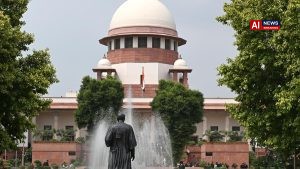
 Supreme Court refuses extension for Aravalli panel, sets November 30 deadline for final report
**

Supreme Court refuses extension for Aravalli panel, sets November 30 deadline for final report - AI News Breaking
The Supreme Court on Monday rejected a petition seeking an extension of the deadline for the Aravalli Hills expert panel, ordering the committee to submit its final report by 30 November. The ruling comes as the apex court intensifies pressure on a high‑powered committee tasked with formulating a uniform definition of the ecologically fragile Aravalli range and recommending a comprehensive framework for regulating mining activities across the region. The decision underscores the judiciary’s growing impatience with the protracted deliberations that have stalled concrete environmental safeguards for one of India’s most vulnerable mountain systems.The Aravalli panel, officially the Committee on Conservation and Sustainable Development of the Aravalli Hills, was constituted in 2022 under the aegis of the Ministry of Environment, Forest and Climate Change..
Its mandate, as outlined in the court’s earlier orders, is to harmonise the disparate definitions of the hills that currently exist across three states—Rajasthan, Gujarat and Haryana—and to propose a set of legally binding standards for mining, quarrying and related industrial activity. The panel comprises senior geologists, ecologists, forest officials and representatives of mining companies, a composition meant to balance scientific rigour with industry perspectives.In its petition, the panel argued that the complex topography of the Aravalli, combined with the need to reconcile conflicting state policies, required additional time to gather field data and conduct stakeholder consultations. The court, however, found the justification insufficient, noting that the deadline was set in response to a series of illegal mining incidents that have caused irreversible damage to the hills’ biodiversity and water resources..
“The urgency of the matter cannot be overstated,” the bench said, referring to the Supreme Court’s earlier observations that unchecked extraction threatens not only the environment but also the livelihoods of thousands of people dependent on the hills for agriculture, tourism and traditional crafts.Legal experts say the verdict sends a clear message that procedural delays will not be tolerated when environmental stakes are high. “The Supreme Court is effectively saying that the window for inaction has closed,” said Meera Sharma, a senior advocate at the Delhi High Court who has filed several public interest litigations on mining regulation. “The panel now has less than three months to produce a report that will form the basis of future legislation, and any further procrastination could invite contempt proceedings.”The panel’s upcoming report is expected to address three core issues: a scientifically robust definition of the Aravalli’s ecological boundaries, a set of criteria for assessing the environmental impact of mining projects, and a framework for community participation in decision‑making..
Draft proposals circulated among the members indicate a move towards a “zone‑based” approach, wherein core conservation areas would be strictly off‑limits to mining, while peripheral zones could allow limited extraction subject to stringent environmental clearances. The draft also recommends the creation of a dedicated monitoring agency equipped with satellite‑based surveillance and real‑time data analytics to track illegal operations.Industry stakeholders have expressed cautious optimism about the panel’s direction. The Confederation of Indian Industry (CII) released a statement acknowledging the Supreme Court’s deadline and pledging cooperation with the panel’s recommendations..
“Sustainable mining is not only an environmental imperative but also a long‑term economic necessity,” the statement read. However, senior executives from major mining firms have warned that overly restrictive definitions could hamper investment and lead to job losses in regions where mining remains a primary source of income.Environmental NGOs remain skeptical, insisting that the panel’s composition still gives undue weight to corporate interests. “The presence of industry representatives on a committee meant to protect a fragile ecosystem is a conflict of interest that cannot be ignored,” said Anjali Verma, director of the Green Earth Foundation, which has been campaigning for a total ban on mining in the most vulnerable zones of the Aravalli..
Verma added that past reports on the hills have been watered down under pressure from powerful mining lobbies, leading to weak enforcement and repeated violations of existing environmental laws.State governments, too, are watching the developments closely. Rajasthan’s Chief Minister, who heads the state’s mining department, has indicated willingness to align state policies with the panel’s recommendations, but has also hinted at the need for “pragmatic solutions” that consider the economic realities of mining‑dependent districts. Gujarat, whose industrial sector relies heavily on raw materials sourced from the hills, has called for a phased implementation of any new regulations, citing concerns over supply chain disruptions.The Supreme Court’s order also reiterates the principle that any final report submitted after the stipulated date will be subject to judicial review, and non‑compliance could attract punitive measures, including the imposition of fines on the responsible officials..
The court’s bench, comprising Justice D.Y. Chandrachud and Justice N.V. Ramana, emphasised that the deadline is “non‑negotiable” and that the panel must demonstrate concrete progress rather than procedural formalities..
“The eyes of the nation, and indeed the world, are on the Aravalli,” Justice Chandrachud observed, “and this Court will not stand by while irreversible damage continues.”As the 30 November deadline approaches, the Aravalli panel faces a daunting task: to synthesize scientific research, reconcile divergent state policies, and accommodate legitimate industry concerns, all while delivering a robust framework that can withstand judicial scrutiny and public scrutiny alike. The outcome will likely shape the future of mining regulation not only in the Aravalli hills but also set a precedent for how India balances development with environmental stewardship in other ecologically sensitive regions..
Updated: September 20, 2026
Insight: The Supreme Court’s hard deadline forces the panel to move from endless debate to decisive action, signaling that ecological urgency now outweighs industry lobbying. If the report delivers a tough, enforceable framework, it could become the template for India’s future clash between rapid development and fragile ecosystems.