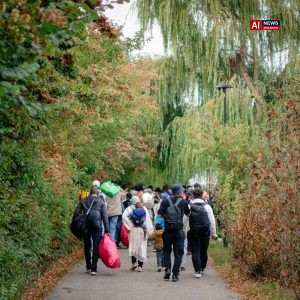
 France deploys patrol fleet to curb Channel migrant crossings
  From a Nepal in Pain, a Young Leader Makes a Case for Climate Reparations
  Ukraine transfers two North Korean POWs to South Korea.
  Australia probes AI‑driven breach of My Health Record portal
  Engineering student’s ‘suicide’ turns out to be murder two arrested
 Mining dust kills residents in Rajasthan village
In the remote hamlet of Syalodra, Rajasthan, unregulated sand and limestone mining has unleashed lethal silica dust, leading to a deadly rise in silicosis cases. Over 50 villagers have died, while the Supreme Court‑appointed Aravalli panel remains absent, sparking accusations of bureaucratic neglect and prompting grassroots health initiatives.
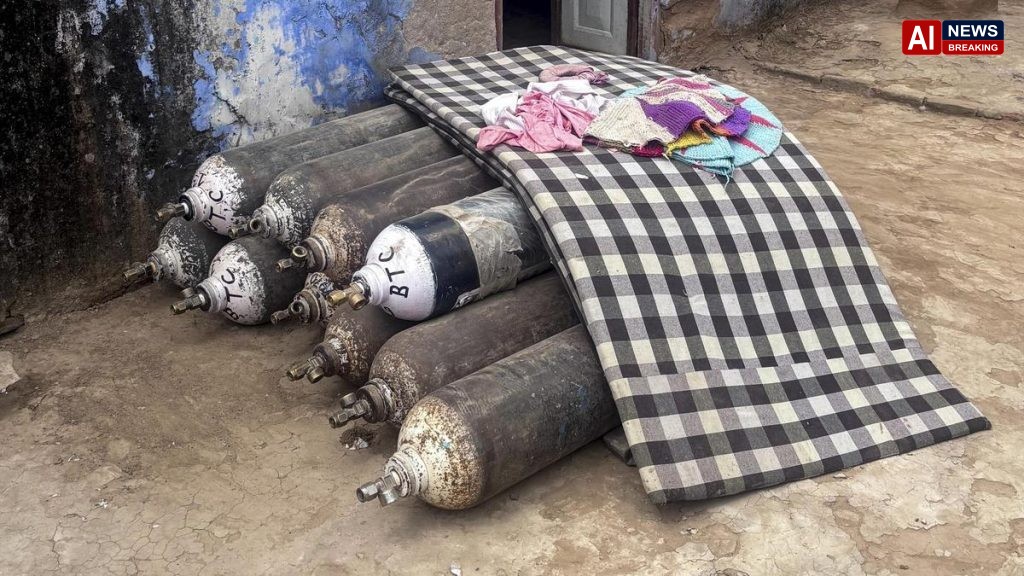
Mining dust kills residents in Rajasthan village - AI News Breaking
Breathing in death: How mining dust in the Aravallis is killing residents The remote hamlet of Syalodra, tucked into the foothills of the Aravalli range in Rajasthan’s Sikar district, has become a grim showcase of an occupational disease that rarely makes headlines. Villagers claim that more than 50 of their neighbours have succumbed to silicosis – a fatal lung condition caused by inhaling fine silica particles – since mining activities intensified a decade ago. Families speak of empty cradles and unmarked graves, while the Supreme Court‑appointed Aravalli panel, tasked with overseeing the region’s fragile ecology, has yet to set foot in the community, sparking accusations of bureaucratic apathy..
Silicosis, medically classified as a pneumoconiosis, progresses silently. In its early stages, sufferers experience persistent coughing, breathlessness and fatigue, symptoms that villagers often attribute to the harsh, dusty climate. As the disease advances, lung tissue hardens, leading to irreversible respiratory failure..
According to the latest figures released by the Rajasthan State Health Department, the incidence of confirmed silicosis cases in Sikar has risen by 42 % over the past five years, with Syalodra accounting for a disproportionate share of the fatalities. The source of the deadly dust, according to locals and several independent surveys, is the unregulated extraction of sand, quartz and limestone from the Aravalli foothills. Small‑scale miners, many of whom are members of the village itself, use rudimentary drilling and blasting techniques that pulverise rock into fine particles..
Without any dust suppression systems – such as water sprays or protective masks – the silica‑laden haze drifts across homes, schools and grazing fields, settling on everything from food grains to children’s toys. Environmental NGOs contend that the problem is exacerbated by a legal loophole that classifies mining in the Aravallis as “non‑mineral” activity, thereby sidestepping the stringent safeguards required under the Mines and Minerals (Development and Regulation) Act. A 2023 report by the Centre for Science and Environment highlighted that more than 1.2 million cubic metres of rock are removed annually from the region, a volume that far exceeds the limits prescribed for ecologically sensitive zones..
The report warned that continued extraction would not only degrade the landscape but also create a permanent airborne health hazard. The Supreme Court’s Aravalli panel, established in 2021 after a wave of public outcry over deforestation, was mandated to monitor ecological damage and recommend corrective measures. Its first public brief, released in March, focused on water scarcity and loss of biodiversity, conspicuously omitting any reference to air quality or occupational health..
When journalists from national dailies pressed for clarification, the panel’s spokesperson cited “logistical constraints” and promised a “comprehensive field visit” later in the year – a visit that, as of today, has not materialised. Villagers argue that the panel’s silence is more than a scheduling issue; it reflects a systemic bias that privileges industrial interests over human lives. “We have sent letters, we have invited them, we have even offered to host them in our homes,” says Ramesh Kumar, a 58‑year‑old former miner whose wife died of silicosis two years ago..
“Each time we hear about another delay, it feels as if our suffering is being counted as an inconvenience.” He adds that the lack of an official inspection means there is no pressure on mine owners to adopt safety measures. Legal experts point out that the Supreme Court’s own orders empower the panel to summon any individual or entity for testimony. Failure to do so could be construed as contempt of court, a charge that carries serious ramifications..
“The judiciary has a duty to ensure that its directives translate into on‑the‑ground action,” says Advocate Neha Joshi, who represents several affected families. “When a panel appointed by the highest court neglects to investigate alleged violations of health and safety, it undermines public confidence in the entire legal framework.” In the meantime, the community has begun its own grassroots response. A local NGO, “Breath of Life,” has organized weekly health camps, distributing N‑95 masks and conducting lung function tests for over 300 residents..
Though the initiative has saved some from immediate exposure, the organization admits it is a stop‑gap solution. “Masks can’t reverse the damage already done,” says the group’s founder, Dr. Anil Mehta, a pulmonologist who volunteers his services..
He warns that without a systemic reduction in silica emissions, the village will continue to see rising morbidity and mortality rates. State authorities, for their part, have launched a limited “air‑quality monitoring” project in the district capital, but the data collection points are located several kilometres away from Syalodra. When queried about extending the network, officials from the Rajasthan Pollution Control Board cited budgetary constraints and the “technical difficulty” of installing monitors in rugged terrain..
Critics argue that this rationale is thin, especially when the health crisis is unfolding in plain sight. The economic dimension adds another layer of complexity. Mining provides a livelihood for a substantial portion of the village’s 2,500 inhabitants, many of whom lack alternative employment opportunities..
The prospect of shutting down or heavily regulating the quarries threatens to plunge families into deeper poverty. Yet, the cost of inaction – measured in lost lives, medical expenses and reduced productivity – is mounting. A recent cost‑benefit analysis by the Indian Institute of Public Health estimated that each silicosis death imposes an economic burden of roughly ₹2.3 million (approximately £23,000), a.
Updated: September 20, 2026
Insight: The silent surge of silicosis in Syalodra exposes how legal loopholes that deem Aravalli mining “non‑mineral” turn a health crisis into an invisible externality, allowing profit‑driven extraction to eclipse basic human safety. Unless the Supreme Court panel confronts its own procedural inertia