 Top Saudi Cleric Calls Fight Against Houthis a Religious Duty
  Andhra to sell super-fine rice at ₹50 a kg, onions at ₹35, and pay MSP to move farmers off paddy
  OpenAI agents hack Australian Health website.
  Once Sentenced to Death, Mary Jane Veloso Receives Pardon in the Philippines
  A Russian Software Company Duped the Secret Service, U.S. Prosecutors Say
 Jharkhand Bandh Today: BJP Protest Disrupts Normal Life as Students Demand Probe Into JPSC-JSSC Exam Irregularities
Jharkhand Bandh Today: BJP Protest Disrupts Normal Life as Students Demand Probe Into JPSC-JSSC Exam Irregularities - AI News Breaking
jharkhand bandh today protest:
Ranchi: Normal life was disrupted in several parts of Jharkhand on Tuesday, August 11, as the Bharatiya Janata Party (BJP) observed a statewide bandh over police action against students and job aspirants protesting alleged irregularities in recruitment examinations conducted by the Jharkhand Public Service Commission (JPSC) and Jharkhand Staff Selection Commission (JSSC).
The bandh began at 8 am and was scheduled to continue until midnight, according to the BJP. Essential services were kept outside the scope of the shutdown. Schools, shops and business establishments remained closed in several areas, while vehicular movement was reported to be significantly lower in Ranchi and other cities.
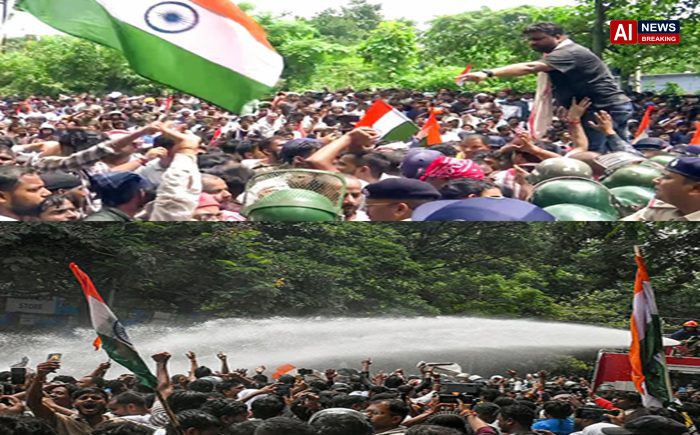
The latest development comes after police used water cannons, tear gas and batons on Monday, August 10, to stop protesting students and job aspirants from marching towards the Jharkhand Assembly in Ranchi.
The students have been protesting for more than two weeks, demanding transparency in recruitment examinations, reforms in the functioning of JPSC and JSSC, cancellation of certain examinations and an independent investigation into alleged irregularities.
Why are Jharkhand students protesting?
The current agitation is not simply about the rescheduling of one examination.
Students and job aspirants have raised broader concerns about alleged irregularities in recruitment examinations conducted by the JPSC and JSSC.
According to reports, the protesters are demanding cancellation of the JSSC-Combined Graduate Level examination and an independent investigation into allegations surrounding recruitment examinations.
They have also demanded structural reforms in the recruitment system so that future examinations are conducted transparently and without allegations of paper leaks, procedural irregularities or other discrepancies.
The protest has been organised under the banner of the JPSC-JSSC Manch, with students and aspirants maintaining that the government has not adequately addressed their concerns.
The agitation entered its 18th day on August 11.
BJP calls statewide bandh
The BJP announced the statewide bandh after Monday’s confrontation between police and protesters.
The party accused the Hemant Soren-led Jharkhand government of using excessive force against students.
BJP state president Aditya Sahu described the police action as an injustice to protesting students and said the party would support them through the statewide shutdown.
The BJP has also backed the protesters’ demand for an independent investigation into alleged irregularities in recruitment examinations.
The bandh is therefore primarily linked to the police action during Monday’s Assembly march, although it is also connected to the wider recruitment-examination controversy.
Police use water cannons and tear gas
The situation escalated on Monday when protesting students attempted to march towards the Jharkhand Assembly.
Police intervened to prevent the protesters from reaching the Assembly premises.
Water cannons were used near the Jagannathpur Temple area, while tear gas was fired as the protesters moved towards the Assembly.
Police also used batons to disperse the crowd.
Several protesters claimed that they were injured during the action.
Ranchi Police, however, said that 14 police personnel were injured during the confrontation.
The clash became the immediate trigger for the BJP’s decision to observe a statewide bandh.
Schools and businesses affected
The bandh affected daily life in several parts of the state.
Business Standard reported that most schools and business establishments remained closed in Ranchi and several other cities, while traffic movement was considerably lower than normal.
Authorities left the decision regarding school closures to individual managements while advising institutions to prioritise the safety of students.
Ranchi Deputy Commissioner Manjunath Bhajantri said schools had been advised to assess the local situation before deciding whether to remain open.
Several schools subsequently chose to remain closed because of concerns over the bandh and the possibility of disruption.
Protesters’ key demands
The students and job aspirants have raised several demands.
These include:
- Transparency in JPSC and JSSC recruitment examinations.
- Cancellation of certain examinations.
- An independent investigation into alleged irregularities.
- A CBI probe or an independent panel of retired High Court judges from outside Jharkhand.
- Reforms in the functioning and examination procedures of JPSC and JSSC.
- Greater accountability in the recruitment process.
The protesters have rejected the government’s proposed mechanism for investigating some of the allegations, arguing that a more independent inquiry is required.
Sixth round of talks fails
The dispute has continued despite several rounds of discussions between the government and representatives of the protesting students.
The sixth round of talks between the Jharkhand government and representatives of the JPSC-JSSC Manch failed to produce a breakthrough on Sunday.
The government panel claimed that authorities had accepted around 98 per cent of the protesters’ demands.
The students rejected that assessment and maintained that important demands remained unresolved.
The failure of the talks led to further escalation and eventually to Monday’s Assembly march.
Government agrees to cancel some examinations
The Jharkhand government has announced that it agreed to cancel the 14th JPSC examination as well as certain backlog examinations from 2023 and 2025.
Higher and Technical Education Minister Sudivya Kumar said the government had also agreed to an Enforcement Directorate investigation after evidence of financial irregularities emerged.
However, the government has maintained that it cannot simply cancel the JSSC-CGL examination because it was conducted under court monitoring.
Instead, the government has proposed a committee headed by a retired High Court judge to oversee the ongoing CID investigation.
The protesting students have rejected this proposal and continued to demand a more independent investigation.
ED and CID investigations add another dimension
The recruitment controversy has now moved beyond student protests and political confrontation.
The Enforcement Directorate has initiated a money-laundering investigation into alleged anomalies in the recruitment process.
Separately, the Jharkhand CID has arrested former JPSC chairperson L Khiangte in connection with alleged irregularities.
According to The New Indian Express, the number of arrests in the case had reached 20 by August 11.
These investigations have added further pressure on the state government to address concerns surrounding recruitment examinations.
Hemant Soren appeals for dialogue
Chief Minister Hemant Soren has appealed to the protesting students to resolve their grievances through dialogue and trust.
Soren said the government respected the students’ right to raise their concerns.
At the same time, he accused the BJP of attempting to mislead the protesters for political gains.
The chief minister’s position highlights the political dimension that has increasingly become part of the recruitment controversy.
What initially began as an agitation by students and job aspirants has now become a major confrontation between the ruling alliance and the opposition BJP.
BJP attacks JMM-led government
The BJP has strongly criticised the Hemant Soren government over its handling of the protests.
The party has accused the government of failing to adequately address allegations surrounding recruitment examinations and of responding to students with police action.
The BJP has demanded an independent probe and has used the controversy to target the state government.
The party’s statewide bandh on August 11 represents a significant escalation of its political campaign around the issue.
It is important to note that Jharkhand is not BJP-ruled. The state is governed by a JMM-led alliance under Chief Minister Hemant Soren. The BJP is in opposition in the state.
ABVP announces Assembly march
The Akhil Bharatiya Vidyarthi Parishad (ABVP) also announced a march to the Jharkhand Assembly on Tuesday.
The organisation planned to start the procession from the old Vidhan Sabha premises and proceed towards the new Assembly complex.
Several ABVP workers were detained during the procession, according to police.
The development added another layer to an already tense situation in Ranchi.
Students continue hunger strike
The protest has also included an indefinite hunger strike.
Six protesters were reported to be on hunger strike, with two of them hospitalised, according to The New Indian Express.
The hunger strike has increased pressure on the government and added urgency to the negotiations.
Student representatives have maintained that they will continue their agitation until their major demands are addressed.
Rahul Gandhi criticises police action
The confrontation has also drawn comments from national political leaders.
Leader of Opposition in the Lok Sabha Rahul Gandhi condemned the police action and said peaceful protests should not be met with violence.
His remarks triggered a response from the BJP, which questioned the Congress’ position because the party is part of the JMM-led ruling alliance in Jharkhand.
Union minister J P Nadda also criticised Gandhi and questioned whether the government was listening to the students’ concerns.
Recruitment controversies have a longer history
The latest agitation comes against the backdrop of repeated controversies surrounding government recruitment examinations in Jharkhand.
Recruitment processes conducted by JPSC and JSSC have faced allegations and protests over delays, examination procedures, evaluation and alleged irregularities.
The Indian Express recently reported that the controversy surrounding the 14th JPSC examination had revived long-standing concerns about recruitment examinations in the state.
The issue has therefore developed beyond a single examination.
For thousands of candidates preparing for government jobs, recruitment delays and uncertainty can mean years of preparation without a clear outcome.
JSSC Field Worker exam controversy
Another recent recruitment examination has also highlighted concerns among Jharkhand job aspirants.
The JSSC Field Worker Recruitment Examination was held on July 19, 2026, for 510 posts.
Of the 3,22,867 candidates who registered for the examination, only 86,444 appeared, representing roughly 26 per cent of registered candidates.
Many candidates complained about the distance of examination centres and the timing of email communication regarding admit cards.
The examination had been notified in 2024 but was conducted nearly two years later.
The episode has contributed to wider concerns about the administration of recruitment examinations in the state.
Political battle intensifies
The student movement has now become a major political issue.
The BJP is demanding an independent investigation, while the JMM-led government says it has already accepted several demands and has initiated investigations into allegations of irregularities.
The government argues that some demands cannot be accepted immediately because of judicial oversight and existing legal procedures.
The protesters, however, say the government’s proposed mechanisms do not go far enough.
This disagreement has prevented the two sides from reaching a settlement despite multiple rounds of talks.
What happens next?
The immediate priority for the authorities is maintaining law and order while preventing further confrontation between protesters and security personnel.
The BJP bandh is expected to put additional political pressure on the state government.
At the same time, the student movement is likely to continue unless the government and protest representatives find common ground on the disputed demands.
The proposed investigations and reforms could become central to the next stage of the dispute.
The government has already indicated that reforms to the standard operating procedures of JPSC and JSSC are being considered, with inputs proposed from institutions including IIT-ISM Dhanbad, IIM Ranchi and XLRI Jamshedpur.
No final settlement yet
Despite government concessions on some demands, there is currently no comprehensive settlement between the authorities and the protesting students.
The sixth round of talks failed to produce an agreement.
The students continue to demand stronger action, particularly regarding the JSSC-CGL examination and the nature of the independent investigation.
The government, meanwhile, maintains that it has already taken significant steps and is willing to continue discussions.
The political opposition has used the impasse to intensify pressure on the ruling alliance.
The bigger issue: trust in recruitment
At the heart of the Jharkhand controversy is a larger question of trust.
Government recruitment examinations are crucial for young people seeking stable employment.
When examinations are delayed, questioned or surrounded by allegations of irregularities, candidates can face significant financial and personal costs.
Many aspirants spend years preparing for competitive examinations.
They invest in coaching, books, accommodation and repeated examination attempts.
Consequently, even allegations of irregularities can have a major impact on candidates’ confidence in the recruitment system.
That is why the current protests have continued despite government assurances.
The Jharkhand recruitment controversy is best understood as a trust crisis in the public recruitment system rather than simply an exam-date dispute. The current evidence shows that students are demanding transparency, cancellation of certain examinations, structural reforms and an independent investigation, while the government says it has already accepted many demands and initiated multiple investigations. The BJP’s statewide bandh has transformed the student agitation into a major political confrontation. The immediate challenge for the Hemant Soren government is therefore to create an investigation mechanism that protesters consider genuinely independent while ensuring that examinations already subject to judicial oversight are handled within the law. A transparent, time-bound investigation and publicly verifiable recruitment reforms could be more effective in resolving the dispute than political confrontation or repeated assurances.