The Supreme Court will decide whether assault weapons bans violate the Second Amendment
 A Critic of Beijing Falls Short in Taiwan’s Key Mayoral Election
 EPA says no rise in contamination after Army detonates lead azide stockpile in Iowa
 Israeli Strike Kills 2 Workers at Gaza Clinic, Doctors Without Borders Says
 McQueen Pre-Fall 2027
Kejriwal says Delhi government met all election promises.
**
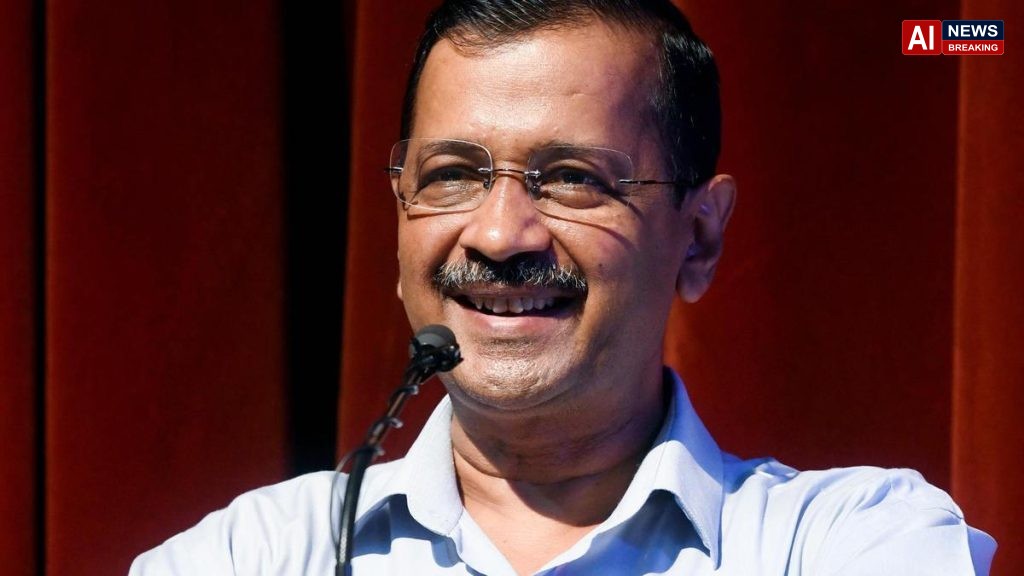
All election guarantees fulfilled, says Arvind Kejriwal; Opposition slams AAP of misusing public resources - AI News Breaking
All election guarantees fulfilled, says Arvind Kejriwal; Opposition slams AAP of misusing public resources Delhi chief minister Arvind Kejriwal, addressing a gathering in New Delhi on Wednesday, asserted that his administration had honoured every promise made during the 2020 Assembly elections. He highlighted the launch of free public transport, the establishment of a new health insurance scheme and the rollout of a comprehensive water‑purification programme as evidence of his government’s commitment to the electorate. Kejriwal added that the Aam Aadmi Party (AAP) remained focused on delivering tangible benefits to citizens, despite growing criticism from rival parties across the country..
The remarks came as the opposition, led by the Congress and the Shiromani Akali Dal (SAD), launched a coordinated attack on the AAP’s handling of a recent political rally in Punjab. The event, held in the city of Amritsar, was billed as a “public outreach” programme but was alleged by opposition leaders to have been staged using state‑owned venues, official security personnel and government‑funded transport services. Critics argue that such utilisation of public assets for partisan purposes contravenes the norms of a fair electoral contest..
In a press conference later that day, Congress leader Amarinder Singh accused the AAP of “blurring the line between governance and party politics”. Singh pointed to the deployment of Punjab’s police force to manage traffic and crowd control at the rally, a task he claimed should have been overseen by private security hired by the party. He also referenced invoices submitted by the state’s transport department, suggesting that government buses had been allocated to ferry party workers and supporters at no cost to the organisation..
The Shiromani Akali Dal, which governs Punjab in coalition with the BJP, echoed these concerns. SAD president Sukhbir Singh Badal warned that the misuse of public resources could exacerbate the state’s already precarious fiscal situation. Badal cited recent audit reports indicating a widening budget deficit, with a shortfall of nearly ₹8,000 crore projected for the current financial year..
He warned that diverting state assets to political events undermines public trust and threatens essential service delivery. AAP officials, however, defended the rally as a legitimate exercise of democratic rights. Party spokesperson Manish Sisodia argued that the event was open to the public and that the use of government facilities was permissible under existing law, provided no additional cost was incurred by the state..
He cited a precedent set by previous administrations, where public spaces such as community halls and parks have been utilised for political gatherings without breaching fiscal regulations. Sisodia also stressed that the rally’s primary aim was to disseminate information about the party’s policy proposals for Punjab’s development. Financial analysts monitoring Punjab’s economy have warned that any perceived misallocation of resources could have broader implications..
According to a recent report by the Centre for Fiscal Studies, the state’s revenue generation has stalled, with tax collections falling short of targets by 12 per cent. The report warned that continued political spending without clear accountability could deepen the fiscal gap, forcing the government to seek additional borrowing or cut back on essential public programmes such as education and healthcare. The controversy has also sparked a debate in Parliament, where opposition MPs have called for a parliamentary committee to investigate the matter..
Several legislators have submitted motions demanding transparency in the allocation of state assets for political events, citing the need for a clear demarcation between state functions and party activities. The ruling coalition, meanwhile, has dismissed the calls as “politically motivated” attempts to undermine the AAP’s governance record. Kejriwal, while acknowledging the opposition’s concerns, insisted that the allegations were “misguided”..
He argued that the Delhi government has consistently set a benchmark for efficient use of public funds, citing the low cost of its welfare schemes and the high satisfaction ratings among beneficiaries. Kejriwal also warned that focusing on procedural disputes detracts from pressing issues such as unemployment, inflation and the looming climate crisis, which require collaborative action across party lines. In Punjab, the situation remains tense as civil society groups weigh in on the debate..
The Punjab Civil Liberties Forum released a statement urging both the government and opposition to prioritise the welfare of citizens over partisan battles. The forum called for an independent audit of all state‑funded events held in the past twelve months, recommending that any irregularities be addressed through judicial review. Their stance reflects a broader public fatigue with political bickering amid daily hardships..
The AAP’s response to the audit demand has been cautious. Party insiders suggest that while the leadership does not object to scrutiny, they fear that an extensive audit could be used as a tool for political retaliation. Sources close to the party claim that internal mechanisms are already in place to monitor expenditure related to political activities, and that any findings of misuse would be dealt with internally, in accordance with party discipline..
As the election season approaches, the dispute over resource usage is likely to become a focal point in campaign narratives across northern India. Analysts predict that the opposition will leverage the issue to question the AAP’s credibility, especially in regions where the party is seeking to expand its footprint beyond Delhi and Punjab. Conversely, the AAP may seek to portray the criticism as an attempt to derail its development agenda, emphasizing its record of delivering public services without increasing taxes..
The unfolding episode underscores the delicate balance between political mobilisation and fiscal responsibility in India’s federal system..
Delhi Chief Minister Arvind Kejriwal claimed his government has delivered on all 2020 election promises, citing free transport, a new health‑insurance scheme and a water‑purification drive, while opposition parties accuse the AAP of diverting state assets for a Punjab rally and demand a probe into alleged misuse of public resources. The dispute highlights a growing partisan battle over fiscal propriety as the AAP seeks to expand its foothold beyond Delhi ahead of upcoming elections.
If AAP’s blurring of state machinery with campaign logistics persists, the party risks turning its governance laurels into a liability that fuels fiscal anxiety and erodes the credibility it touts for expansion.
The backlash also signals a broader voter fatigue: citizens may soon demand a hard line on resource misuse, forcing every regional contender to prove that development can be decoupled from overt partisan patronage.