 NASA outlines Artemis III test flight plan
  Sacha Baron Cohen Says Donald Trump Has ‘Elements of Brilliance’ and ‘We Were Too Easy to Dismiss Him as a Nincompoop’
  Legal action ordered against officials over irregularities in voter list in Pilibhit
  Floods force evacuations and rooftop rescues
  Revival Rugs Birthday Sale: 20 Percent Off Sitewide Through Sunday
 Kerala Human Rights Commission orders Kochi corporation to repair street lights.
**
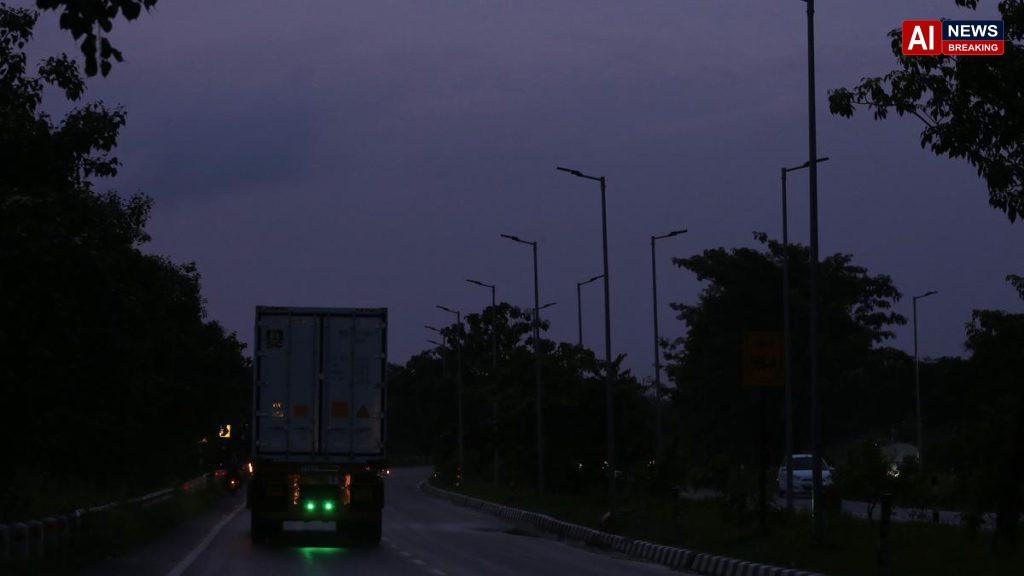
Kerala Human Rights Commission orders Kochi corporation to repair street lights. - AI News Breaking
The Kerala State Human Rights Commission has issued a stern directive to the Kochi Municipal Corporation, mandating immediate repairs to damaged street lights across the city. The order comes in the wake of numerous complaints from residents regarding the inadequate and non-functional lighting systems in various wards, which have been cited as a significant security risk. The Commission, acting on a petition filed by local citizens, emphasized that the right to safety is an intrinsic part of the Right to Life under Article 21 of the Constitution of India..
Consequently, the state body has directed the corporation ary to treat these complaints with the highest level of priority and to submit a comprehensive action-taken report within three weeks.The directive underscores the critical role that functional street lighting plays in maintaining public order and ensuring the safety of citizens, particularly during nighttime hours. In its interim order, the Commission highlighted that the absence of adequate lighting not only facilitates criminal activities but also creates an atmosphere of fear and insecurity among the populace. The body noted that repeated failures by the municipal authorities to address these issues violate the fundamental rights of the residents..
The order specifically calls for an immediate assessment of all damaged or non-functional street lights within the corporation limits, with a timetable for their repair or replacement to be submitted to the Commission.Residents of Kochi, particularly those living in older parts of the city and peripheral wards, have long complained about the erratic functioning of street lights. Many neighborhoods have faced prolonged periods of darkness due to burnt-out bulbs, damaged wires, or faulty switches. These issues have been exacerbated by the lack of a responsive maintenance mechanism within the municipal corporation..
Petitioners before the Commission argued that the negligence of the local authorities has led to a rise in petty crimes, thefts, and harassment incidents, especially affecting women and elderly citizens who rely on safe public spaces after dark. The Commission acknowledged these concerns, stating that the state has a constitutional obligation to provide essential civic amenities that ensure the well-being and security of its citizens.The Kochi Corporation ary has been directed to constitute a special monitoring committee to oversee the repair work. This committee is expected to coordinate with the electrical department and other relevant units to ensure that repairs are carried out swiftly and efficiently..
The Commission stated that the report filed in three weeks should include details of the number of lights inspected, the number repaired, the sources of funds allocated for the work, and the timeline for completing pending repairs. Failure to comply with the directive may result in contempt proceedings against the responsible officials. The body also advised the corporation to establish a grievance redressal mechanism that allows citizens to report faulty street lights directly, with a guaranteed response time for repairs.Legal experts suggest that the Commission’s intervention marks a significant shift in how civic issues are addressed in Kerala..
By invoking the Right to Life, the state body has elevated the issue of street lighting from a mere administrative inconvenience to a matter of fundamental rights. This approach is likely to set a precedent for other civic issues, such as pothole-filled roads, inadequate waste management, and water shortages, which also impact public safety and health. The directive reflects a growing judicial and quasi-judicial activism in holding local government bodies accountable for their civic responsibilities.However, municipal authorities have historically faced challenges in maintaining infrastructure due to budgetary constraints and bureaucratic delays..
The Kochi Corporation, like many urban local bodies in India, operates under financial limitations that often hinder timely maintenance. The recent order puts pressure on the corporation to prioritize spending on civic amenities rather than deferring them for administrative convenience. Critics argue that while the Commission’s order is necessary, long-term solutions require structural reforms in how municipal budgets are allocated and monitored..
There is also a need for transparency in expenditures related to civic maintenance to prevent fund misallocation.In response to the Commission’s order, the Kochi Corporation administration has assured compliance. Officials stated that they have already initiated a survey of the affected areas and have begun the process of identifying the specific locations of damaged street lights. The corporation has also mentioned that it is exploring options for upgrading the existing infrastructure, including the installation of energy-efficient LED lights, which are more durable and consume less power..
This shift towards modern technology is seen as a step towards sustainable urban governance, although the immediate focus remains on repairing the existing network.Civil society groups in Kochi have welcomed the Commission’s directive, viewing it as a victory for citizen activism. Local rights organizations argue that such interventions are crucial for empowering citizens to demand better civic services. They emphasize that accountability at the local level is essential for democratic governance..
These groups have urged the corporation to involve resident welfare associations in the monitoring process, suggesting that community participation can enhance the efficiency of maintenance operations. They also call for regular public hearings where municipal officials can be questioned about their performance in providing basic civic amenities.The issue of street lighting in Kochi is not isolated but reflects broader challenges faced by rapidly urbanizing cities in India. As cities expand, the demand for civic infrastructure often outpaces the capacity of local governments to provide and maintain it..
This gap leads to a decline in the quality of life for urban residents and exacerbates social inequalities. The Commission’s order highlights the need for proactive urban planning and adequate funding for municipal corporations. It also underscores the importance of technology in civic management, such as the use of smart city solutions to monitor and maintain infrastructure in real time.Furthermore, the directive serves as a reminder to local governments that their mandate extends beyond revenue collection and property tax administration..
It includes the responsibility to provide a safe and secure environment for residents. The absence of functional street lighting not only affects physical safety but also impacts the social and economic life of the city. Businesses suffer from reduced nighttime activity, and social interactions are curtailed due to fear of crime and harassment..
Therefore, addressing such civic issues is integral to the overall development and prosperity of the urban center.As the three-week deadline approaches, all eyes will be on the Kochi Corporation to see if it can deliver on the Commission’s mandate. The effectiveness of the repair drive will be judged not only by the number of lights fixed but also by the sustainability of the repairs and the responsiveness of the administration to future complaints. If successful, this initiative could serve as a model for other municipalities in Kerala and beyond..
However, if the corporation fails to meet the timeline or if the repairs prove to be temporary fixes, the Commission may need to take further action to ensure compliance. Situation in Kochi remains a test case for the interplay between citizen rights, judicial oversight, and municipal accountability in modern India. The outcome will likely influence how civic grievances are handled in other parts of the country, reinforcing the principle that safe public spaces are a fundamental right, not a privilege..
Updated: August 19, 2026
Summary: The Kerala Human Rights Commission has ordered Kochi’s municipal corporation to promptly repair faulty street lighting, citing safety as a fundamental right under Article 21. The body set a three‑week deadline for an action report and warned of contempt proceedings if the repairs are not completed.
Kochi’s lighting saga shows how a single, everyday nuisance can become a litmus test for constitutional accountability, turning municipal neglect into a rights‑based battlefield. If the city can convert forced compliance into lasting, community‑driven maintenance, it may spark a ripple of citizen‑emp