Trump administration offers mixed messages on limits to Ukraine’s Starshield access
 US Treasury proposes a rule to crack down on high-tech investments in China, other adversaries
 Calley Means, a key MAHA advocate, resigns as a top RFK Jr. adviser
 Spotify Tightens Family Plan Controls with QR Code Verification
 Use of Chief Minister C. Joseph Vijay’s deep fake videos to collect money: Rajasthan youth moves Madras High Court seeking bail
Keralam Assembly passes resolution seeking removal of CEC Gyanesh Kumar, steps to restore credibility of ECI
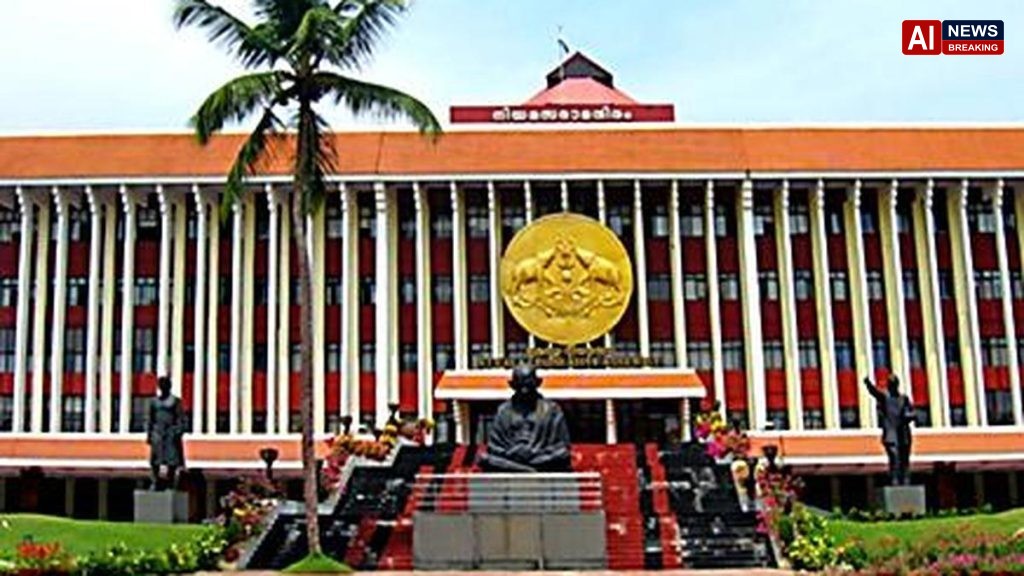
Keralam Assembly passes resolution seeking removal of CEC Gyanesh Kumar, steps to restore credibility of ECI - AI News Breaking
In the early hours of Tuesday, the Kerala Legislative Assembly adopted a resolution demanding the removal of Chief Electoral Commissioner Gyanesh Kumar from his post and calling for comprehensive reforms to restore credibility to the Election Commission of India (ECI). The motion, tabled by a coalition of opposition parties and supported by a narrow majority, underscores growing concerns about the integrity of India’s electoral process, particularly the handling of the Special Intensive Revision (SIR) of electoral rolls. While the resolution itself is a political statement, the underlying issues it raises touch on broader questions about democratic governance and electoral administration.The resolution, introduced by the opposition leader in the assembly, highlights two main grievances..
First, it alleges that the current SIR has been executed with “defects” that compromise the accuracy of voter lists, thereby denying the voting rights of thousands of eligible citizens. Second, it accuses Chief Electoral Commissioner Gyanesh Kumar of failing to address these flaws effectively, arguing that his continued tenure undermines public confidence in the electoral process. The motion calls on the central government to dismiss Kumar and to appoint a new head who will take “decisive steps to restore the credibility of the Election Commission.”The SIR, a nationwide exercise conducted annually by the ECI, aims to update and verify voter registration lists before each general election..
However, it has faced criticism for errors ranging from duplicate entries to the inadvertent removal of voters’ names. In Kerala, the most recent revision was conducted in early 2024, during which thousands of voters were reportedly excluded from the rolls. Opposition leaders claim that many of those excluded are legitimate voters who were either overlooked or incorrectly flagged as duplicates..
The result, they argue, is a disenfranchisement that could skew election outcomes, particularly in a state where political margins are often razor-thin.Chief Electoral Commissioner Gyanesh Kumar, appointed by the central government in 2022, has been a figure of contention since taking office. Critics point to a series of administrative lapses, including delays in publishing revised voter lists and inadequate communication with state election authorities. The Kerala resolution specifically calls out these shortcomings, suggesting that the SIR’s flaws are symptomatic of deeper systemic weaknesses..
It also points to Kumar’s perceived reluctance to engage with state election bodies, which has hampered collaborative efforts to rectify errors.The demand for Kumar’s removal reflects a broader trend of political actors seeking to hold electoral officials accountable. In recent months, several states have expressed dissatisfaction with the central ECI’s handling of electoral rolls, leading to calls for greater state autonomy in roll maintenance. Kerala’s motion joins a growing chorus that argues for a more transparent and inclusive process, one that ensures every eligible voter has a clear and uninterrupted path to the ballot box..
While the resolution itself is a political instrument, it mirrors concerns that have been voiced by civil society groups, election experts, and voter advocacy organisations across the country.In the assembly debate, members from the ruling party defended the ECI’s processes, arguing that the commission’s work is governed by stringent protocols and that any errors are statistically insignificant. They cited recent audits that confirmed a high degree of accuracy in the SIR. Despite this, the opposition’s stance was that the perceived errors are not merely technical glitches but indicators of a deeper erosion of public trust..
They urged the central government to undertake an independent review of the SIR, to involve independent auditors, and to publish a transparent audit report.The resolution’s emphasis on restoring voting rights to all eligible voters points to the core democratic principle that every citizen must be able to participate in the electoral process. According to the Election Commission of India, more than 1.5 billion people were registered to vote in the 2019 general elections. Ensuring that these numbers reflect accurate and up-to-date information is essential not only for fairness but also for maintaining the legitimacy of elected bodies..
In Kerala, the state election commission has already taken steps to reconcile discrepancies, but the resolution calls for a coordinated approach at the national level that would standardise procedures across states.If the central government were to heed the resolution, it would be forced to confront the question of how the ECI’s leadership is chosen and how accountability is enforced. The Chief Electoral Commissioner is appointed by the President on the recommendation of the Election Commission’s members, a process that is intended to be insulated from political pressure. Removing a sitting chief on the grounds of procedural shortcomings would raise questions about the independence of the ECI and could potentially lead to a constitutional debate over the balance of power between the central government and independent institutions..
Critics fear that a politically motivated dismissal could erode the very independence that the ECI was designed to protect.The resolution also proposes that the central government take “steps to restore the credibility of the Election Commission.” While the specifics of these steps are left to the government’s discretion, the opposition suggests a comprehensive overhaul of the SIR methodology. This could include the adoption of more robust technology, greater citizen participation in roll verification, and the establishment of an independent oversight body. The idea is to create a system where errors can be identified and corrected swiftly, thereby reducing the risk of disenfranchisement before the next election.In the broader context of Indian democracy, the Kerala assembly’s demand reflects a growing trend of states taking a more active role in electoral oversight..
Over the past decade, several states have sought to decentralise aspects of the electoral process, arguing that state bodies are better positioned to understand local nuances and to address voter grievances. The central government has historically maintained a tight grip on the ECI, citing concerns about national uniformity and the prevention of politicisation. The current debate in Kerala may force the central authorities to re-evaluate this stance, potentially leading to a new model of shared responsibility between the central and state election bodies.The resolution’s passage is also symbolic of the intense political rivalry between the ruling party and the opposition in Kerala..
While the motion was adopted by a narrow margin, it sends a clear message that electoral integrity is a non-negotiable issue for the opposition. Whether the central government will act on the resolution remains to be seen, but the mere fact that it has entered the legislative record underscores the urgency of addressing systemic defects in electoral roll management.Looking ahead, the next general election in India is slated for 2025, giving the Election Commission a narrow window to address the concerns raised by Kerala. The commission has already announced plans to conduct a pilot project that employs biometric verification to minimise duplication and inaccuracies..
Whether this initiative will be expanded nationwide will be a critical factor in determining the public’s confidence in the electoral process.In conclusion, the Kerala assembly’s resolution demanding the removal of Chief Electoral Commissioner Gyanesh Kumar and calling for reforms to restore the Election Commission’s credibility brings to the fore critical questions about democratic governance, institutional independence,.
Updated: October 12, 2026
This development highlights evolving dynamics and may have broader implications in the near term.