Trump administration offers mixed messages on limits to Ukraine’s Starshield access
 US Treasury proposes a rule to crack down on high-tech investments in China, other adversaries
 Calley Means, a key MAHA advocate, resigns as a top RFK Jr. adviser
 Spotify Tightens Family Plan Controls with QR Code Verification
 Use of Chief Minister C. Joseph Vijay’s deep fake videos to collect money: Rajasthan youth moves Madras High Court seeking bail
Bengaluru Short Tunnel Project: BDA Addresses Groundwater Risks, Green Cover and Traffic Concerns
**
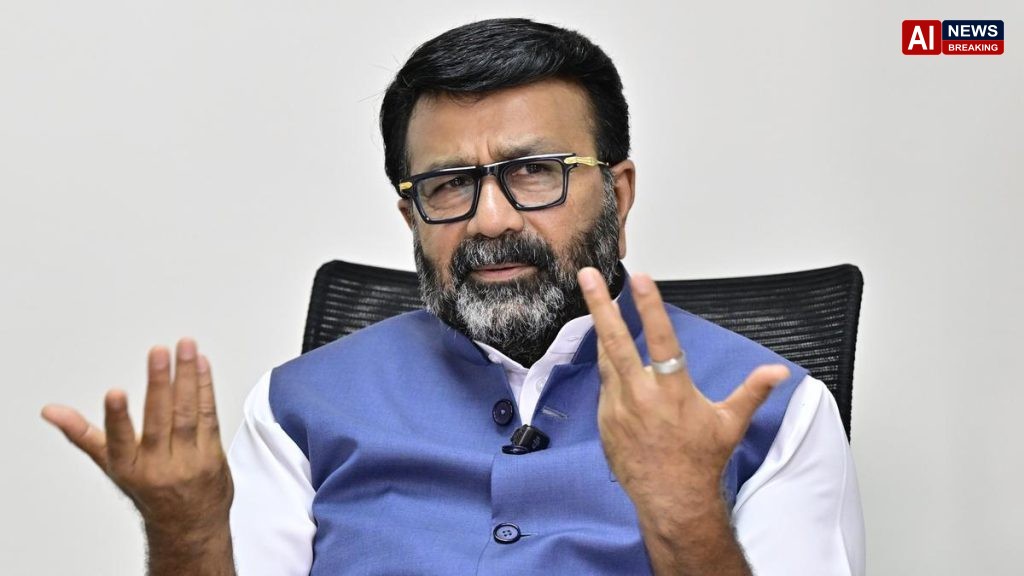
#THtalksBengaluru | N.A. Haris and the BDA’s vision for Bengaluru - AI News Breaking
The Bengaluru Development Authority (BDA) has been under increasing scrutiny as residents seek answers to a series of long‑standing urban challenges, from the environmental repercussions of a proposed short tunnel to the chronic congestion on the city’s arterial roads.
Haris, the authority’s chief executive, participated in a question‑and‑answer session organised by THtalksBengaluru, offering detailed explanations of the BDA’s current projects and future vision for the rapidly expanding metropolis.When asked about the short tunnel slated to cut through the eastern fringe of the city, Haris acknowledged that any underground work carries inherent ecological risks, particularly concerning groundwater tables and local flora. He outlined a multi‑stage environmental impact assessment (EIA) that the BDA has commissioned, noting that the study incorporates hydrogeological surveys, biodiversity audits and air‑quality monitoring..
According to Haris, the tunnel’s design incorporates a sealed lining and a sophisticated drainage system intended to minimise seepage and preserve the natural flow of aquifers that supply surrounding residential zones. He also highlighted that the project will adhere to the National Green Tribunal’s guidelines, and that an independent monitoring committee, comprising experts from the Indian Institute of Science and the Karnataka State Pollution Control Board, will oversee compliance throughout construction.Critics, however, have pointed to previous infrastructure works in Bengaluru that have been accused of inadequate mitigation measures, leading to water‑logging and loss of green cover. Haris responded that the BDA has learned from those instances and is now employing a “green‑first” approach..
He cited the inclusion of a compensatory afforestation plan, which earmarks at least five hectares of native species planting for every hectare disturbed by the tunnel. The plan also integrates community‑led stewardship programmes, allowing local residents to partake in the maintenance of the new green spaces, thereby fostering a sense of ownership and ensuring long‑term sustainability.Beyond the tunnel, several residents raised concerns about recurring civic issues in BDA‑developed layouts, such as irregular water supply, delayed waste‑collection services and the proliferation of illegal encroachments on public land. Haris conceded that the authority’s rapid expansion over the past decade has sometimes outpaced its service delivery capacity..
To address this, he announced the rollout of a digitised grievance redressal platform that will enable citizens to log complaints in real time, track resolution status and provide feedback on service quality. The platform, he explained, is linked to a performance dashboard for field officers, ensuring accountability and faster response times.In addition to the digital tool, the BDA is piloting a “smart layout” model in three newly sanctioned colonies. This model incorporates a decentralized water‑storage network, solar‑powered street lighting and an automated solid‑waste segregation system that routes recyclables directly to processing facilities..
Haris emphasized that these pilots are intended to serve as templates for future developments, aligning with the Karnataka Urban Development Policy’s objectives of creating resilient and resource‑efficient neighbourhoods.Traffic congestion, a chronic bane for Bengaluru’s commuters, featured prominently in the discussion. Haris detailed the status of three long‑pending traffic corridors that have been earmarked to decongest the city’s core: the Outer Ring Road (ORR) expansion, the Hosur Road flyover extension, and the proposed Peripheral Ring Road (PRR) linking the north and south suburbs. He revealed that the ORR widening is 80 percent complete, with the remaining stretch expected to open by mid‑2025, contingent on the clearance of land acquisition disputes..
The Hosur Road flyover, meanwhile, has faced setbacks due to contractor disputes, but a revised timeline now projects completion by the end of 2026.The Peripheral Ring Road, a 55‑kilometre project intended to provide an alternate bypass for heavy vehicles and reduce pressure on the city centre, has been awaiting final environmental clearance for over two years. Haris asserted that the BDA has submitted an updated EIA that addresses earlier concerns about habitat fragmentation and proposes the construction of wildlife underpasses at critical crossings. He noted that the state government’s recent push for “green corridors” aligns with these mitigation strategies, increasing the likelihood of swift approval.Haris also highlighted the role of public‑private partnerships (PPPs) in accelerating the delivery of traffic infrastructure..
He cited a recent agreement with a consortium of construction firms to fund and operate the PRR under a Build‑Operate‑Transfer model, with the private partner assuming construction risk in exchange for toll revenue over a 30‑year concession period. While acknowledging that tolls may raise affordability questions, Haris argued that the PPP framework ensures that projects move forward without overburdening the state’s fiscal resources, and that toll rates will be regulated by the Karnataka Transport Authority to remain within reasonable limits.When pressed on the broader vision for Bengaluru’s growth, Haris outlined a 10‑year master plan that seeks to balance expansion with livability. Central to this plan is the concept of “polycentric development,” which encourages the emergence of multiple sub‑centres across the metropolitan area, each equipped with its own commercial hubs, educational institutions and healthcare facilities..
This approach, he explained, is intended to reduce the pressure on the traditional downtown core, shorten commute times and distribute economic activity more evenly. The master plan also integrates a robust public‑transport network, including the proposed metro extensions to the eastern and western fringes, and a city‑wide network of dedicated bus rapid transit (BRT) lanes.In concluding remarks, Haris reiterated the BDA’s commitment to transparency and citizen engagement. He invited residents to participate in the upcoming “Bengaluru Futures Forum,” a series of town‑hall meetings scheduled across the city’s districts, where detailed project maps, timelines and budgetary allocations will be displayed for public scrutiny..
Haris stressed that the authority’s success hinges on collaborative effort, stating that “the challenges of a megacity like Bengaluru cannot be solved in isolation; they require the active involvement of planners, developers, and the communities they serve.” The dialogue, he said, marks a step toward rebuilding trust and aligning the BDA’s operational agenda with the aspirations of Bengaluru’s diverse populace..
Updated: October 12, 2026
BDA chief N.A. Haris answered resident concerns in a THtalksBengaluru Q&A, detailing environmental safeguards for the proposed eastern tunnel, a new digital grievance system and “smart layout” pilots aimed at greener, more efficient neighbourhoods. He also outlined progress on major traffic corridors, a polycentric 10‑year master plan and upcoming town‑hall forums to boost transparency and citizen involvement.
BDA’s “green‑first” tunnel plan signals a shift from ad‑hoc fixes to systemic resilience—yet it will only succeed if the promised monitoring truly curbs ecological damage.
The push for smart layouts and PPP‑funded rings shows Bengaluru trying to outpace its infrastructure deficit, but without robust public oversight