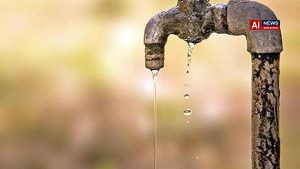
 Kochi Corporation plans water security assessment to strengthen city’s resilience
 ‘Heated Rivalry’ Superfans Hit Theaters for Shane and Ilya on the Big Screen: ‘They Invented Chemistry’
 Mass Killing in Poland Becomes Cause for a Political Fight
 Guns on Amtrak Trains? A Workers Union Is Up in Arms.
 Supreme Court clears way for Trump administration to resume Texas border wall construction.
Kochi Corporation plans water security assessment to strengthen city’s resilience
Kochi Corporation has partnered with the Kerala Water Authority on a six‑month water‑security assessment to map supply networks, identify leaks and vulnerabilities, and develop climate‑resilient strategies such as rain‑water harvesting, smart meters, and infrastructure upgrades.
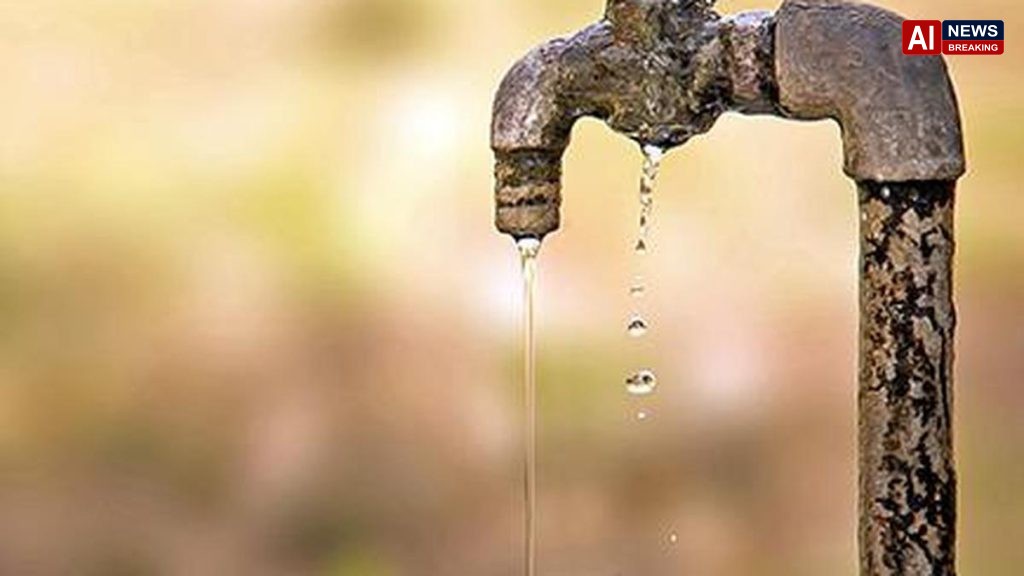
Kochi Corporation plans water security assessment to strengthen city’s resilience - AI News Breaking
Kochi Corporation has announced a comprehensive water‑security assessment aimed at bolstering the city’s resilience against future shortages and climate‑related disruptions. The initiative, slated to run for six months, will be carried out in partnership with the Kerala Water Authority, which will provide technical support and expertise throughout the evaluation. Officials say the study will map existing water‑supply networks, identify vulnerabilities in the distribution system and propose strategic interventions to safeguard the city’s water needs amid a rapidly changing environment.The city’s municipal administration highlighted that the assessment comes at a critical juncture, as urban growth, rising demand and erratic monsoon patterns have increasingly strained Kochi’s water infrastructure..
Over the past decade, the metropolitan area has seen its population swell by more than 15 per cent, driving up consumption in residential, commercial and industrial sectors. Simultaneously, climate models project a higher frequency of extreme weather events, including prolonged dry spells and intense flooding, both of which can compromise water quality and availability. By undertaking a systematic review of its water resources, the corporation hopes to develop a forward‑looking framework that can accommodate these pressures while ensuring reliable service to residents.The project’s scope encompasses a detailed audit of the city’s water‑source portfolio, which currently relies heavily on the Periyar River, a series of groundwater wells and a limited number of surface reservoirs..
Engineers will evaluate the capacity of these sources against projected demand scenarios for the next two decades, factoring in demographic trends, industrial expansion and the potential impact of sea‑level rise on coastal aquifers. In addition, the assessment will examine the condition of the distribution network, which includes a labyrinth of pipelines dating back to the mid‑20th century. Preliminary data suggest that a substantial proportion of water loss may be attributable to leakages and illegal connections, problems that have persisted despite periodic maintenance drives.Stakeholders from the private sector, civil society and academic institutions have been invited to contribute to the assessment process..
The municipal corporation aims to adopt a collaborative approach, encouraging input from water‑user groups, environmental NGOs and local research bodies. This inclusive model is intended to capture a broad spectrum of perspectives, from the concerns of low‑income neighbourhoods that often bear the brunt of supply interruptions to the insights of engineers who design and operate the city’s treatment plants. The Kerala Water Authority will facilitate workshops and stakeholder consultations, ensuring that the final recommendations reflect both technical feasibility and community priorities.One of the key objectives of the assessment is to develop a set of actionable measures that can be implemented within a realistic timeframe and budget..
Among the options under consideration are the expansion of rainwater harvesting programmes, the retrofitting of existing pipelines with leak‑detection technology, and the promotion of water‑reuse schemes in industrial parks. Authorities also plan to explore the feasibility of augmenting the city’s storage capacity through the construction of new reservoirs or the reinforcement of existing ones. These infrastructure upgrades would be complemented by policy reforms aimed at incentivising water‑saving practices among households and businesses, including tiered pricing structures and the introduction of smart meters.Financial implications of the proposed interventions have been a subject of intense discussion within the city’s budgetary committees..
Preliminary estimates suggest that a multi‑year investment of several hundred crore rupees may be required to achieve the desired level of resilience. To meet this funding gap, Kochi Corporation is exploring a mix of financing avenues, ranging from state and central government grants to public‑private partnership models. The Kerala Water Authority, as a technical partner, will assist in preparing detailed cost‑benefit analyses that can underpin applications for external assistance, including potential support from climate‑finance mechanisms such as the Green Climate Fund.Environmental considerations feature prominently in the assessment’s methodology..
Analysts will conduct a thorough review of the city’s water‑quality monitoring data, paying particular attention to contamination risks associated with industrial effluents and urban runoff. The study will also assess the ecological impact of any proposed extraction or storage projects on local habitats, including mangrove ecosystems that line Kochi’s coastline. By integrating environmental safeguards into the planning process, officials hope to avoid unintended consequences that could undermine both biodiversity and long‑term water security.The timeline for the assessment has been set at six months, with a final report due to the municipal council by the end of the first quarter next year..
Upon receipt of the report, the council will convene a series of deliberations to prioritise the recommended actions and to chart a phased implementation plan. Officials have indicated that the findings will be made publicly available, reinforcing a commitment to transparency and accountability. The city’s mayor has urged residents to stay engaged throughout the process, emphasizing that collective stewardship will be essential to safeguard Kochi’s water future.If successful, the water‑security assessment could serve as a template for other Indian cities grappling with similar challenges..
Rapid urbanisation, climate variability and ageing infrastructure are common threads across the nation’s metropolitan centres, and many municipal bodies are seeking evidence‑based strategies to navigate these complexities. By leveraging technical expertise, stakeholder participation and rigorous analysis, Kochi’s initiative aims to chart a pragmatic path toward a more resilient water system, one that can sustain the city’s growth while protecting the rights and wellbeing of its citizens..
Updated: November 10, 2026
Kochi’s municipal body has launched a six‑month water‑security study with the Kerala Water Authority to map supply networks, pinpoint leaks and climate vulnerabilities, and devise cost‑effective upgrades. The assessment will involve stakeholders, explore rain‑water harvesting, pipe retrofits and new storage, and aim to produce a public report guiding resilient water management for the growing city.
Insight: Kochi’s push to audit leaks and diversify sources reads like a city‑wide reality check: growth can’t outrun water, so the real battle will be financing and enforcing the fixes before scarcity becomes a daily headline.
If the plan succeeds, it could rewrite the playbook for Indian metros