 How is Kerala planning to prevent child deaths linked to malnutrition and neglect? Explained
  Odisha moves Supreme Court against Andhra Pradesh over rural poll notice in Kotia area
  NASA outlines Artemis III test flight plan
 Ladakh Leaders Draw Red Lines in Talks With Centre, Demand Elected Assembly and Greater Autonomy
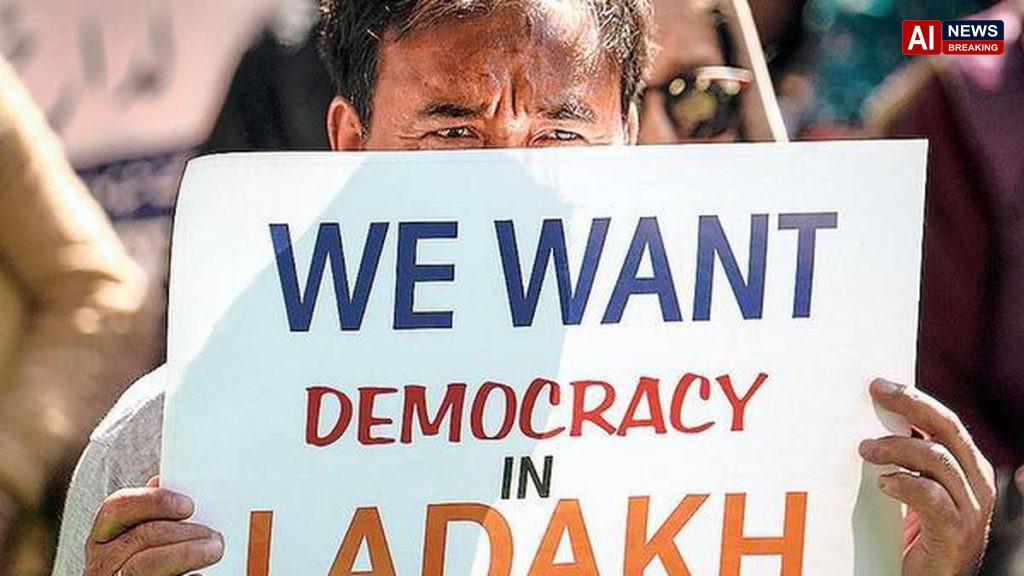
Ladakh civil society groups submit list of non-negotiable points to MHA officials, Chief Secretary in Leh - AI News Breaking
ladakh leaders draw lines:
Leh, August 20, 2026: Political and civil society representatives from Ladakh have intensified their demand for greater democratic and administrative autonomy, presenting a set of “non-negotiable” demands to the Union Ministry of Home Affairs during a high-level meeting in Leh.
Representatives of the Leh Apex Body (LAB) and the Kargil Democratic Alliance (KDA) told government officials that Ladakh needs a stronger elected political structure and greater control over its administration. The latest discussions come after months of negotiations between Ladakhi representatives and the Centre over the Union Territory’s future governance model.
The latest round of talks is significant because Ladakh has remained a Union Territory without a legislature since the 2019 reorganisation of the former state of Jammu and Kashmir. Since then, LAB and KDA have repeatedly demanded greater democratic representation, constitutional safeguards and stronger protection for the region’s land, culture and employment opportunities.
Elected Assembly and Chief Minister at the Centre of Demand
One of the most prominent demands raised by the Ladakhi delegation is the creation of an elected legislative assembly for Ladakh, along with a chief minister to head the elected government.
The proposal would represent a substantial change from the present administrative arrangement, under which Ladakh does not have its own elected legislature or chief minister.
Ladakh’s representatives have argued that an elected government would provide greater accountability and allow residents to have a direct role in decisions affecting the strategically important Himalayan territory.
According to reports from the latest meeting, the delegation also sought to bring home affairs under the control of the elected government, rather than leaving key areas of internal administration solely within the existing bureaucratic structure.
The demand reflects a broader argument from local leaders that administrative autonomy without an elected political institution is insufficient to address Ladakh’s long-term political aspirations.
Statehood Remains a Core Political Demand
Although the latest discussions have focused heavily on the structure of democratic governance, statehood remains one of the principal demands of the Ladakh movement.
LAB and KDA have consistently argued that the region should ultimately be granted full statehood, saying that this would restore democratic representation and give elected representatives greater legislative and executive authority.
The demand emerged after Ladakh was separated from Jammu and Kashmir and converted into a Union Territory in August 2019.
Since then, local political groups, civil society organisations and activists have repeatedly called for the restoration of statehood, arguing that the current administrative framework does not provide adequate political representation for the people of Leh and Kargil.
The Centre, meanwhile, has continued to engage with Ladakhi representatives through a High-Powered Committee and related mechanisms rather than accepting the demand for immediate statehood.
Sixth Schedule Protection Remains Central
The second major pillar of the Ladakhi movement is the demand for inclusion under the Sixth Schedule of the Constitution.
The Sixth Schedule provides special administrative arrangements for certain tribal areas in Assam, Meghalaya, Tripura and Mizoram. It allows autonomous district councils to exercise specified legislative, judicial and administrative powers.
Ladakh’s representatives have argued that comparable constitutional safeguards are necessary to protect the region’s distinctive social and cultural identity.
They have particularly raised concerns about land ownership, employment, natural resources, traditional livelihoods and demographic changes.
The argument is that constitutional protection would give local communities greater control over issues that directly affect their future, particularly in a region where fragile ecology, limited resources and rapid changes in tourism and infrastructure have become major public concerns.
Centre and Ladakh Had Earlier Reached an In-Principle Understanding
The latest confrontation comes after a period in which the Centre and Ladakh’s representatives appeared to be moving towards a possible compromise.
In May 2026, LAB and KDA said they had reached an “in-principle” understanding with the Union government on a governance model involving constitutional safeguards broadly along the lines of Articles 371A, 371F and 371G.
Under the proposed framework discussed at the time, legislative, executive and financial powers would be exercised through an elected Union Territory-level body, with senior bureaucrats coming under the authority of the elected executive.
The May discussions were viewed as a potential breakthrough because they appeared to offer a possible route toward greater democratic representation without immediately granting full statehood.
However, differences subsequently emerged over the details of the proposed arrangement.
By July, LAB and KDA were still seeking greater clarity from the Centre over the proposed elected body and constitutional safeguards. The organisations said they were awaiting a draft from the government detailing the proposed framework.
Demand for Withdrawal of Cases Linked to 2025 Unrest
The latest meeting has also brought the events of September 2025 back into the political negotiations.
Ladakh’s representatives have demanded the withdrawal of criminal cases against people accused in connection with the September 24, 2025 unrest, along with compensation for families of those who died during the violence.
The issue has become an important component of the political dialogue between the Centre and Ladakhi representatives.
The 2025 unrest had dramatically intensified the already existing tensions surrounding demands for statehood and constitutional safeguards. The government subsequently maintained that dialogue remained the appropriate mechanism for addressing Ladakh’s political concerns.
The demand for withdrawal of cases indicates that the negotiations now extend beyond constitutional arrangements and into questions of accountability, reconciliation and the aftermath of the unrest.
Ladakh’s Political Movement Has Intensified
The latest talks follow months of mobilisation by LAB and KDA.
In June, Ladakh observed a shutdown as the two organisations accused the Centre of failing to make sufficient progress following earlier negotiations. Protesters called for a credible dialogue with New Delhi and reiterated demands for statehood and Sixth Schedule protections.
Earlier protests in Leh and Kargil also focused on the same issues, demonstrating that the demand is not restricted to one district or political group.
LAB and KDA have increasingly coordinated their positions in negotiations with the Centre, allowing representatives from Leh and Kargil to present a broadly common political agenda.
That unity has strengthened the movement’s negotiating position while also making the talks with New Delhi more politically consequential.
Centre Has Pointed to Existing Reforms
The Union government has argued that considerable progress has already been achieved through negotiations with Ladakhi representatives.
In an earlier statement, the Ministry of Home Affairs highlighted measures including an increase in reservation for Scheduled Tribes in Ladakh from 45 per cent to 84 per cent, one-third reservation for women in the autonomous councils and recognition of Bhoti and Purgi as official languages. The government also said recruitment for 1,800 posts had been initiated.
These measures have been presented by the Centre as evidence that the dialogue process has produced tangible results.
Ladakhi groups, however, have continued to argue that such measures do not address their central political demands.
For LAB and KDA, the question is not only about administrative reforms but also about who ultimately exercises political authority over the territory.
Statehood Versus an Intermediate Governance Model
One of the most difficult questions in the negotiations is whether Ladakh can obtain meaningful democratic autonomy without immediate statehood.
The Centre has previously explored alternatives involving stronger powers for the existing Hill Councils and a new elected governance structure.
Ladakh’s representatives have been reluctant to accept arrangements they believe could permanently substitute for statehood.
In April, the Kargil Democratic Alliance rejected a council-based alternative, reiterating that statehood and Sixth Schedule safeguards remained non-negotiable.
That position illustrates the fundamental difference between the two sides.
New Delhi appears to be exploring a governance model that could provide greater political representation while retaining Ladakh’s Union Territory status.
LAB and KDA, meanwhile, continue to seek constitutional guarantees that they believe will provide long-term protection for the region.
Land, Jobs and Cultural Identity Drive the Movement
Behind the constitutional debate are several practical concerns affecting everyday life in Ladakh.
Local groups have repeatedly raised concerns about access to government employment, protection of land rights, control over natural resources and preservation of local cultures.
Ladakh’s unique geography and fragile Himalayan environment have also made questions surrounding tourism, infrastructure and resource management particularly sensitive.
Supporters of Sixth Schedule protection argue that decisions on these matters should involve stronger local institutions rather than being determined primarily through the Union Territory administration.
The demand for political autonomy is therefore closely linked to concerns about economic development and cultural preservation.
What Happens Next?
The latest talks are unlikely to immediately resolve the long-running dispute.
The Centre and Ladakh’s representatives have already held multiple rounds of negotiations, and previous discussions have produced tentative understandings as well as subsequent disagreements.
The immediate challenge will be to translate broad political commitments into a concrete governance framework acceptable to both sides.
For Ladakhi representatives, the key questions will be the actual powers of any elected assembly, the authority of the proposed chief minister, control over bureaucracy and home affairs, and the nature of constitutional safeguards.
For the Centre, the challenge will be balancing Ladakh’s demand for greater autonomy with concerns over administration, finances, national security and the constitutional framework governing Union Territories.
A Crucial Moment for Ladakh’s Future
The latest meeting represents another important stage in Ladakh’s prolonged political campaign for greater autonomy.
The region’s leaders are now seeking more than administrative concessions. Their demands encompass elected political representation, control over internal administration, constitutional safeguards, statehood, protection of land and cultural interests, and justice-related measures connected with the 2025 unrest.
The Centre has demonstrated a willingness to negotiate and has already agreed in principle to explore a stronger elected governance model and constitutional protections. But the gap between that approach and Ladakh’s demand for full statehood and Sixth Schedule protection remains substantial.
The coming rounds of dialogue will therefore be critical.
If New Delhi and Ladakh’s representatives can agree on a credible elected governance structure with meaningful constitutional safeguards, the current standoff could move toward a negotiated settlement.
If the two sides remain divided over the extent of autonomy and the status of statehood, however, political mobilisation in Leh and Kargil is likely to continue.
For now, the message from Ladakh’s leadership is clear: greater political representation and constitutional protection are no longer being treated as secondary administrative issues, but as fundamental questions about the region’s political future.