 How Defiant Youth Are Testing India’s Idea of Democracy
  Netanyahu pushes hawkish
  How is Kerala planning to prevent child deaths linked to malnutrition and neglect? Explained
  Odisha moves Supreme Court against Andhra Pradesh over rural poll notice in Kotia area
 Trump Threatens ‘Tremendous Economic Consequences’ for Countries Helping Iran as 60-Day Ceasefire Expires
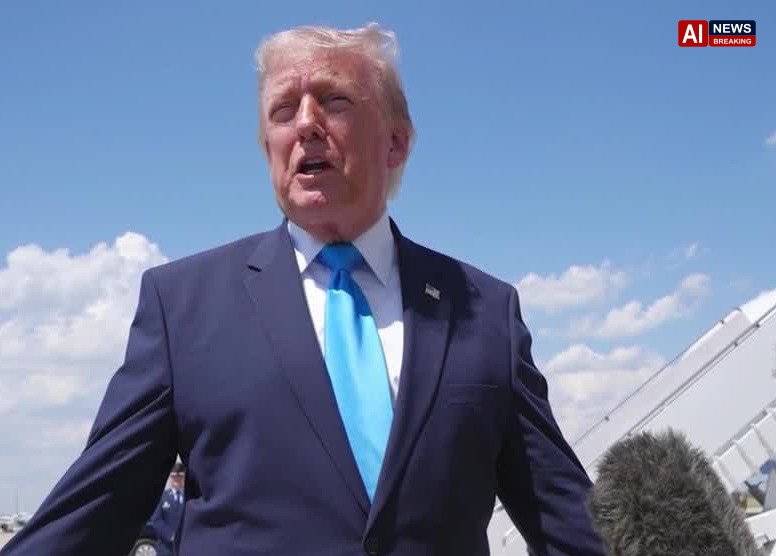
Trump Threatens 'Tremendous Economic Consequences' for Countries Helping Iran as 60-Day Ceasefire Expires - AI News Breaking
trump threatens tremendous economic:
Washington, August 20, 2026: US President Donald Trump has threatened countries and entities supporting Iran with “tremendous economic consequences”, escalating Washington’s economic pressure on Tehran after a 60-day US-Iran ceasefire and negotiation framework expired without a lasting peace agreement.
Trump has described the next phase of the US campaign as an “Economic D-Day” and warned that countries continuing to provide Iran with financial, commercial or other forms of economic assistance could face severe consequences. The threat comes as Washington seeks to further isolate Iran and increase pressure on its economy.
Ceasefire deadline expires without peace deal
The 60-day agreement between the United States and Iran expired on Monday, August 17, after the two sides failed to reach a permanent settlement.
The framework had been intended to create time for negotiations aimed at ending the conflict and addressing the dispute over Iran’s nuclear programme. However, key provisions were not implemented, including arrangements concerning the Strait of Hormuz and the US blockade and sanctions regime. Both Washington and Tehran have blamed each other for the breakdown.
The expiration has renewed fears that the conflict could enter another dangerous phase, particularly because there is currently no clear diplomatic or military off-ramp capable of bringing the confrontation to an end.
Trump announces tougher economic campaign
Trump’s latest warning signals a shift toward intensified economic warfare against Tehran.
The US president has threatened what he describes as the most severe economic operation ever imposed against a country, with the objective of further restricting Iran’s ability to trade internationally and obtain foreign currency.
The administration is expected to focus particularly on countries, companies and financial networks that continue to facilitate Iranian oil sales, shipping, financial transactions or other commercial activities.
Trump’s message is aimed not only at Tehran but also at Iran’s remaining international economic partners.
The warning is especially significant because Iran continues to maintain substantial commercial relationships with countries including China and regional trading hubs, despite extensive US sanctions. Washington’s strategy appears designed to make those relationships increasingly costly for foreign governments and businesses.
UAE move adds pressure on Tehran
Trump’s warning comes as the United Arab Emirates has suspended financial and economic dealings with Iran, dealing another blow to Tehran’s access to an important regional commercial hub.
Dubai has historically played a major role in Iran’s international trade and financial activity. Restrictions on Iranian access to the UAE could therefore make it considerably more difficult for Iranian businesses to obtain goods, process payments and maintain international trading networks.
The UAE’s decision also demonstrates how the conflict is increasingly affecting countries that have traditionally attempted to maintain commercial relationships with Tehran while avoiding direct military confrontation.
Strait of Hormuz remains at centre of crisis
The Strait of Hormuz remains one of the biggest obstacles to a diplomatic settlement.
The waterway is a critical route for global oil and gas shipments, and disruption to traffic through the strait has already reduced energy flows and increased shipping costs.
Iran maintains that the strait will remain closed until Washington meets its demands, while the Trump administration has taken a sharply different position and insists that the waterway should be open. The conflicting positions have become a central element of the broader US-Iran confrontation.
The continued uncertainty has unsettled energy markets. Oil prices have remained elevated as traders assess the possibility of prolonged disruption to Gulf shipping.
Iran faces growing economic pressure
The expanded US economic campaign could deepen pressure on an Iranian economy already affected by years of sanctions and the consequences of the conflict.
Restrictions on oil exports, foreign currency access, shipping and international financial transactions could further reduce Tehran’s economic options.
Iran has increasingly relied on alternative trading arrangements and regional networks to maintain imports and exports despite US sanctions. Washington’s latest strategy appears aimed at closing or disrupting those remaining channels.
However, completely isolating Iran could prove difficult because of its longstanding commercial relationships with major economies, particularly China, as well as its geographic position and regional trading networks.
Diplomacy remains uncertain
The expiration of the 60-day framework has significantly reduced optimism about an immediate diplomatic settlement.
Trump said Tuesday that there were no negotiations currently scheduled with Iran, although he also indicated that talks could potentially resume at some point.
That mixed messaging reflects the uncertain state of diplomacy.
While Washington continues to demand major concessions from Tehran, Iran has insisted that it will not negotiate under what it considers coercive conditions. Iranian officials have indicated that the country could shift toward a more offensive military posture if diplomatic efforts fail.
The absence of a functioning negotiation process increases the risk that economic pressure could be accompanied by renewed military escalation.
Threat extends beyond Iran
Trump’s warning is significant because it potentially places third countries in the crosshairs of Washington’s Iran strategy.
Countries that continue buying Iranian oil, providing financial services or facilitating trade could face sanctions or other economic measures.
The threat could force governments and companies to reassess their relationships with Tehran, particularly if they depend heavily on access to the US financial system or American markets.
For countries caught between Washington and Tehran, the situation presents a difficult choice: maintain economic relations with Iran or reduce exposure to the possibility of US retaliation.
Global markets watch the next move
Financial markets are closely monitoring developments because the conflict has already created significant uncertainty over energy supplies, shipping costs and inflation.
A prolonged closure or disruption of the Strait of Hormuz could push energy prices higher and increase transportation costs worldwide. Higher energy prices could, in turn, complicate efforts by central banks to control inflation.
The rise in government bond yields across several major economies in recent days has already reflected concerns that prolonged energy disruptions could fuel inflation and keep interest rates higher for longer.
The economic consequences of the conflict could therefore extend well beyond the Middle East.
No clear off-ramp in sight
The most immediate concern is the absence of a clear path toward de-escalation.
The 60-day framework has expired, negotiations are stalled and the United States is preparing additional economic pressure. Iran, meanwhile, continues to resist US demands and has maintained its position over the Strait of Hormuz.
Regional tensions have also increased following missile incidents involving Gulf states, while countries such as the UAE are taking increasingly direct economic measures against Tehran.
Reuters has described the conflict as moving toward a potentially uncontrolled cycle of escalation, with military incidents, economic measures and diplomatic uncertainty reinforcing one another.
A new phase of economic warfare
Trump’s latest warning marks a significant escalation in the US strategy toward Iran.
Rather than relying solely on direct military pressure, Washington is attempting to use Iran’s dependence on international trade, financial networks and energy markets as leverage.
The success of that strategy will depend heavily on whether other countries comply with the US pressure or continue trading with Tehran despite the threat of economic retaliation.
For Iran, the challenge is equally significant. Tehran must preserve access to essential imports, maintain foreign-currency earnings and protect its remaining international trade routes while facing intensified sanctions and continuing military pressure.
With the 60-day ceasefire framework now expired, the US-Iran conflict has entered a more uncertain phase in which economic warfare could become the principal instrument of Washington’s pressure campaign.
Trump’s warning that countries helping Iran will face “tremendous economic consequences” sends a message far beyond Tehran: Washington is increasingly prepared to target the wider network that keeps Iran’s economy connected to the global system.