 Australia probes AI‑driven breach of My Health Record portal
  Engineering student’s ‘suicide’ turns out to be murder; two arrested
  Canada’s Capital Bids Good Riddance to Trump Avenue as Tensions With U.S. Rise
  Pentagon investigates after China obtains parts from F-35 stealth fighter jet
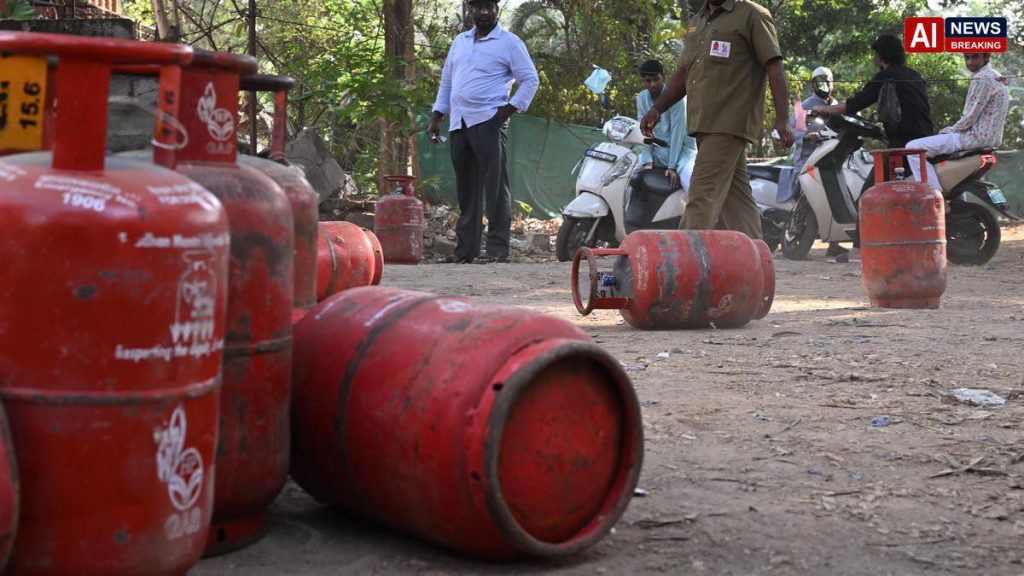
 LPG Cylinder Prices and Subsidies Since 2022: Centre Reveals Why Cooking Gas Costs Changed and What Consumers Pay Today
LPG Cylinder Prices and Subsidies Since 2022: Centre Reveals Why Cooking Gas Costs Changed and What Consumers Pay Today - AI News Breaking
cylinder prices subsidies since:
The Centre has released detailed data on domestic LPG cylinder prices and subsidies since 2022, highlighting the impact of global energy prices, geopolitical tensions, and targeted government support schemes. The government has clarified that domestic LPG prices remain linked to international benchmarks while continuing subsidies for economically vulnerable households.
Centre Releases Comprehensive LPG Price and Subsidy Data: The Government of India has published year-wise details of domestic LPG cylinder prices and subsidy payments since 2022 in response to questions raised in the Rajya Sabha. The information provides one of the most comprehensive official explanations of how cooking gas prices have evolved over the past several years and why consumers across the country have experienced multiple price revisions.
Union Minister of State for Petroleum and Natural Gas Suresh Gopi informed Parliament that domestic LPG prices in India are directly linked to international LPG market prices. Although retail prices fluctuate according to global trends, the government has intervened through subsidies and compensation mechanisms to protect consumers from the full impact of price volatility.
The latest data also highlights how geopolitical developments in West Asia significantly affected India’s LPG supply chain during 2026 and pushed international LPG prices to record levels.
Why LPG Prices Have Changed Since 2022
Several factors determine the retail price of domestic LPG cylinders in India. These include:
- International LPG benchmark prices.
- India’s dependence on LPG imports.
- Transportation and distribution costs.
- Currency exchange rate movements.
- Global geopolitical developments.
- Government subsidy policies and fiscal support measures.
India imports approximately 60 percent of its LPG requirements, making domestic prices particularly vulnerable to developments in global energy markets. Before the West Asia crisis began in early 2026, nearly 90 percent of India’s LPG imports passed through the strategically important Strait of Hormuz.
Strait of Hormuz Crisis Significantly Impacted LPG Supplies
The Centre revealed that the closure of the Strait of Hormuz during the West Asia conflict severely disrupted LPG imports into India.
According to the government, authorities implemented multiple emergency measures to maintain household LPG supplies across the country. These included:
- Increasing domestic LPG production.
- Prioritising household LPG consumption.
- Diversifying import sources.
- Dynamic stock management.
- Inter-regional allocation of LPG supplies.
- Strengthening supply chain coordination.
The disruption caused international LPG prices to surge sharply during April, May, and June 2026.
The average Saudi Contract Price (Saudi CP), which serves as an international LPG pricing benchmark, climbed to:
- April-May 2026: US$780 per metric tonne.
- June 2026: US$796 per metric tonne.
These developments pushed the market-determined price of a 14.2 kg domestic LPG cylinder to an estimated Rs 1,695 during June 2026 before government interventions reduced the effective consumer price.
Current LPG Cylinder Prices in India
Despite international price pressures, the government stated that consumers currently pay significantly less than market-determined prices.
As of July 2026:
- Regular consumers: Rs 942 per 14.2 kg cylinder.
- PMUY beneficiaries: Rs 642 per cylinder.
- PMUY subsidy: Rs 300 per cylinder.
The Rs 300 subsidy continues to provide targeted financial support for beneficiaries under the Pradhan Mantri Ujjwala Yojana (PMUY), which aims to make clean cooking fuel affordable for economically weaker households.
State-Wise LPG Cylinder Prices in July 2026
Some of the notable prices include:
- Delhi – Rs 942
- Maharashtra – Rs 941.50
- Tamil Nadu – Rs 957.50
- West Bengal – Rs 968
- Uttar Pradesh – Rs 979.50
- Telangana – Rs 994
- Bihar – Rs 1,040
- Tripura – Rs 1,102.50
- Mizoram – Rs 1,094
- Srinagar (Jammu & Kashmir) – Rs 1,058
Tripura recorded the highest domestic LPG cylinder price among the listed states and union territories, while Maharashtra reported one of the lowest prices during July 2026.
LPG Price Trend Since 2022
Delhi’s retail price trajectory illustrates how LPG prices have changed over the years:
- January 2022 – Rs 899.50
- January 2023 – Rs 1,053
- January 2024 – Rs 903
- January 2025 – Rs 803
- January 2026 – Rs 853
- July 2026 – Rs 942
The data indicates that LPG prices generally rise and fall depending on international market conditions and government policy interventions.
Government Compensation to Oil Marketing Companies
The Centre has continued compensating public sector oil marketing companies (OMCs) for losses incurred while selling domestic LPG at subsidised rates.
According to the Ministry of Petroleum and Natural Gas:
- Rs 22,000 crore was paid as compensation during FY 2022-23.
- Rs 30,000 crore compensation was approved for FY 2025-26.
These payments are intended to offset under-recoveries arising from domestic LPG sales and help keep consumer prices affordable.
Domestic LPG Subsidy Trends
Official government data shows the following LPG subsidy expenditure:
- FY 2021-22 – Rs 1,811 crore.
- FY 2022-23 – Rs 28,965 crore.
- FY 2023-24 – Rs 11,444 crore.
- FY 2024-25 – Rs 13,640 crore.
- FY 2025-26 (up to December 2025) – Rs 23,559 crore.
The subsidy structure primarily includes:
- Direct Benefit Transfer (DBT) for LPG consumers.
- PMUY subsidy payments.
- Compensation to public sector oil marketing companies.
The government also reported that no expenditure was recorded under the Pradhan Mantri Garib Kalyan Package subsidy component during the period mentioned.
How Global Events Influence LPG Prices in India
Domestic LPG prices are closely tied to international energy markets. Major factors influencing prices include:
Crude Oil Prices
Higher crude oil prices generally increase LPG production costs globally.
Middle East Geopolitics
Supply disruptions in major LPG-producing regions can quickly impact global benchmark prices.
Shipping Routes
Critical maritime chokepoints such as the Strait of Hormuz play a significant role in India’s LPG import supply chain.
Currency Movements
A weaker Indian rupee increases import costs even if global LPG prices remain stable.
Domestic Subsidy Policies
Government subsidies and compensation mechanisms can significantly reduce the price consumers ultimately pay.
Will LPG Prices Rise Further? : Future LPG prices will depend largely on developments in international energy markets and geopolitical conditions. If global LPG prices remain elevated or supply disruptions continue, market-linked LPG prices could remain high. However, government interventions may continue to shield consumers from major price shocks.
For PMUY beneficiaries, targeted subsidies remain an important policy tool to ensure access to affordable and clean cooking fuel.
The Centre’s latest disclosure offers valuable insight into the factors influencing domestic LPG prices in India. While international energy markets and geopolitical tensions continue to drive price volatility, government subsidies and compensation mechanisms have helped moderate the impact on consumers. The data also highlights India’s significant dependence on LPG imports and underscores the importance of strategic supply management during periods of global uncertainty. As global energy markets evolve, LPG pricing is likely to remain a balancing act between international realities and domestic welfare priorities.
AI Insight: India’s LPG pricing model reflects the broader challenge of balancing market-linked energy pricing with social welfare objectives. The government’s targeted subsidy approach, particularly under the PMUY scheme, indicates a gradual shift toward focused support for vulnerable households. Going forward, geopolitical developments in West Asia and India’s efforts to diversify energy supply chains will increasingly influence cooking gas affordability and India’s long-term energy security strategy.