 Australia probes AI‑driven breach of My Health Record portal
  Engineering student’s ‘suicide’ turns out to be murder; two arrested
  Canada’s Capital Bids Good Riddance to Trump Avenue as Tensions With U.S. Rise
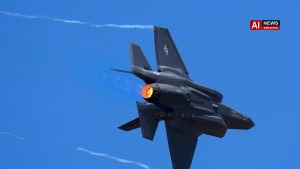
  Pentagon investigates after China obtains parts from F-35 stealth fighter jet
 Macron warns of growing Russian threat: How ‘hybrid attacks’ are targeting Europe
**
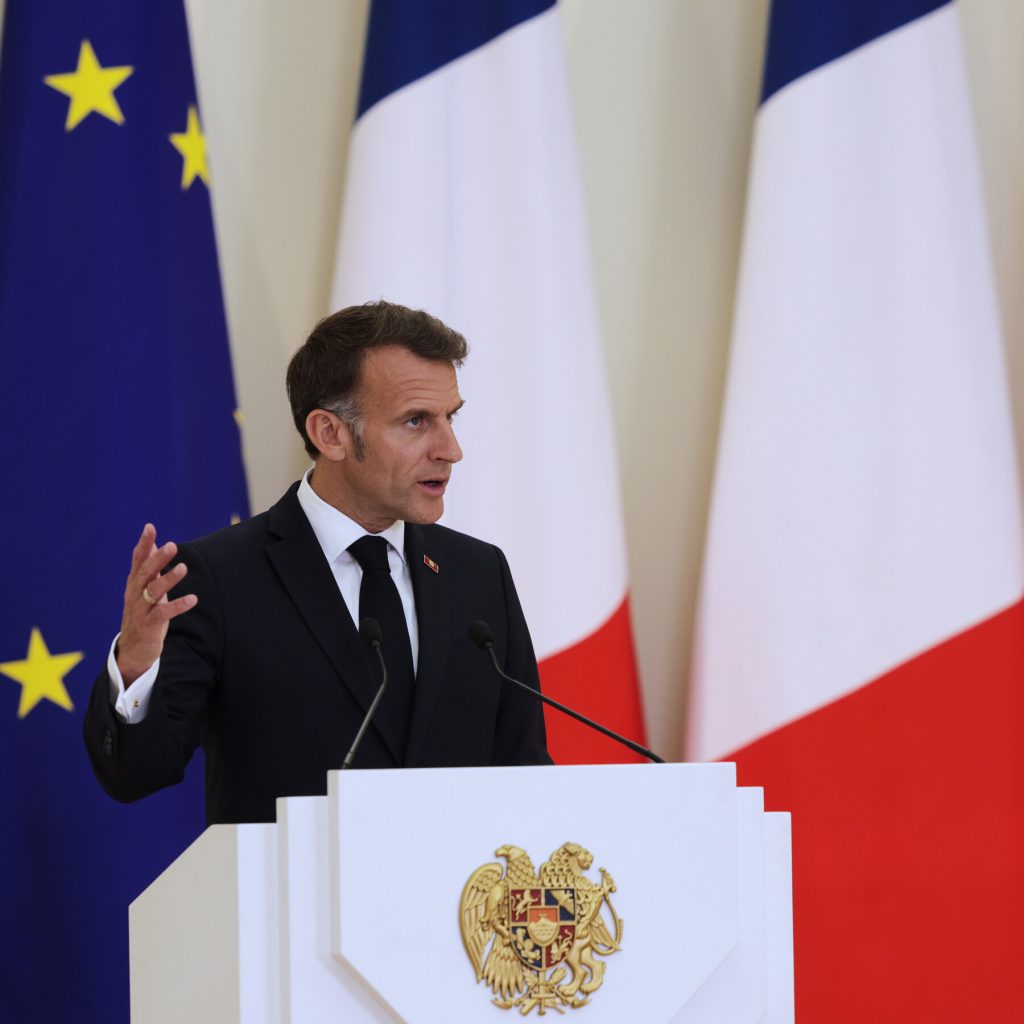
macron warns growing russian:
French President Emmanuel Macron warned on Tuesday that the Russian Federation was intensifying a “hybrid” campaign against Europe, a threat that he said combined conventional military pressure with cyber‑attacks, disinformation and the covert financing of extremist groups. In a televised address to the nation, Macron cited recent sabotage of energy infrastructure in Ukraine, the spread of false narratives about the European Union’s migration policy and the alleged use of “gray‑zone” tactics to undermine NATO’s eastern flank. He called for a coordinated response that would blend diplomatic, economic and security measures, and urged European capitals to share intelligence more freely and to invest in resilient critical‑infrastructure systems.The term “hybrid warfare” has become a staple of security discourse since the annexation of Crimea in 2014, but its precise definition remains contested..
Analysts generally describe it as the blending of conventional force with non‑military tools – cyber intrusion, information operations, economic coercion and the covert support of proxy actors – all designed to achieve strategic objectives while staying below the threshold that would trigger a formal declaration of war. In the Russian context, experts point to a pattern that mixes overt military deployments in Belarus and the Donbas region with clandestine cyber campaigns targeting government networks in Estonia, Finland and the United Kingdom, alongside disinformation drives that exploit social‑media platforms to sow doubt about democratic institutions.Recent evidence suggests that the latest Russian hybrid push is more sophisticated and better integrated than earlier attempts. A joint report by the European Union’s Agency for Cybersecurity (ENISA) and the NATO Cooperative Cyber Defence Centre of Excellence documented a surge in ransomware attacks on hospitals, transport hubs and energy grids across the continent, with malware signatures linked to groups believed to operate under the direction of the Russian military intelligence service, the GRU..
At the same time, open‑source investigations traced a wave of fake news stories – ranging from fabricated reports of mass immigration influxes to altered footage of NATO exercises – to bot networks that appear to be coordinated from servers located in the Kaliningrad exclave.Energy security has emerged as a focal point of the hybrid strategy. In late March, a series of coordinated attacks disabled several substations in the Ukrainian power grid, causing widespread outages during a severe winter storm. While the physical damage was limited, the psychological impact was significant, reinforcing the perception that Russia could weaponise critical infrastructure without firing a single shot..
European officials warn that similar tactics could be deployed against the continent’s own energy networks, especially as the region accelerates its transition away from fossil fuels and becomes more dependent on digital control systems. In response, the European Commission has announced a €1.5 billion fund to modernise grid cybersecurity and to develop rapid‑response teams that can isolate compromised equipment within minutes.The political dimension of hybrid attacks is equally pronounced. Since the start of the war in Ukraine, Russian‑linked media outlets have amplified stories that portray the European Union as a “failed project” plagued by bureaucratic infighting and rampant corruption..
Polls conducted in several member states show a modest but measurable rise in public scepticism towards EU institutions, a trend that Russian strategists appear to be deliberately nurturing. In France, for example, a recent survey indicated that confidence in the European Parliament had slipped from 46 percent to 39 percent over the past twelve months, a decline that analysts attribute partly to targeted disinformation campaigns that exploit genuine concerns about economic slowdown and migration.Financial instruments are also being weaponised in the hybrid playbook. The United States and its allies have imposed multiple rounds of sanctions on Russian oligarchs and banks, yet investigators have uncovered a web of shell companies and cryptocurrency exchanges that facilitate the movement of funds to and from sanctioned entities..
In a case uncovered by the Financial Action Task Force, a series of crypto wallets registered in the Seychelles were used to funnel proceeds from a ransomware campaign against a German logistics firm into a network of front companies tied to the Russian defense sector. Such financial sleight of hand enables Moscow to bypass traditional banking restrictions while continuing to fund covert operations.Western intelligence services have raised alarms about the growing involvement of Russian paramilitary groups in the internal politics of certain European states. Known colloquially as “mercenary” units, these fighters have been linked to the recruitment of local extremist elements and to the organization of street protests that aim to destabilise governments perceived as hostile to Moscow..
In the Balkans, for instance, a series of violent clashes in the capital of a NATO‑partner country were traced back to a shadowy network that received logistical support from the Russian private military company Wagner. While the direct line of command remains murky, the pattern mirrors earlier Russian tactics of exploiting ethnic tensions and historical grievances to create flashpoints that distract from broader geopolitical aims.In response to the multifaceted threat, the European Union has proposed a “Hybrid Resilience Initiative” that would create a permanent body within the European External Action Service tasked with coordinating counter‑hybrid measures. The proposal calls for a shared “situational awareness” platform where member states can upload real‑time data on cyber incidents, disinformation trends and illicit financial flows..
It also envisions a rapid‑deployment task force that could be dispatched to assist national authorities in the event of a large‑scale cyber‑physical attack. Critics argue that the initiative may duplicate existing structures within NATO and the EU’s own cybersecurity agencies, but proponents maintain that a single, unified command is essential to overcome the fragmented nature of current responses.NATO, for its part, has upgraded its own hybrid‑threat posture. At its recent summit in Brussels, the alliance endorsed a new “Strategic Concept” that explicitly recognises hybrid warfare as a central challenge to collective defence..
The document outlines a three‑pronged approach: strengthening deterrence through forward‑deployed cyber units, enhancing the resilience of member‑state infrastructure, and countering propaganda by bolstering strategic communications capabilities. Allied leaders also pledged to increase joint exercises that simulate combined kinetic and cyber operations, a move designed to improve interoperability among national forces and to send a clear signal that an attack on one member’s critical systems would be considered an attack on the alliance as a whole.While the official rhetoric emphasises unity, the practical implementation of hybrid‑defence measures faces significant hurdles. National legal frameworks on data sharing, privacy and cyber‑crime differ widely across Europe, making it difficult to establish a seamless intelligence exchange..
Moreover, the private sector – which owns the majority of the digital infrastructure vulnerable to attack – remains wary of government‑imposed mandates that could affect commercial operations. Industry groups have called for clearer guidelines and for public‑private partnerships that balance security with innovation, a balance that experts say is crucial for maintaining the continent’s competitive edge in emerging.
Updated: September 18, 2026
French President Emmanuel Macron warned that Russia is escalating a coordinated hybrid assault on Europe, blending military pressure with cyber‑attacks, disinformation and covert funding of extremist groups, and called for a unified diplomatic, economic and security response. EU and NATO officials are now pushing new joint initiatives, including a €1.5 billion cyber‑resilience fund and a dedicated “Hybrid Resilience” body, to bolster intelligence sharing, protect critical infrastructure and counter the multifaceted Russian
Insight: Macron’s warning signals that Russia’s “gray‑zone” tactics are maturing into a coordinated assault on Europe’s digital backbone, turning every cyber‑incident into a geopolitical lever. The continent’s response will hinge not just on tech fixes, but on building a trans‑national trust network