Europe warns of Russia’s hybrid attacks but struggles to counter them
  Former chief election commissioner calls SIR scheme illegal.
  A Corruption Scandal Is Reshaping Brazil’s Presidential Election
  US citizen injured in Illinois after ICE agents mistook him for fugitive, tried to arrest him
  At 10 years old, Smithsonian’s Black museum is undaunted amid pressure from Trump administration
 Madras High Court Questions Maintainability of PIL Challenging Promotion of Seven IAS Officers to Chief Secretary Grade
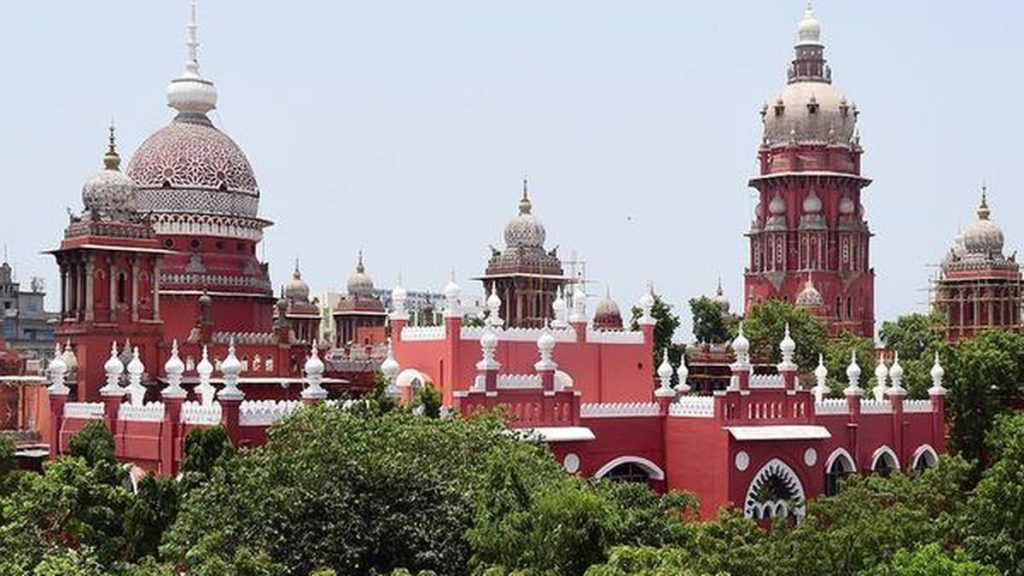
The Madras High Court has heard a challenge against a Government Order promoting seven IAS officers to the Chief Secretary grade. During the hearing, the bench questioned whether a Public Interest Litigation could be filed in a matter concerning government service rules and administrative promotions.
Chennai — The Madras High Court on Monday heard a petition challenging a Government Order (G.O.) that granted promotion to seven Indian Administrative Service (IAS) officers to the rank of Chief Secretary grade, triggering a judicial discussion on whether such a matter could be examined under a Public Interest Litigation (PIL).
A bench comprising Chief Justice Sushrut Arvind Dharmadhikari and Justice G. Arul Murugan orally observed that it was “difficult to understand” how a PIL could be entertained in a dispute that appears to fall within the domain of government service rules and administrative decision-making.
The court’s remarks came after the petitioner sought judicial intervention to review the validity and alleged irregularities in the promotion process, arguing that the Government Order violated established service norms and lacked transparency.
However, the bench questioned the very maintainability of the petition, indicating that issues relating to promotions of government officials typically fall under service jurisprudence and are not ordinarily subject to PIL scrutiny.
During the preliminary hearing, the Chief Justice orally remarked that PIL jurisdiction is meant to address issues of public interest affecting a larger section of society, and not to adjudicate service disputes or individual administrative decisions involving government employees.
Justice Dharmadhikari observed that the petition appeared to involve questions of eligibility, seniority, and administrative discretion, all of which are traditionally handled under service law mechanisms rather than constitutional PIL proceedings.
Justice G. Arul Murugan, concurring with the observation, indicated that expanding PIL jurisdiction into service-related matters could open the floodgates for litigation challenging routine administrative orders.
The bench asked counsel for the petitioner to clarify how the matter qualified as a public interest issue rather than a service dispute involving specific individuals and departmental decision-making.
The petition under consideration challenges a Government Order that elevated seven IAS officers to the Chief Secretary grade, one of the highest bureaucratic ranks in the state administrative hierarchy.
According to the petitioner, the promotion process allegedly bypassed certain procedural safeguards and violated norms related to seniority, eligibility criteria, and administrative fairness.
The plea reportedly argues that the decision was arbitrary and not in compliance with established service rules governing IAS cadre promotions.
It also raises concerns about whether due consultation procedures were followed and whether the selection process adhered to constitutional principles of fairness and transparency under Articles 14 and 16.
While detailed arguments from the state government were not fully recorded at the initial hearing stage, officials are expected to defend the promotions as being within the scope of executive discretion exercised under service rules governing IAS cadre management.
In similar cases, governments typically argue that promotions to senior administrative grades are based on a combination of factors, including performance evaluation, seniority, empanelment procedures, and vacancies in higher posts.
The state is also likely to contend that such decisions fall within the exclusive domain of the executive and cannot be routinely subjected to judicial review unless there is clear evidence of mala fide intent or procedural illegality.
The bench’s oral observations align with established legal principles in Indian administrative law, where courts have repeatedly held that service matters involving government employees should generally be adjudicated through specialized tribunals or service law mechanisms.
The Supreme Court and various High Courts have consistently maintained that PILs should not be used as a substitute for service litigation, particularly in matters involving promotion, seniority, or departmental postings.
Courts typically intervene in such cases only when there is:
- Clear violation of statutory rules
- Manifest arbitrariness
- Evidence of mala fide decision-making
- Constitutional breach affecting a broader class of employees
The Madras High Court’s questioning reflects this jurisprudential boundary between public interest litigation and individual administrative grievances.
The case has once again brought into focus the evolving debate over the scope of PIL jurisdiction in India.
Over the years, PILs have expanded from environmental and human rights issues into governance-related disputes. However, courts have increasingly cautioned against misuse of PIL mechanisms for private or service-related disputes.
Legal experts note that if service matters are allowed to be litigated as PILs, it could undermine the structured framework of administrative tribunals and service law adjudication.
In this context, the court’s skepticism signals an effort to preserve the integrity of PIL jurisdiction as a tool for addressing genuine public interest concerns rather than internal administrative disagreements.
The Chief Secretary grade in the IAS cadre represents one of the highest levels of bureaucratic authority within a state administration.
Officers elevated to this rank typically occupy key positions in governance, policy implementation, and coordination between state and central government agencies.
Promotions to this level are usually governed by strict rules framed under the All India Services (Cadre) Rules and involve detailed scrutiny by selection committees.
Given the importance of such posts, any allegation of irregularity in promotion processes often becomes a subject of legal and administrative scrutiny.
Implications of the Court’s Observations
The Madras High Court’s remarks do not constitute a final judgment on the merits of the case but signal judicial hesitation regarding the maintainability of the PIL.
If the court ultimately rules that the petition is not maintainable, the matter may be dismissed at the threshold stage without examining the substantive allegations.
Alternatively, if the petitioner succeeds in demonstrating a broader public interest dimension, the court may admit the case for detailed hearing.
Legal observers suggest that the outcome will depend on whether the petition can establish systemic irregularity affecting public administration, rather than isolated grievances about specific promotions.
This case reflects a recurring tension in Indian constitutional litigation: the gradual expansion of PIL jurisdiction versus the institutional need to preserve specialized legal pathways for service matters. While PILs have become a powerful instrument for accountability, their overextension into administrative promotion disputes risks diluting their original purpose. Courts are increasingly reinforcing doctrinal boundaries to prevent PILs from becoming parallel service tribunals, ensuring that executive discretion in bureaucratic structuring remains insulated unless clear constitutional or statutory violations are demonstrated.