 CPI(M) turns the heat on Keralam govt. over SMA drug controversy
  Finnish puppy livestream boosts pet ownership and sales.
  Punjab CM alleges he was made to sit at Delhi airport, officials told him they were ‘under pressure from above’
 Manipur strike halts Imphal routines as NRC expansion protests continue
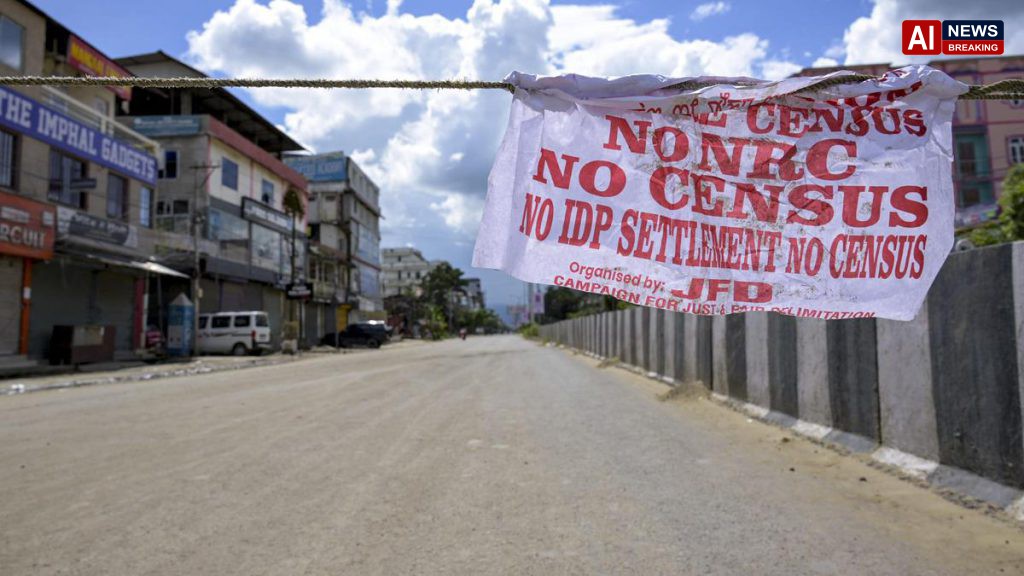
Manipur strike halts Imphal routines as NRC expansion protests continue - AI News Breaking
Resumption of daily routines in the heart of Manipur’s capital region faced significant disruption on Tuesday, marking the second consecutive day of a widespread general strike called in response to the government’s proposed expansion of the National Register of Citizens. The agitation, driven by widespread apprehension regarding the implementation of the NRC in the northeastern state, brought much of Imphal East and Imphal West districts to a near-standstill. Commercial activities ground to a halt as shops remained shuttered with iron grills pulled down, while schools, colleges, and official offices stayed closed..
The atmosphere in the valley districts was palpably tense, characterized by a heavy presence of local youth groups and civil society organizations who have been at the forefront of protests against the center’s demographic survey initiatives. While the initial day of strikes saw sporadic clashes and isolated incidents of violence, the second day was marked more by organized blockade tactics and a strict enforcement of shutdown norms by local enforcers.In various parts of Imphal East and Imphal West, strike enforcers systematically obstructed major arterial roads and suburban links, employing makeshift barricades constructed from bamboo poles, iron chains, and large stone boulders. These physical impediments were strategically placed at key junctions including the Nebi intersection, the Khurai bypass, and the Thangmeibong crossing, effectively sealing off entry and exit points for non-essential vehicle movement..
The use of heavy stone boulders, in particular, posed a significant challenge for traffic control authorities, as removing them requires specialized heavy machinery that was largely absent from the immediate vicinity. Local residents reported that the blockades were maintained around the clock, with volunteers taking shifts to ensure that no unauthorized vehicles, including public transport and essential goods carriers, could pass through without explicit permission from the local protest committees. This methodical approach to enforcement highlighted the organized nature of the resistance, which has evolved over recent months into a disciplined network of community surveillance and action.The impact on the civilian population has been immediate and multifaceted, affecting not only mobility but also access to essential services and supplies..
Supermarkets and grocery stores that had opened early in the morning quickly faced inventory depletion as residents rushed to stock up on food and medicinal supplies, fearing extended disruptions. By mid-afternoon, many retailers closed their premises ahead of schedule, citing security concerns and the lack of customers due to the severe restrictions on movement. The supply chain for perishable goods was particularly strained, with traders from surrounding hills and plains unable to transport fresh vegetables and meat into the valley..
This scarcity drove up prices in local markets and created a sense of urgency among households that rely on daily purchases for their sustenance. The disruption extended to healthcare facilities, with private clinics refusing to open and public hospitals operating with skeletal staff, raising concerns about the ability to handle emergencies during the shutdown.Government authorities maintained a low profile during the second day of the strike, avoiding direct confrontation with the protesters while ensuring that critical infrastructure remained secure. Police forces were deployed in strategic locations, primarily guarding government buildings, banks, and vital utilities, but they largely refrained from attempting to remove the roadblocks unless immediate security threats were perceived..
This restrained approach appears to be part of a broader strategy to de-escalate tensions and prevent the violence that has marred previous protests in the state. However, the presence of police in high-visibility areas has sparked anxiety among some residents who fear that any minor incident could trigger a broader outbreak of communal violence. Local administration officials have appealed for peace, urging citizens to refrain from carrying weapons and to cooperate with authorities to maintain law and order..
Despite these appeals, the mood on the ground remained volatile, with loud speakers broadcasting messages from protest leaders and counter-narratives from government supporters echoing through the quiet streets.The demographic and political context of the protest remains deeply rooted in the ongoing ethnic tensions in Manipur, which have persisted since May 2023 when violent clashes erupted between the Meitei and Kuki-Zo communities. For the Meitei community, which predominantly inhabits the Imphal Valley, the introduction of the NRC is viewed with extreme suspicion, as many fear it could lead to their designation as foreigners if they cannot provide documentary proof of ancestry. This fear is compounded by historical grievances and a sense of vulnerability following the prolonged ethnic violence that has displaced over 40,000 people..
The protest is thus not merely a political demonstration but a survival strategy for a community that feels existentially threatened by policy decisions made in New Delhi. Leaders of various Meitei organizations have repeatedly stated that they will continue their agitation until the government provides clear and reassuring guidelines on how the NRC will be implemented in the state, ensuring that it does not result in the disenfranchisement of native inhabitants.Conversely, other sections of society, including some Kuki-Zo groups and human rights activists, have expressed differing views on the NRC, with some seeing it as a tool to identify illegal immigrants and others fearing it could exacerbate communal divisions. This complex web of perspectives has made it difficult for the administration to formulate a policy that satisfies all stakeholders..
The central government has defended the NRC as a necessary measure to protect the integrity of the nation and ensure that only genuine citizens enjoy the rights and privileges of Indian nationality. However, the lack of detailed operational guidelines for Manipur has fueled speculation and mistrust. The vacuum of information has been filled by rumors and misinformation, which have circulated rapidly on social media platforms, further inflaming tensions and making it difficult for authorities to manage the narrative.The economic implications of the extended strike are becoming increasingly apparent, particularly for the informal sector and small businesses that depend on daily cash flows..
Auto-rickshaw drivers, taxi operators, and street vendors have reported losing their entire daily income, with no mechanisms in place to compensate for these losses. The hospitality industry, already struggling to recover from the aftermath of the 2023 violence, has seen a sharp decline in bookings and footfall. Hotels and restaurants in Imphal remain nearly empty, as tourists avoid travel to the region due to safety concerns and the unpredictable nature of the protests..
The cumulative effect of these disruptions could have long-term consequences for the local economy, potentially leading to job losses and a deepening financial crisis for vulnerable populations.International observers and human rights groups have been monitoring the situation closely, expressing concern over the potential for human rights violations during the enforcement of the shutdown. Reports from independent journalists and local activists indicate that while the second day was relatively peaceful compared to earlier days of unrest, the threat of violence remains ever-present. The use of bamboo poles and stones as barricades, while effective in stopping traffic, also creates hazardous conditions for emergency vehicles that may need to respond to critical incidents..
There have been isolated reports of ambulances being delayed or turned away, raising serious questions about the prioritization.
Updated: August 19, 2026
The shift from sporadic violence to disciplined barricading signals a strategic escalation, transforming civil dissent into an unbreakable logistical fortress that New Delhi cannot dismantle without force. By weaponizing daily survival, the protest transcends political disagreement, forcing the state to choose between authoritarian suppression and the imminent disintegration of administrative control in the valley.