Europe warns of Russia’s hybrid attacks but struggles to counter them
  Former chief election commissioner calls SIR scheme illegal.
  A Corruption Scandal Is Reshaping Brazil’s Presidential Election
  US citizen injured in Illinois after ICE agents mistook him for fugitive, tried to arrest him
  At 10 years old, Smithsonian’s Black museum is undaunted amid pressure from Trump administration
 Modi Government Unveils Rs.62,500 Crore Mobile Manufacturing Scheme to Make India a Global Smartphone Hub
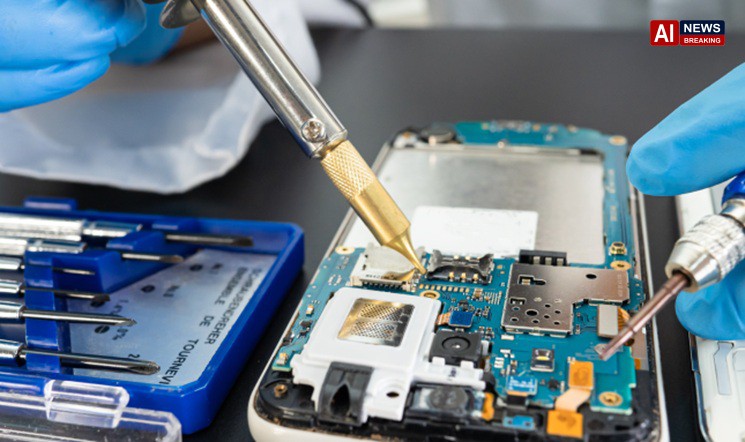
Modi Government Unveils Rs.62,500 Crore Mobile Manufacturing Scheme to Make India a Global Smartphone Hub - AI News Breaking
modi government unveils rs62500:
Cabinet Approves ₹62,500 Crore Mobile Phone Manufacturing Scheme; 60,000 Jobs and Export Boom Expected; India Targets Global Smartphone Leadership
Summary
- The Union Cabinet has approved a massive ₹62,500 crore Mobile Phone Manufacturing Scheme (MPMS) aimed at boosting domestic production, exports, and innovation in India’s smartphone sector.
- The scheme is expected to create over 60,000 direct jobs and attract significant global investments over the next five years.
- The initiative marks another major step in India’s ambition to become a global electronics manufacturing powerhouse under the Make in India programme.
In a landmark decision aimed at accelerating India’s electronics manufacturing ambitions, the Union Cabinet chaired by Prime Minister Narendra Modi has approved the ₹62,500 crore Mobile Phone Manufacturing Scheme (MPMS). The scheme is expected to significantly boost domestic smartphone manufacturing, attract global investments, create thousands of jobs, and strengthen India’s position in global electronics supply chains. The programme will be implemented over five years and is being viewed as one of the government’s biggest initiatives for the electronics sector in recent years.
The announcement comes at a time when India has emerged as the world’s second-largest mobile phone manufacturer and smartphones have become one of the country’s top export commodities. Policymakers believe the new scheme will help India move beyond assembly operations and deepen domestic value addition across the smartphone manufacturing ecosystem.
What Is the Mobile Phone Manufacturing Scheme?
The Mobile Phone Manufacturing Scheme (MPMS) has been designed to provide financial incentives and policy support to manufacturers operating in India. With an allocation of ₹62,500 crore, the scheme aims to encourage large-scale production of mobile phones, enhance exports, promote research and development (R&D), and reduce India’s dependence on imported components.
The scheme is expected to support:
- Domestic smartphone manufacturing.
- Global electronics investments.
- Research and development activities.
- Export-oriented production.
- Supply chain development.
- Advanced manufacturing technologies.
- Employment generation.
- Local component manufacturing.
Why Has the Government Introduced This Scheme?
India’s smartphone manufacturing industry has witnessed extraordinary growth over the past decade. Government initiatives such as the Production Linked Incentive (PLI) scheme have successfully attracted major global manufacturers, including Apple’s contract manufacturing partners and Samsung. Mobile phone exports have grown substantially, helping India become a trusted manufacturing destination.
However, policymakers believe the next phase of growth requires:
- Higher domestic value addition.
- Greater indigenous R&D capabilities.
- Stronger component manufacturing ecosystems.
- Increased global competitiveness.
- Advanced manufacturing infrastructure.
- Enhanced supply chain resilience.
The new scheme seeks to address these priorities while supporting India’s long-term goal of becoming a global electronics manufacturing hub.
Job Creation Expected to Cross 60,000
One of the biggest expected outcomes of the scheme is employment generation. Government estimates indicate that more than 60,000 direct jobs are likely to be created through investments facilitated by the programme. Thousands of additional indirect employment opportunities are expected across:
- Logistics.
- Electronics components manufacturing.
- Packaging.
- Warehousing.
- Transportation.
- Research and development.
- Services.
- Supply chain operations.
India’s electronics manufacturing sector has increasingly become an important source of skilled and semi-skilled employment, particularly for young workers and women employed in smartphone manufacturing facilities.
Boost for Domestic Research and Development
Unlike earlier schemes that focused primarily on production, the new Mobile Phone Manufacturing Scheme also places significant emphasis on research and development.
The government aims to encourage companies to:
- Design products in India.
- Develop indigenous technologies.
- Invest in semiconductor-linked innovations.
- Build advanced manufacturing capabilities.
- Promote local intellectual property creation.
By strengthening domestic R&D capabilities, India hopes to move higher up the global electronics value chain rather than remaining limited to assembly operations.
Strengthening India’s Global Export Position
India has already emerged as one of the world’s fastest-growing smartphone export hubs. Several global smartphone brands are increasingly using India as a manufacturing base for exports to Europe, the United States, and other international markets.
The new scheme is expected to:
- Increase smartphone exports.
- Improve manufacturing competitiveness.
- Enhance production capabilities.
- Strengthen India’s role in global supply chains.
- Attract multinational electronics companies.
Industry experts believe that smartphone exports could witness substantial growth over the coming years if global demand remains strong and supply chains continue diversifying away from traditional manufacturing hubs.
Complementing India’s Semiconductor Ambitions
The Cabinet approval of the Mobile Phone Manufacturing Scheme comes alongside the government’s broader semiconductor strategy.
On the same day, the Union Cabinet approved India Semiconductor Mission 2.0 with a financial allocation of ₹1.27 lakh crore. Together, these initiatives represent a comprehensive effort to strengthen India’s electronics ecosystem.
The combined objectives include:
- Semiconductor manufacturing.
- Mobile phone production.
- Electronics component manufacturing.
- Domestic value addition.
- Supply chain development.
- Technology leadership.
Industry observers note that successful smartphone manufacturing increasingly depends upon strong semiconductor capabilities, making these two initiatives strategically interconnected.
Benefits for Global Electronics Companies
The scheme is expected to benefit both domestic and international manufacturers.
Potential beneficiaries may include companies involved in:
- Smartphone manufacturing.
- Component manufacturing.
- Electronics design.
- Semiconductor technologies.
- Mobile hardware production.
- Supply chain operations.
India’s growing domestic market of over one billion consumers further enhances its attractiveness as a manufacturing destination.
Global manufacturers are increasingly adopting a “China Plus One” strategy to diversify production across multiple countries. India’s expanding policy support framework is expected to strengthen its competitiveness in attracting such investments.
Impact on the Indian Economy
The economic benefits of the scheme are expected to extend beyond the electronics sector.
Potential macroeconomic gains include:
- Higher exports.
- Increased foreign direct investment.
- Manufacturing-led economic growth.
- Employment generation.
- Enhanced tax revenues.
- Technology transfer.
- Skill development.
- Supply chain expansion.
The initiative also aligns with the government’s broader objectives under:
- Make in India.
- Digital India.
- Atmanirbhar Bharat.
- Electronics Manufacturing Mission.
- Semiconductor Mission.
By strengthening electronics manufacturing, policymakers aim to position India among the world’s leading technology manufacturing economies over the next decade.
Challenges Ahead
Despite significant progress, several challenges remain.
These include:
Domestic Value Addition
India continues to import many high-value components used in smartphone manufacturing. Increasing local sourcing remains a key priority.
Supply Chain Development
Developing a robust domestic ecosystem for components and materials will require sustained investments.
Global Competition
India faces strong competition from established manufacturing hubs such as:
- China.
- Vietnam.
- South Korea.
- Taiwan.
- Malaysia.
Technology Leadership
Continuous investments in innovation and advanced manufacturing technologies will be critical to maintaining competitiveness.
Industry Outlook
The approval of the ₹62,500 crore Mobile Phone Manufacturing Scheme reflects India’s long-term commitment to building a globally competitive electronics manufacturing sector.
Industry analysts expect the initiative to:
- Accelerate smartphone exports.
- Deepen domestic manufacturing capabilities.
- Create high-quality jobs.
- Encourage innovation.
- Improve supply chain resilience.
- Strengthen India’s position in global technology markets.
The scheme could significantly contribute to India’s ambitions of becoming one of the world’s largest electronics manufacturing and export hubs in the coming decade.
Key Highlights of the Scheme
| Particulars | Details |
|---|---|
| Scheme Name | Mobile Phone Manufacturing Scheme (MPMS) |
| Total Outlay | ₹62,500 crore |
| Duration | Five Years |
| Expected Jobs | Over 60,000 Direct Jobs |
| Objectives | Manufacturing, Exports, R&D, Investments |
| Major Beneficiaries | Smartphone Manufacturers and Suppliers |
| Strategic Goal | Make India a Global Mobile Manufacturing Hub |
The ₹62,500 crore Mobile Phone Manufacturing Scheme signals India’s transition from being merely a smartphone assembly destination to becoming a comprehensive electronics manufacturing powerhouse. Combined with semiconductor investments and supply chain initiatives, the scheme could substantially enhance India’s technological self-reliance and global competitiveness. If successfully implemented, it has the potential to transform India into one of the world’s most important centres for smartphone innovation, manufacturing, and exports over the next decade while generating significant economic and employment opportunities.