 Australia probes AI‑driven breach of My Health Record portal
  Engineering student’s ‘suicide’ turns out to be murder; two arrested
  Canada’s Capital Bids Good Riddance to Trump Avenue as Tensions With U.S. Rise
  Pentagon investigates after China obtains parts from F-35 stealth fighter jet
 Naidu urges farmers to shift to natural farming, focus on biodiversity conservation
**
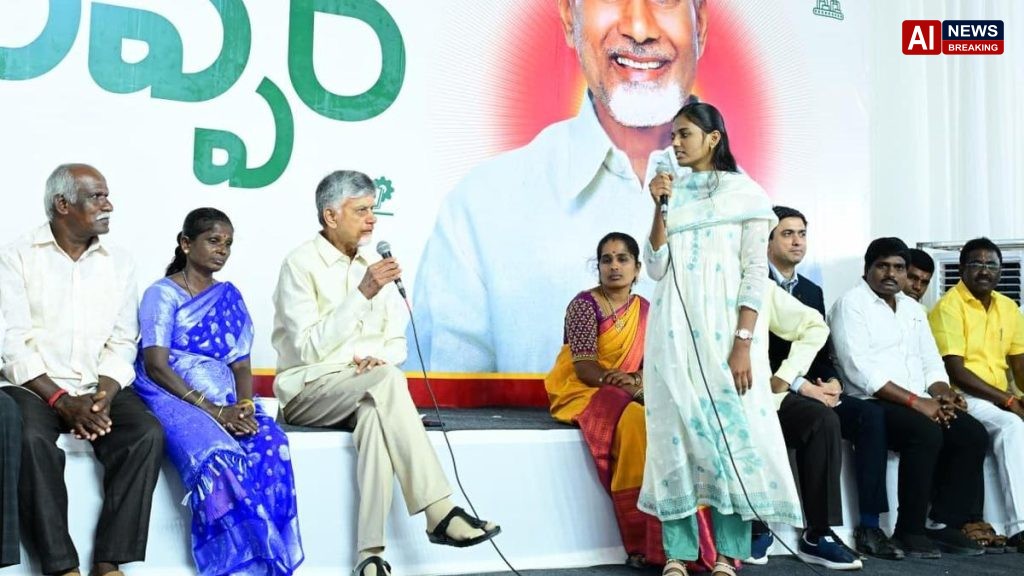
Naidu urges farmers to shift to natural farming, focus on biodiversity conservation - AI News Breaking
naidu urges farmers shift:
The chief minister of Andhra Pradesh, N. Chandrababu Naidu, used a series of infrastructure inaugurations in the town of Kuppam on Thursday to press a broader message to the state’s farming community: shift away from chemical‑intensive practices and embrace natural farming methods that protect biodiversity and soil health. Speaking before a crowd of local officials, cooperative leaders and small‑holder growers, Naidu linked the launch of a new irrigation canal, a rural broadband hub and a school renovation to a “green agenda” that he says will secure long‑term prosperity for the region’s agrarian sector.Naidu’s remarks came against a backdrop of mounting concern among scientists and policymakers about the environmental toll of synthetic fertilizers, pesticides and monoculture cropping that dominate much of India’s agricultural landscape..
Recent studies by the Indian Council of Agricultural Research (ICAR) indicate that excessive nitrogen and phosphorous applications have degraded soil organic matter in several districts of Andhra Pradesh, leading to reduced water infiltration, higher runoff and a rise in harmful algal blooms in nearby water bodies. The chief minister cited these findings, noting that “when the soil loses its vigor, the entire ecosystem suffers – from the microbes in the earth to the fish in our rivers and the health of our people.”In his address, Naidu outlined a series of state‑level incentives designed to encourage farmers to adopt natural farming techniques, a term that encompasses a range of low‑input practices such as crop diversification, intercropping, use of organic manures, and the preservation of native seed varieties. The government will reportedly expand the existing “Natural Farming Promotion Scheme” by increasing subsidies for compost production, providing free training through agricultural extension officers, and offering market linkages for organic produce..
Naidu highlighted a pilot project in the nearby Anantapur district where a cluster of 250 farms achieved a 12 percent increase in yield after converting to a mixed‑cropping system that reduced fertilizer use by 40 percent.The chief minister also stressed the importance of biodiversity conservation as a pillar of resilient agriculture. He pointed to the Western Ghats and the Eastern Ghats, both of which stretch into Andhra Pradesh, as critical habitats for pollinators, soil fauna and beneficial insects that naturally regulate pests. “If we protect these habitats, we protect the services they provide to our fields,” Naidu said, urging the creation of “pollinator corridors” that link fragmented forest patches and agro‑ecological zones..
The state plans to allocate an additional 5,000 hectares for community‑managed seed banks and native tree planting, projects that will be overseen by the Department of Forests in coordination with local panchayats.Farmers in Kuppam, many of whom rely on paddy and millets, expressed cautious optimism about the proposals. Ramesh Reddy, a 45‑year‑old cultivator who has cultivated the same plot for three generations, told reporters that the rising cost of urea and diammonium phosphate has squeezed his profit margins. “If the government can help us get organic inputs at affordable prices and guarantee a market for what we grow, it will make a real difference,” he said..
However, he also voiced concerns about the transition period, noting that natural farming often requires a learning curve and may involve initial yield fluctuations.Agricultural economists observing the speech noted that while natural farming can enhance soil carbon sequestration and reduce input costs, its scalability remains uncertain. Dr Anita Mohan of the Indian Institute of Management, Ahmedabad, cautioned that “policy design must address risk mitigation for smallholders, such as crop‑insurance schemes tailored to low‑input systems, and ensure that extension services are sufficiently staffed and equipped.” She added that the success of market linkages will hinge on consumer demand for organic products, which, while growing, still represents a modest share of total food consumption in the state.The chief minister’s emphasis on natural farming aligns with national policy shifts, including the Ministry of Agriculture’s recent “Soil Health Card” initiative and the central government’s pledge to increase the share of organic farming to 20 percent of total cultivated area by 2030. Naidu’s announcement also dovetails with the United Nations’ Sustainable Development Goal 15, which calls for the protection, restoration and sustainable use of terrestrial ecosystems..
By framing the agricultural transition as both an economic and environmental imperative, the Andhra Pradesh government hopes to attract investment from climate‑focused funds and development agencies.Critics, however, argue that the state’s rapid push for natural farming may overlook the complexities of local agronomy and market realities. The opposition party in the state assembly warned that “unrealistic promises without adequate financial support could leave vulnerable farmers worse off.” Environmental NGOs have echoed similar concerns, urging the government to pair subsidies with robust monitoring mechanisms to prevent illegal dumping of industrial waste, a problem that has plagued parts of the Krishna river basin in recent years.Despite the debate, Naidu concluded his speech by unveiling a new “Biodiversity Innovation Hub” in Kuppam, a research and training centre that will bring together scientists, agronomists and farmer groups to develop context‑specific solutions. The hub, he said, will serve as a “living laboratory” where traditional knowledge and modern science converge to create climate‑smart farming practices..
He invited local youth to participate, underscoring the need for a new generation of “farm‑guardians” who can steward the land while meeting the food demands of a growing population.As the ceremony drew to a close, the chief minister urged farmers to view the shift toward natural farming not as a sacrifice but as an opportunity to restore the vitality of their soils, safeguard water resources and secure a sustainable livelihood for their families. “Our fields are the lungs of the nation,” he said, “and by breathing cleaner, we breathe stronger.” The initiatives announced in Kuppam will now be monitored over the coming months, with the state pledging quarterly reports on fertilizer usage, soil health indicators and farmer incomes, data that will determine whether Andhra Pradesh can serve as a model for integrating ecological stewardship with agricultural productivity..
AP chief minister N. Chandrababu Naidu used Kuppam’s new irrigation canal, broadband hub and school upgrade to unveil incentives for natural farming, aiming to cut chemical inputs, boost soil health and link growers to organic markets. He pledged subsidies, training and a biodiversity hub, while critics warn the transition may strain smallholders without stronger risk‑mitigation measures.
By unveiling irrigation, broadband and a school as “green” projects, Naidu turns infrastructure into a symbolic pivot—suggesting that modernity and nature need not clash but can coexist in a single policy package.
If the incentives truly reach the hand that tills the soil, Andhra Pradesh could