 Trying to establish ‘facts’ about incident ‘apparently’ involving Indians on yacht off Yemen coast: India
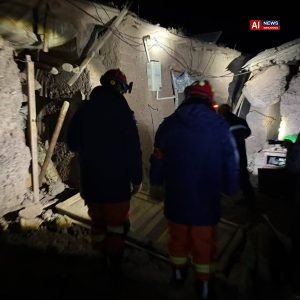
 Powerful Earthquake in Tibet Kills at Least 16
 How Pastors Mobilize Communities in Congo’s Fight Against Ebola
 Gadi Eisenkot
Palestinian Authority postpones elections
**
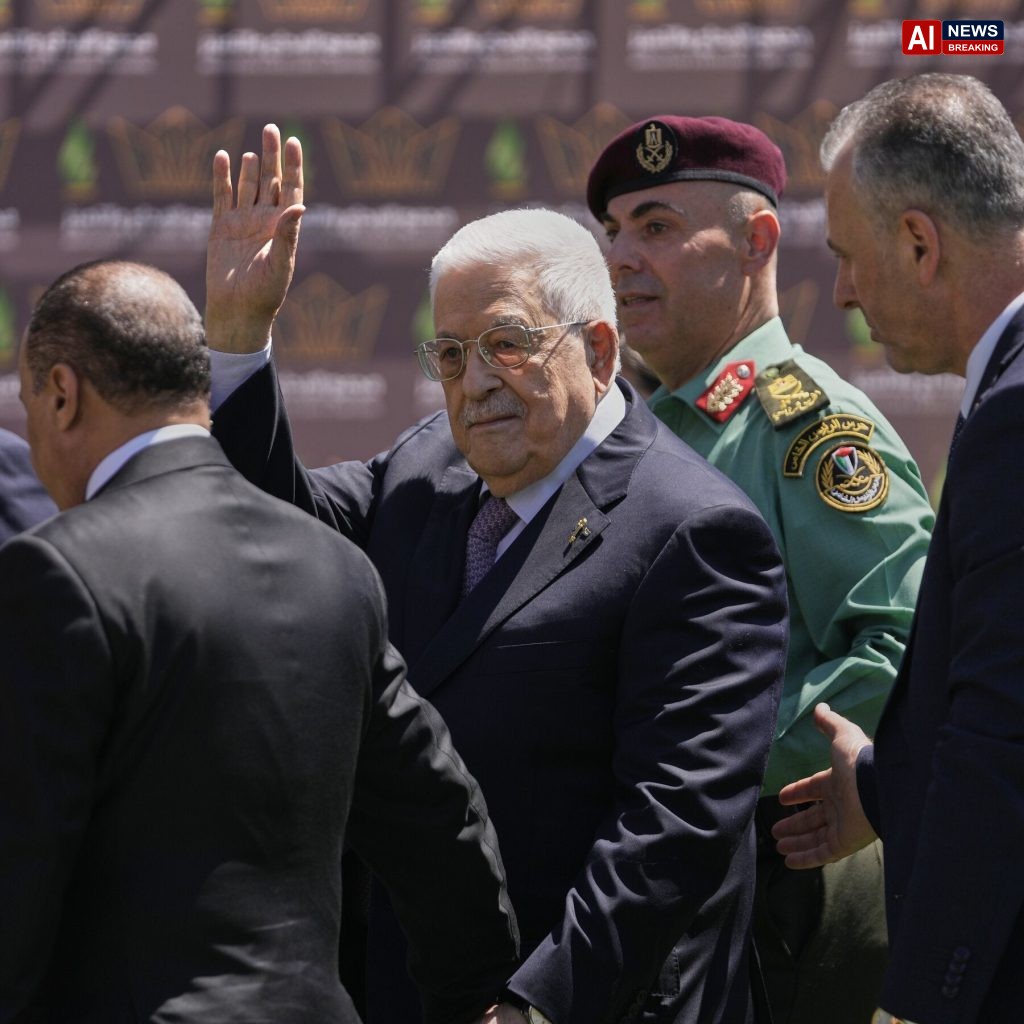
Palestinian Authority Formally Delays Elections, Despite Western Pressure - AI News Breaking
The Palestinian Authority announced on Thursday that it would postpone its long‑delayed national elections until late 2027, a decision that has sparked criticism from a range of international actors who view the delay as a setback for democratic progress in the region. The announcement came after months of political deadlock between the rival factions of Fatah and Hamas, which has prevented the organisation of a comprehensive electoral process since the 2006 elections that saw Hamas win a majority in the Palestinian Legislative Council.The move follows a statement from Mahmoud Abbas, the president of the Palestinian Authority, who said that the political circumstances still do not allow for a free and fair election. “The Palestinian people deserve elections that will truly represent their will, and that will be possible only when all parties come together and agree on a framework that guarantees transparency and security,” Abbas said in a televised address to the public..
He added that the delay would provide time for a renewed attempt at reconciliation and to resolve outstanding issues over security arrangements, voter registration and the conduct of the vote itself.Western leaders have expressed their concern over the announcement. The European Union’s external action service issued a statement urging the Palestinian leadership to resume the electoral timetable as soon as possible and to work toward a unified electoral system. The United States, through its embassy in Ramallah, reiterated the importance of elections as a cornerstone of democratic governance and urged that the delay be reconsidered in the interest of the Palestinian population..
Meanwhile, the United Nations Office for the Coordination of Humanitarian Affairs noted that the lack of a functioning parliamentary body hampers efforts to coordinate aid delivery and to address pressing social issues.Critics within the Palestinian territories have also voiced opposition. The political party Hamas, which controls the Gaza Strip, denounced the delay as a continuation of the Palestinian Authority’s attempt to maintain power. “We will not sit in silence while our people’s voices are muted,” said a senior Hamas official in a statement..
The statement called for a joint effort between Fatah and Hamas to hold elections that would be acceptable to all factions and reflective of the will of the entire Palestinian populace. Similar calls have come from civil society groups that argue the delay exacerbates frustration among young Palestinians who have grown up under the shadow of stalled political progress.The decision to push elections to 2027 also raises logistical questions. The Palestinian Authority’s electoral commission has been grappling with issues such as incomplete voter registration, insufficient polling stations, and a lack of resources to conduct a nationwide vote..
The commission’s chief, Saeed Makhoul, acknowledged that the delay will allow the Authority to address these deficiencies, but also warned that it would require additional funding from international partners. “We need to secure the necessary financial support to guarantee a fair, transparent and secure electoral process,” he said in an interview with a local news outlet.Abbas’s own political standing is under scrutiny. Having been in power since 2005, Abbas has faced criticism over his age and perceived inability to bring about meaningful political reform..
His decision to extend the electoral deadline has been interpreted by some analysts as an attempt to consolidate power in the absence of a functioning parliament. The long-running stalemate between Fatah and Hamas has left many Palestinians feeling politically disempowered and has fostered a sense of disenchantment with the existing leadership. The postponement could therefore deepen existing fractures within Palestinian society, complicating prospects for a united front.The international community has repeatedly urged the Palestinian leadership to address internal divisions, citing the need for a credible electoral process as a key step toward a viable two‑state solution..
The recent statement from the EU’s foreign policy chief, who emphasized that “democratic institutions are essential for any long‑term peace arrangement,” highlights the diplomatic weight of the issue. The United Nations has also called for a renewed dialogue between the two parties to restore a functioning parliament, which it considers vital for effective governance and for representing Palestinian interests in negotiations with Israel.Despite the delays, there are signs that reconciliation talks could be revived. A small group of moderate politicians from both sides has reportedly reached an informal agreement on a set of electoral reforms that could streamline the registration process and expand voter outreach..
If these discussions progress, they could lay the groundwork for a more inclusive electoral framework that would address long‑standing grievances about representation. However, the success of such talks will depend on the willingness of both factions to compromise and to commit to a transparent electoral process.The postponement comes at a time of heightened tensions in the region, with periodic flare‑ups along the Gaza–Israel border and renewed settlement activity in the West Bank. The lack of a stable governing body within the Palestinian territories hampers the ability to coordinate responses to security concerns and to negotiate with Israeli counterparts..
The delay has therefore been seen by many as a missed opportunity to strengthen internal governance mechanisms at a crucial juncture.In the months ahead, the Palestinian Authority’s decision to delay elections until 2027 will be closely watched by both domestic stakeholders and the international community. While the postponement may offer a chance to address logistical and political challenges, it also risks further eroding public confidence in the electoral process. The outcome of the ongoing reconciliation efforts will ultimately determine whether the Palestinian people can move forward with a democratic system that reflects their aspirations for self‑determination and a sustainable peace..
Updated: October 10, 2026
Abbas’s push to 2027 may be a calculated pause—enough time to iron out technical snags, yet risky enough that it could cement his perceived power‑grab amid an already fractured polity. If the stalled talks finally crack, the delay could morph from a setback into a blueprint for a