 Australia probes AI‑driven breach of My Health Record portal
  Engineering student’s ‘suicide’ turns out to be murder; two arrested
  Canada’s Capital Bids Good Riddance to Trump Avenue as Tensions With U.S. Rise
  Pentagon investigates after China obtains parts from F-35 stealth fighter jet
 PM Modi Calls NEET Paper Leak a National Issue, Says Students’ Future Must Remain Above Politics
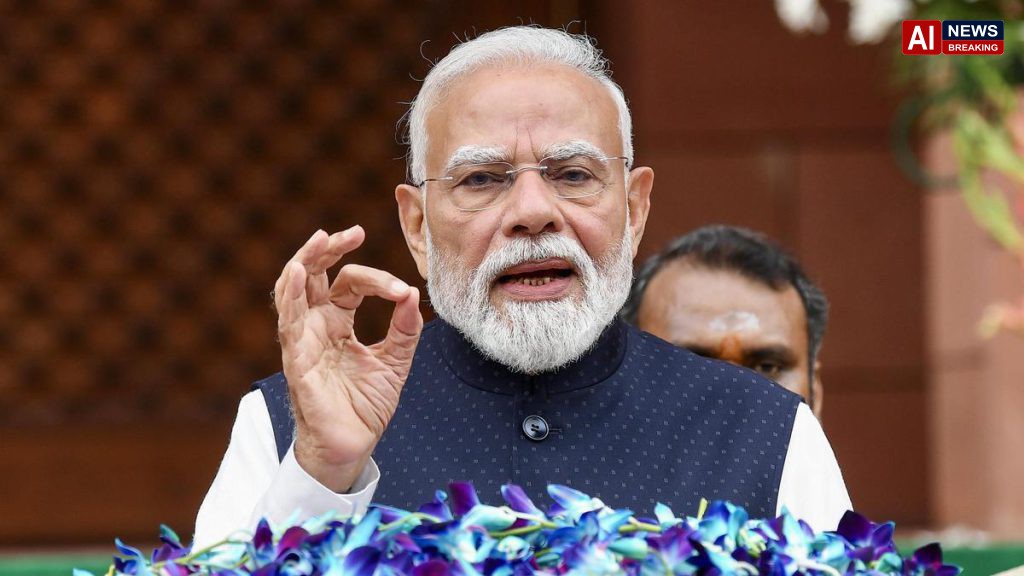
PM Modi hopes for productive monsoon season - AI News Breaking
Prime Minister Narendra Modi has called the NEET paper leak controversy a matter of national concern, stressing that the future of millions of students should not become a subject of partisan politics. Addressing the NDA Parliamentary Party meeting, the Prime Minister defended the government’s actions against those involved in the examination scandal and reaffirmed that safeguarding the aspirations of India’s youth remains one of the Centre’s highest priorities.
His remarks come amid widespread protests by students and opposition criticism over alleged irregularities in one of India’s most competitive entrance examinations. The issue has sparked nationwide debates over examination security, institutional accountability, and the need for comprehensive reforms in the country’s recruitment and testing mechanisms.
PM Modi Addresses NDA Parliamentary Party Meeting
During the meeting of National Democratic Alliance (NDA) Members of Parliament, Prime Minister Modi reportedly emphasized that the government has acted decisively against those responsible for the NEET paper leak.
According to Union Parliamentary Affairs Minister Kiren Rijiju, the Prime Minister stated that the matter should not be viewed through a political lens because it directly affects the aspirations and careers of millions of young Indians.
The Prime Minister highlighted that:
- The future of India’s youth remains the government’s top priority.
- Examination integrity is a matter of national importance.
- Strict action has been taken against those involved.
- Political parties should avoid exploiting the issue for partisan gains.
- Institutional reforms will continue to strengthen examination systems.
The Prime Minister’s remarks sought to position the controversy as a national challenge requiring collective political responsibility rather than political confrontation.
NEET Paper Leak Sparks Nationwide Concern
The National Eligibility-cum-Entrance Test (NEET) serves as India’s primary entrance examination for undergraduate medical education and is taken annually by millions of students across the country.
The alleged paper leak triggered:
- Massive student protests.
- Legal challenges.
- Parliamentary debates.
- Calls for examination reforms.
- Investigations by central agencies.
Students and parents have expressed concerns over the fairness and transparency of the examination process, arguing that paper leaks undermine merit-based admissions and damage public confidence in competitive examinations.
The controversy has evolved into one of the most significant education-related issues in recent years.
Centre Defends Its Response
Prime Minister Modi defended the government’s handling of the crisis, pointing to the steps taken by investigative agencies and relevant ministries.
The Centre has undertaken multiple measures, including:
- Arresting individuals allegedly involved in the leak.
- Expanding criminal investigations.
- Introducing legislative and administrative reforms.
- Strengthening examination security mechanisms.
- Coordinating with state governments and agencies.
Government representatives have repeatedly stated that those responsible for compromising examination integrity will face strict legal consequences.
The Prime Minister reportedly conveyed that protecting students’ interests remains central to every policy decision related to competitive examinations.
Massive Student Protests in Delhi
The Prime Minister’s comments come shortly after large-scale protests by students and youth organisations in Delhi demanding accountability and reforms.
Protesters have raised concerns regarding:
- Examination transparency.
- Fairness in the selection process.
- Accountability of testing agencies.
- Delays caused by controversies and investigations.
- Long-term educational reforms.
The demonstrations reflect growing public expectations for a robust and secure examination ecosystem capable of handling large-scale competitive tests.
The government has maintained that peaceful democratic expressions are respected while investigations continue.
NEET Is More Than an Examination
The Prime Minister reportedly highlighted that NEET is not merely an entrance test but a critical milestone that shapes the careers of millions of aspiring doctors.
The examination carries immense significance because:
- It determines admission to medical colleges across India.
- It impacts the professional aspirations of students.
- It influences public trust in educational institutions.
- It reflects the integrity of national-level testing systems.
Any compromise in examination security therefore has consequences that extend beyond individual candidates and affect the broader credibility of India’s educational framework.
Political Debate Continues
The opposition has accused the government of failing to prevent examination irregularities and has demanded greater accountability from institutions responsible for conducting national-level examinations.
Several political parties have called for:
- Comprehensive examination reforms.
- Greater transparency in investigation reports.
- Enhanced security protocols.
- Stronger legal safeguards against paper leaks.
The Centre, meanwhile, has argued that it has acted swiftly and decisively to address the issue.
Prime Minister Modi’s appeal against politicisation appears aimed at encouraging broader political consensus on educational reforms.
Examination Security Under Spotlight
The NEET controversy has reignited discussions regarding the security of India’s competitive examinations.
Experts have proposed several measures to strengthen examination systems, including:
- Advanced digital security protocols.
- Improved question paper logistics.
- Greater inter-agency coordination.
- Real-time monitoring mechanisms.
- Stricter penalties for organised cheating networks.
India conducts numerous large-scale examinations every year involving millions of candidates. Maintaining public confidence in these processes remains critical for ensuring merit-based opportunities.
Youth and Nation Building
Prime Minister Modi’s remarks also reflected a broader political message regarding the role of India’s youth in national development.
The government has consistently emphasized:
- Skill development initiatives.
- Educational reforms.
- Youth empowerment policies.
- Employment generation measures.
By describing the NEET controversy as a national issue rather than a political one, the Prime Minister underscored the importance of protecting the aspirations of young citizens irrespective of political affiliations.
What Happens Next?
Investigations into the NEET paper leak continue, while policymakers are expected to examine additional reforms aimed at improving examination security.
Future developments may include:
- Further legal action against accused individuals.
- New policy initiatives for examination management.
- Parliamentary discussions on educational reforms.
- Enhanced coordination between central and state agencies.
Students and parents will be closely watching how institutions implement long-term solutions designed to prevent similar incidents in the future.
Prime Minister Narendra Modi’s assertion that the NEET paper leak is a national issue highlights the significance of maintaining integrity within India’s education system. His appeal to avoid partisan politics and focus on protecting students’ futures reflects the broader importance of examination reforms and institutional accountability. As investigations continue and policy changes are considered, restoring public confidence in national-level examinations remains an urgent priority for both the government and educational institutions.
AI Insight: The NEET controversy underscores the growing importance of examination security in a country where competitive tests serve as gateways to educational and professional opportunities for millions of young people. Modern examination systems must balance scale, technological safeguards, and institutional transparency. Public trust in merit-based selection processes is fundamental to social mobility and national development. The debate surrounding NEET is therefore not only about one examination—it is about strengthening the credibility of India’s broader educational ecosystem for future generations.