 After Jamui, another minor girl molested in Bihar’s Samastipur
  Australia Investigates OpenAI Hack on Public Health Care Site
  Tech leaders to UN: For the sake of humanity, please control the AI technology we created
  Gulf nations have found ways to keep oil flowing
  France deploys patrol fleet to curb Channel migrant crossings
 Pope Leo Issues Warning on Unchecked AI Advancements in Landmark Encyclical
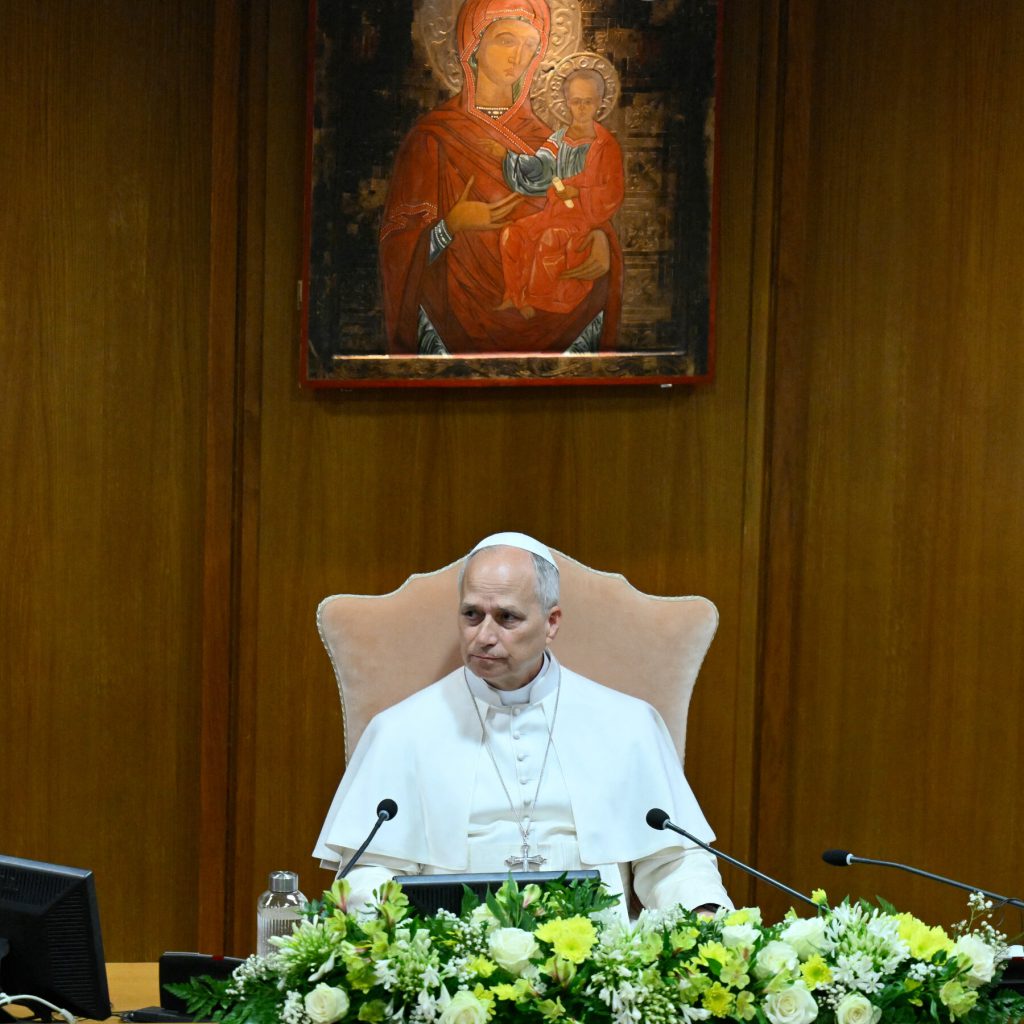
pope issues warning unchecked:
The Catholic Church has taken a significant step into the uncharted waters of the AI revolution, as Pope Leo weighs in on the perils of artificial intelligence in a lengthy encyclical.
The 42,300-word document marks a new era of moral leadership on the global stage, with the pontiff urging policymakers and tech giants to exercise caution in the development and deployment of AI technologies.
Updated: May 25, 2026
The Catholic Church has taken a significant step into the uncharted waters of the AI revolution, as Pope Leo weighs in on the perils of artificial intelligence in a lengthy encyclical. The 42,300-word document marks a new era of moral leadership on the global stage, with the pontiff urging policymakers and tech giants to exercise caution in the development and deployment of AI technologies.
In a major departure from the Church’s previous stance, Pope Leo’s encyclical acknowledges the far-reaching benefits AI can bring, but also outlines the alarming risks associated with unbridled technological advancements. At the heart of the document is a scathing critique of the lack of accountability and oversight in the AI industry, with the Pope lamenting the unchecked proliferation of autonomous machines and the blurring of lines between human and artificial intelligence.
The encyclical is a culmination of years of introspection and consultation, with the Pope having convened an inner-circle of advisors comprising leading AI researchers, ethicists, and theologians. While the Church has long been at the forefront of shaping public opinion on contentious issues, its foray into AI marks a bold attempt to assert its moral authority in a rapidly changing world.
The encyclical, written in the style of a traditional papal statement, yet infused with a modern tone and language, offers a comprehensive analysis of the risks and benefits of AI. Among its key findings is a stark warning about the perils of AI-driven automation, which could exacerbate existing economic disparities and displace millions of workers worldwide.
A separate section of the document touches on the existential risks posed by advanced AI capabilities, with the Pope expressing concern about the potential for AI to surpass human intelligence and become a menace to humanity. This echoes warnings made by prominent figures such as Elon Musk and Bill Gates, who have sounded the alarm on the dangers of superintelligent AI.
Pope Leo’s intervention comes at a critical juncture, as governments and technology leaders grapple with the implications of AI on society. The world’s leading economies, including the United States, China, and the European Union, are in the process of implementing AI strategies that will shape the future of work and governance.
Why this matters is twofold: Firstly, the Church’s endorsement lends credibility to the growing chorus of voices warning about the risks of AI. Secondly, it underscores the need for global cooperation to mitigate the dangers associated with AI, a challenge that will require policymakers to strike a delicate balance between innovation and regulation.
As governments and industry leaders continue to grapple with the implications of AI, the world awaits their response to the Pope’s impassioned plea for responsible innovation. With the stakes so high, it remains to be seen whether the Church’s moral leadership will have a lasting impact on the course of AI development.
In the months and years to come, expect intense debate and soul-searching around the role of AI in society. Governments, industry leaders, and civil society organizations will be forced to confront the uncomfortable truths outlined in the Pope’s encyclical. As AI continues to reshape the world, its ability to drive economic growth, improve health outcomes, and enhance productivity, remains inextricably linked to its capacity to perpetuate risks and exacerbate social inequalities.
Ultimately, Pope Leo’s encyclical serves as a clarion call to action, urging humanity to recognize the immense potential of AI and harness it for the greater good. As we chart a new course into the AI era, the world has a unique opportunity to get it right – to prioritize caution, accountability, and compassion in the pursuit of technological progress.
This encyclical marks a pivotal moment in the Church's shift from observer to catalyst for responsible innovation, forcing governments and tech giants to reexamine their approach to AI development.
By injecting moral authority into the AI conversation, Pope Leo has created a cultural moment where the pursuit of progress is no longer at odds with the pursuit of humanity's well-being.