 BJP Keralam unit questions State govt’s anti-corruption inquiry against CEC Gyanesh Kumar
  Prince Andrew files civil claim against
  SC asks Centre to furnish details on relocation of Central Secretariat Library under Central Vista project
  The Humanoid Robot Future Has Arrived at a South Korean Park. Sort of.
  Bihar MLC polls: JD(U) faces dissent; RLM to back own candidate
 Prince Andrew files civil claim against
**
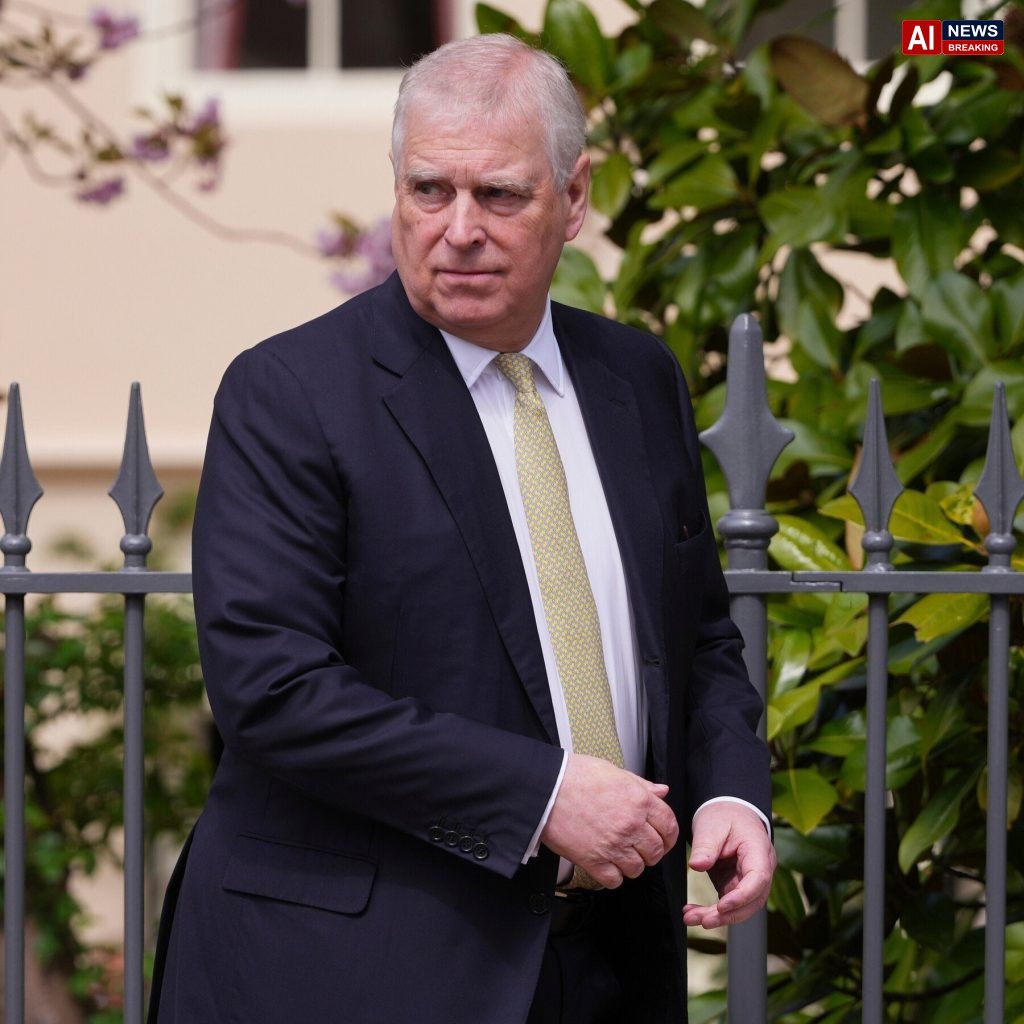
Prince Andrew files civil claim against - AI News Breaking
Former Prince Andrew, the Duke of York, has launched a civil claim against the Metropolitan Police Service, alleging unlawful arrest and mistreatment during an operation linked to the ongoing investigation into his association with the late financier Jeffrey Epstein. The lawsuit, filed in the High Court of Justice, seeks damages for what the Duke’s legal team describes as a “gross miscarriage of justice” and about the conduct of police officers tasked with enforcing the law in high‑profile cases.The arrest, which took place on 7 March, was the culmination of a months‑long probe by the National Crime Agency (NCA) and the Metropolitan Police into the Duke’s alleged involvement in a network that facilitated the sexual exploitation of minors. While the investigation has yet to result in any criminal charges, the arrest itself marked the first time a senior member of the royal family has been detained by police in modern history..
The Duke was released without charge after several hours in custody, but the episode has intensified public scrutiny of the royal institution and its ties to the disgraced American financier.In the claim, the Duke alleges that officers acted on “unsubstantiated and speculative intelligence” and that they failed to follow proper procedures governing the arrest of a public figure. The petition asserts that the police ignored legal advice that warned of the potential diplomatic and constitutional ramifications of detaining a senior royal. It also contends that the arrest was conducted in a manner that the Duke to unnecessary humiliation, including the use of forceful entry at his London residence and the presence of a large contingent of officers, which the petition describes as “a theatrical display designed to send a political message.”Legal experts note that the case hinges on whether the police can demonstrate that they had reasonable grounds for the arrest and that they adhered to the protocols set out in the Police and Criminal Evidence Act 1984 (PACE)..
Under PACE, a suspect may be arrested if there are “reasonable grounds” to suspect involvement in a criminal offence. The Duke’s counsel argues that the police’s justification rests on “thin and conjectural evidence” that does not meet the statutory threshold. If the court accepts this argument, the claim could set a precedent for how law‑enforcement agencies handle investigations involving individuals of high public standing.The Metropolitan Police, through its spokesperson, has responded cautiously, emphasizing that the arrest was “lawful and proportionate” and that the operation was conducted in accordance with established procedures..
The force declined to comment on the specifics of the intelligence that prompted the arrest, citing ongoing investigations and the need to protect operational integrity. However, it did acknowledge that the arrest was “highly sensitive” and that officers received briefings on the unique considerations surrounding a member of the royal family.The broader context of the case is the sprawling and controversial inquiry into Jeffrey Epstein’s activities, which have implicated numerous influential figures across the United States, the United Kingdom, and beyond. Epstein, who died by suicide in a Manhattan jail in 2019 while awaiting trial on federal sex‑trafficking charges, left behind a complex web of alleged co‑conspirators and facilitators..
In the UK, the NCA has been investigating claims that Epstein used his connections to secure access to under‑aged girls for powerful men, including the Duke, who has publicly denied any wrongdoing.The Duke’s legal team, led by senior barrister Sir James Eadie, has also requested the release of all material held by the police concerning the arrest, arguing that transparency is essential to assess the legitimacy of the operation. The petition cites a “right to a fair and open process” for any individual, irrespective of rank, and contends that the secrecy surrounding the investigation has fueled speculation and eroded public confidence in both the police and the monarchy.Public reaction to the lawsuit has been mixed. Some commentators view the claim as an attempt by the Duke to deflect attention from the substantive allegations of sexual misconduct and to recast himself as a victim of a politically motivated witch hunt..
Others argue that the case underscores the need for accountability in policing, particularly when powerful institutions are involved. Civil liberties groups have expressed support for the Duke’s right to challenge what they see as potential abuse of authority, while victims’ advocacy organisations caution against framing the issue solely in terms of procedural fairness, warning that it could marginalise the experiences of those allegedly harmed by Epstein’s network.The timing of the legal action also coincides with a broader reckoning within the British establishment. In recent months, senior officials have faced renewed pressure to address historic sexual abuse scandals, and the royal household has taken steps to distance itself from the Duke, including stripping him of his military affiliations and royal patronages..
The Queen’s death in September 2022 and the subsequent ascension of King Charles III have further heightened scrutiny of the monarchy’s internal governance and its relationship with law enforcement.If the High Court rules in favour of the Duke, the ramifications could be far‑reaching. A finding that the arrest was unlawful might compel the Metropolitan Police to review its protocols for handling high‑profile arrests and could result in significant financial compensation, potentially amounting to millions of pounds. It might also embolden other public figures to pursue similar claims, prompting a wave of litigation that could strain police resources and shift the focus of future investigations away from substantive criminal inquiries toward procedural disputes.Conversely, a judgment upholding the police’s actions would reinforce the authority of law‑enforcement agencies to act on credible intelligence, even when the subject is a member of the royal family..
It would signal that no individual is immune from investigative scrutiny and that the police retain discretion to intervene when there is a reasonable suspicion of criminal conduct. Such an outcome could also bolster public confidence in the impartiality of the justice system, reaffirming the principle that the rule of law applies equally to all citizens.The case is set to be heard later this year, with both sides expected to present extensive documentary evidence and witness testimony. The court will also consider whether the Duke’s claims fall within the ambit of “misfeasance in public office,” a tort that requires proof of deliberate wrongdoing by a public authority..
Legal scholars note that proving such a claim is notoriously difficult, particularly when national security or public interest considerations are invoked.As the legal battle unfolds, the broader narrative surrounding the Epstein investigation remains unresolved. The NCA has yet to disclose whether additional arrests are forthcoming, and the Crown Prosecution Service has not indicated any intent to bring charges against the Duke. Meanwhile, the royal family continues to navigate a delicate balancing act, seeking to preserve institutional integrity while addressing the public’s demand for transparency and accountability..
The outcome of the Duke’s lawsuit will likely influence not only the immediate handling of the case but also the future relationship between the monarchy, the media, and the institutions tasked with up.
Updated: October 5, 2026
Prince Andrew has sued the Metropolitan Police, claiming his March arrest over the Epstein probe was unlawful and amounted to a “gross miscarriage of justice.” The High Court will decide whether the police acted on sufficient evidence, a ruling that could reshape how authorities handle high‑profile arrests.