Europe warns of Russia’s hybrid attacks but struggles to counter them
  Former chief election commissioner calls SIR scheme illegal.
  A Corruption Scandal Is Reshaping Brazil’s Presidential Election
  US citizen injured in Illinois after ICE agents mistook him for fugitive, tried to arrest him
  At 10 years old, Smithsonian’s Black museum is undaunted amid pressure from Trump administration
 Rahul Gandhi, M.K. Stalin Distance Suggests Trouble in Indian Congress-DMK Alliance
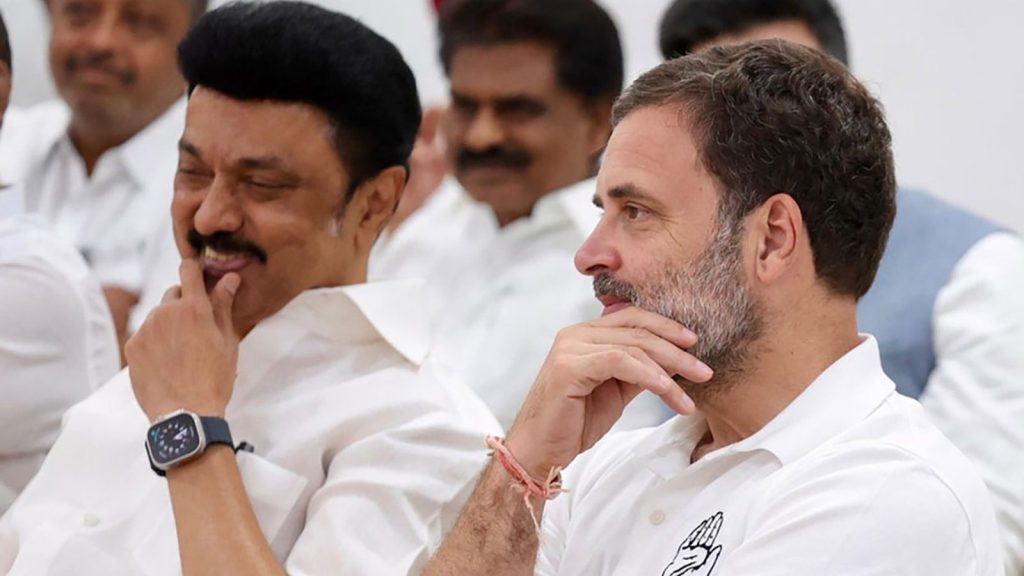
rahul gandhi stalin distance:
The political optics in Tamil Nadu’s ongoing campaign have triggered intense speculation after Congress leader Rahul Gandhi and Tamil Nadu Chief Minister M.K. Stalin—once seen as close allies—conspicuously avoided sharing the stage. Their absence together at key rallies has raised questions about the current state of the Congress–DMK alliance, long considered one of the most stable partnerships in Indian politics.
For years, Rahul Gandhi and Stalin projected a strong sense of camaraderie. Their public interactions—ranging from joint press briefings to coordinated campaign strategies—helped cement the perception of a united opposition front, especially against the BJP at the national level. Stalin had often referred to Rahul Gandhi in warm terms, while Congress leaders routinely praised the DMK’s governance in Tamil Nadu. This “brotherhood” narrative played well politically, reinforcing voter confidence in alliance cohesion.
However, the current campaign tells a more complicated story.
Absence That Speaks Volumes
Political observers were quick to notice that Rahul Gandhi’s campaign events in Tamil Nadu were conducted largely independent of DMK leadership. Similarly, Stalin’s rallies did not prominently feature Congress leaders. In a political culture where symbolism carries weight, such scheduling decisions are rarely accidental.
While both parties have downplayed the significance of this development, insiders suggest that the absence of joint appearances reflects deeper strategic recalibrations rather than a breakdown of ties. Elections, after all, are as much about optics as they are about arithmetic.
Seat-Sharing Sensitivities
One of the key factors contributing to this visible distance is believed to be seat-sharing negotiations. Though the Congress remains a junior partner in Tamil Nadu, it has been pushing for a larger share of seats to regain relevance in the state. The DMK, on the other hand, is keen to maintain its dominant position and avoid conceding too much political ground.
Such negotiations often lead to friction, even among long-standing allies. By campaigning separately, both parties may be attempting to consolidate their individual voter bases without appearing overly dependent on each other. This approach allows each party to project strength while still maintaining the formal alliance structure.
Local vs National Priorities
Another dimension to this evolving dynamic is the difference in political priorities. For Stalin and the DMK, the Tamil Nadu campaign is rooted in regional issues—governance, social justice, language identity, and state autonomy. Rahul Gandhi’s messaging, however, tends to focus on broader national themes such as economic inequality, institutional integrity, and federalism.
These differing emphases can create logistical and messaging challenges during joint rallies. A shared platform requires a harmonized narrative, which may not always align seamlessly between regional and national agendas. By holding separate events, both leaders can tailor their messaging more effectively to their respective audiences.
Strategic Autonomy or Subtle Distancing?
Some analysts interpret the lack of joint appearances as a calculated move by the DMK to assert strategic autonomy. With Stalin firmly entrenched as a strong regional leader, there is little political incentive to share the spotlight extensively. Maintaining a degree of distance from national figures—even allies—can reinforce the DMK’s image as a party rooted in Tamil identity and interests.
At the same time, the Congress may also benefit from showcasing Rahul Gandhi as an independent campaigner capable of drawing crowds without relying heavily on regional partners. This is particularly important for a party seeking to rebuild its organizational strength across states.
No Formal Rift—Yet
Despite the visible change in campaign style, there is no official indication of a rift between the two parties. Both Congress and DMK leaders have reiterated their commitment to the alliance, emphasizing that coordination continues behind the scenes. Joint strategy meetings, policy alignment, and mutual support at the leadership level remain intact, according to party sources.
It is also worth noting that electoral alliances in India often operate with a degree of flexibility. Public appearances—or the lack thereof—do not always reflect the full extent of political cooperation. In many cases, behind-the-scenes coordination plays a more निर्णutive role than on-stage optics.
Impact on Voters
For voters, the absence of Rahul Gandhi and Stalin on a shared stage may create mixed perceptions. While core supporters of both parties are unlikely to shift allegiance, undecided voters could interpret the lack of visible unity as a sign of underlying tension. Opposition parties, particularly the BJP and AIADMK, are likely to exploit this narrative to question the stability of the alliance.
However, Tamil Nadu’s political landscape has historically been shaped more by party loyalty and regional identity than by campaign optics alone. The DMK’s organizational strength and governance record, combined with the Congress’s residual support base, continue to provide a solid electoral foundation.