A Critic of Beijing Falls Short in Taiwan’s Key Mayoral Election
 EPA says no rise in contamination after Army detonates lead azide stockpile in Iowa
 Israeli Strike Kills 2 Workers at Gaza Clinic, Doctors Without Borders Says
 McQueen Pre-Fall 2027
 Mushfiqur Rahim to retire from Test cricket in February 2027
Review: Godzilla Minus Zero joins the list of truly stellar sequels
**
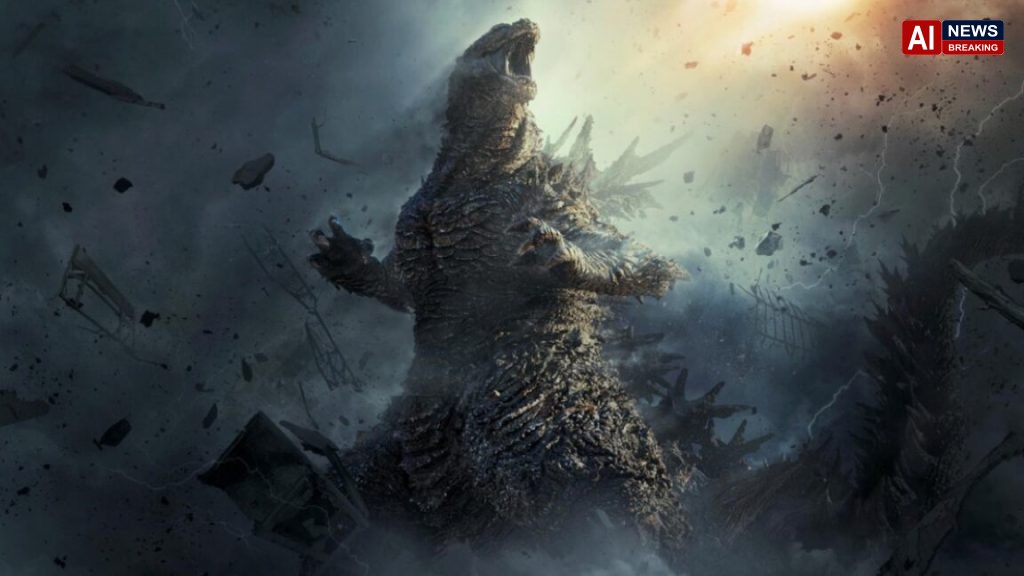
Review: Godzilla Minus Zero joins the list of truly stellar sequels - AI News Breaking
review godzilla minus zero:
Takashi Yamazaki’s latest outing, Godzilla Minus Zero, arrives as a rare sequel that not only lives up to the high bar set by its predecessor, Godzilla Minus One, but also stakes a claim among the few follow‑ups that have genuinely expanded their parent’s legacy. The film opens in a Japan still reeling from the aftershocks of the 2023 disaster, a landscape that feels both familiar and freshly unsettling. Yamazaki’s decision to situate his narrative in the immediate post‑war era – a period already steeped in the mythic weight of the original 1954 Gojira – grants the story a gravitas that transcends mere monster spectacle..
The nation’s scarred cities, the lingering presence of Allied occupation and the palpable anxiety of a people trying to rebuild provide a fertile ground for the human drama that underpins the colossal clashes to come.The screenplay, penned by Yamazaki in collaboration with longtime partner Ryoichi Kimizuka, leans heavily on personal loss as its emotional engine. Central to the plot is Aiko Tanaka (played with restrained intensity by Haruka Abe), a widowed schoolteacher whose husband perished in the initial Godzilla attack. Her struggle to keep her young son, Kenta, alive amidst the chaos mirrors the broader societal effort to preserve hope..
The film’s human core is never reduced to a simplistic “monster‑versus‑man” dichotomy; instead, it explores how collective trauma can manifest as both resilience and desperation. In several quiet scenes – a family huddled in a bomb shelter, a group of workers salvaging debris for scrap – Yamazaki demonstrates an acute awareness that the true terror of the kaiju lies not only in its physical destruction but in the way it forces a nation to confront its own fragility.From a technical standpoint, Minus Zero is a triumph of practical effects and cutting‑edge CGI working in tandem. The titular monster, designed by veteran creature artist Shinji Nishimura, feels like a natural evolution of the design introduced in Minus One..
Its skin bears a texture reminiscent of volcanic rock, and subtle luminescent veins pulse with an inner energy that suggests a being both ancient and newly awakened. The new antagonist, a colossal, bioluminescent leviathan dubbed “Kurogane” by the military, is rendered with a level of detail that blurs the line between digital construct and physical model. The climactic battle in the outskirts of Osaka showcases a seamless blend of miniature set work, motion‑capture performances, and atmospheric lighting that makes the devastation feel visceral rather than merely spectacular.The film’s pacing deserves special mention..
While the first half methodically builds tension through the eyes of ordinary citizens, the second half accelerates into a kinetic showdown that never feels rushed. Yamazaki’s use of long, uninterrupted takes during the monster fights allows viewers to absorb the scale of destruction, while strategic close‑ups on the faces of terrified civilians keep the human element anchored. This balance prevents the narrative from slipping into the “monster‑movie fatigue” that has plagued many recent entries in the genre..
Moreover, the director’s choice to intersperse moments of quiet reflection – a scene where Aiko watches the sunrise over a smoldering horizon, for instance – provides a necessary emotional breather before the final, cataclysmic clash.One of the film’s most compelling achievements is its handling of political intrigue. The Japanese Self‑Defense Forces, under the command of General Hiroshi Saito (a stoic veteran portrayed by Koji Yakusho), grapple with the dilemma of deploying a newly developed anti‑kaiju weapon, the “Zero‑Pulse”. This device, based on experimental quantum research, promises to neutralise Godzilla’s atomic core but carries the risk of triggering an uncontrollable chain reaction..
The moral calculus of using such a weapon – potentially sacrificing a city to save the nation – is explored through heated debates in the National Diet and candid conversations among the scientists. Yamazaki refuses to offer easy answers; instead, he presents the audience with a spectrum of perspectives, from nationalist fervour to pacifist caution, echoing the very debates that surrounded the original 1954 film’s release.Musically, the score, composed by Kenji Kawai in his third collaboration with Yamazaki, weaves traditional Japanese instrumentation with low‑frequency drones that echo the rumble of tectonic plates. The haunting choral passages that accompany the monsters’ arrival serve as a reminder of the mythic roots of the kaiju, while the more contemporary synth‑heavy tracks during action sequences keep the film grounded in modern cinematic language..
The auditory design, particularly the deep, resonant roars of Godzilla and the eerie, high‑pitched cries of Kurogane, contributes significantly to the film’s immersive quality, ensuring that the audience feels the tremors not just visually but physically.While the film excels on many fronts, it is not without its minor missteps. Certain secondary characters, such as the idealistic journalist Masato (played by Takeru Satoh), receive limited development, serving more as narrative devices than fully fleshed individuals. Additionally, the exposition surrounding the scientific basis of the Zero‑Pulse occasionally slips into dense jargon, which may alienate viewers less familiar with quantum mechanics..
However, these issues are eclipsed by the overall strength of the storytelling and the sheer spectacle of the final battle, which remains a masterclass in choreography and visual storytelling.In the broader context of the Godzilla franchise, Minus Zero signals a decisive shift toward a more thematically ambitious direction. Earlier entries in the “Shin” series, while visually impressive, often prioritized set‑piece action over substantive commentary. Yamazaki, by contrast, integrates the monsters as extensions of Japan’s historical anxieties, drawing parallels between nuclear trauma, environmental degradation and the contemporary climate crisis..
The film’s concluding tableau – a battered yet hopeful Japan staring at a sunrise that seems both promising and ominous – suggests that the true battle may never be against the kaiju themselves, but against the cycles of destruction that humanity perpetuates.Critics and audiences alike have responded positively, with early box‑office numbers indicating a robust domestic performance and strong overseas interest, particularly in markets where the kaiju genre enjoys a cult following. The film’s ability to appeal to both long‑time fans and newcomers speaks to Yamazaki’s deft hand at balancing reverence for tradition with innovative storytelling. As the credits roll, the lingering question is not whether Godzilla will return – that is now a given – but how future filmmakers.
Updated: November 21, 2026
By embedding post‑war trauma within a kaiju spectacle, Yamazaki reframes Godzilla as a barometer for Japan’s lingering nuclear guilt and its climate‑era anxieties, urging audiences to see monster attacks as mirrors of self‑inflicted catastrophe. The film’s deft blend of nostalgic craft and politicised narrative may well steer future franchise entries toward socially resonant mythmaking rather than pure blockbuster formulae.