Spotify Tightens Family Plan Controls with QR Code Verification
 Use of Chief Minister C. Joseph Vijay’s deep fake videos to collect money: Rajasthan youth moves Madras High Court seeking bail
 Florida officer took possession of man’s home after finding him dead 4 years ago, police say
 Jury weighs fate of US woman who says father forced her into Syria’s war zone when she was a teen
Russia Detains Japanese Journalist for Alleged Espionage
**
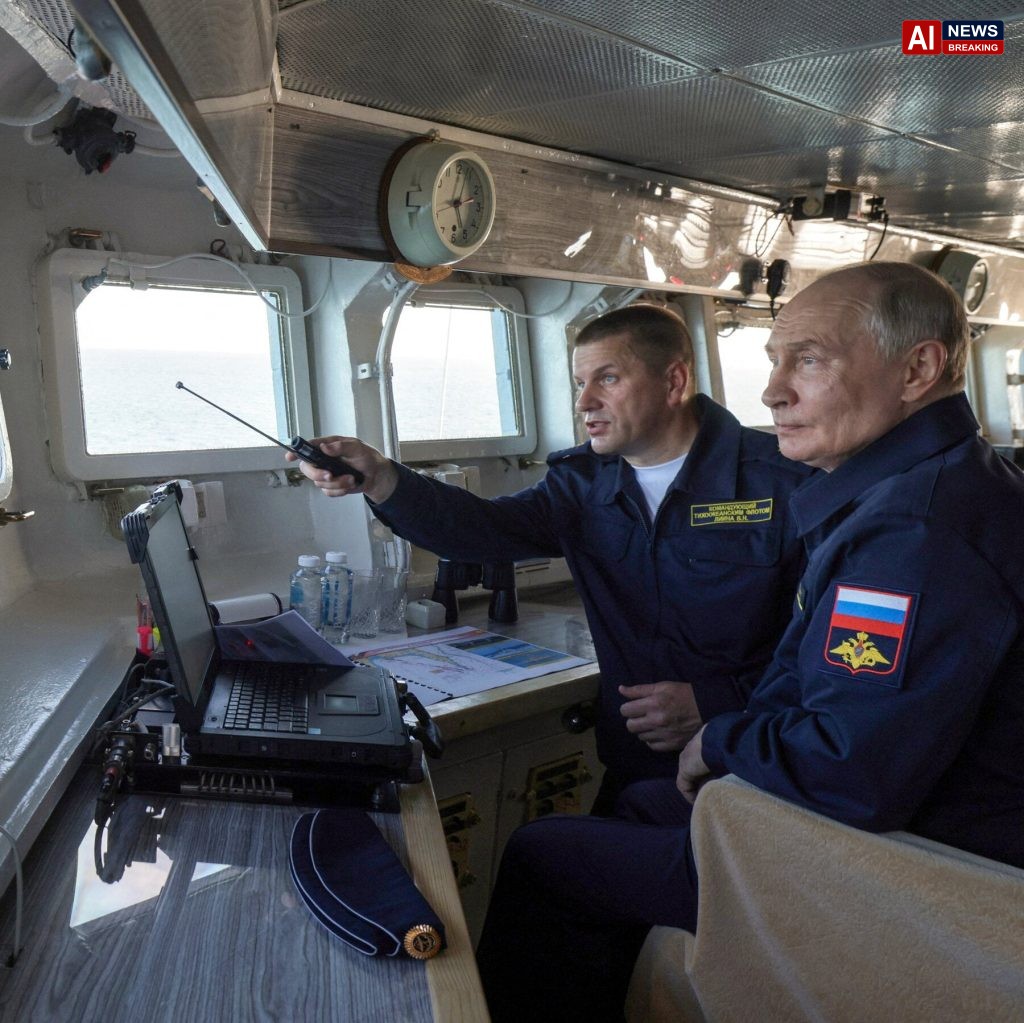
Russia Detains Japanese Journalist for Alleged Espionage - AI News Breaking
Russia’s Federal Security Service (FSB) announced on Tuesday that it had detained a Japanese reporter working for the Hokkaido Shimbun newspaper on charges of espionage, a move that has drawn criticism from press‑freedom advocates and heightened diplomatic tensions between Moscow and Tokyo. The journalist, whose name has not been released, was reportedly apprehended in the city of Khabarovsk, a strategic hub in Russia’s far‑eastern region, after a series of investigations by the FSB’s counter‑intelligence division. According to the agency, the reporter was suspected of gathering classified information about the Russian military’s recruitment activities, a claim that the newspaper’s editorial board has dismissed as “baseless” and politically motivated.The incident unfolds against a backdrop of increasingly strained relations between Russia and several Western-aligned nations, with journalists often finding themselves caught in the crossfire of geopolitical rivalries..
In recent years, Moscow has tightened its grip on media operating within its borders, imposing strict registration requirements and expanding the scope of what it deems “state s.” While the FSB’s statement did not disclose specific evidence, it asserted that the journalist had accessed documents and conducted interviews that fell outside the permissible limits for foreign correspondents, thereby violating Russian law on the protection of state s.The Hokkaido Shimbun, one of Japan’s regional newspapers, issued a brief statement expressing concern for the safety of its correspondent and urging the Russian authorities to provide transparent legal procedures. The paper reiterated that its reporter was in Russia to cover “publicly available information on military recruitment drives” and denied any involvement in intelligence‑gathering activities. In a separate communiqué, the Japanese Ministry of Foreign Affairs called for “the immediate and unconditional release” of the journalist, describing the detention as “unacceptable” and urging Moscow to respect the rights of foreign journalists under international conventions.Human‑rights organisations have quickly taken note..
Reporters Without Borders (RSF) condemned the detention as part of a “wider pattern of intimidation” directed at foreign journalists in Russia, noting that the country has seen a sharp decline in press freedom rankings over the past decade. RSF’s director, Christophe Deloire, warned that the case could set a “dangerous precedent” for the treatment of reporters covering sensitive topics such as defence, security and foreign policy. The Committee to Protect Journalists (CPJ) similarly urged the Russian government to clarify the legal basis for the arrest and to ensure that the journalist receives a fair trial in accordance with both Russian law and international standards.Legal experts familiar with Russian espionage statutes note that the definition of “state ” is often vague, allowing authorities a broad discretionary power to classify a wide array of information..
Under Russia’s Criminal Code, espionage carries a potential sentence of up to twenty years in prison, a penalty that underscores the seriousness with which the state views any perceived breach. Critics argue that the lack of clear parameters creates an environment where legitimate investigative reporting can be criminalised, especially when the subject matter intersects with national security.The detention also about the operational challenges faced by foreign correspondents in Russia’s far east, a region that has seen a surge in military recruitment campaigns amid the ongoing conflict in Ukraine. Khabarovsk, situated near the Chinese border, hosts several military training centers and is a focal point for the Russian Ministry of Defence’s efforts to bolster troop numbers..
Journalists covering these developments often rely on public statements, local officials and on‑the‑ground observations, sources that Russian authorities have increasingly labelled as “sensitive.” The ambiguity surrounding what constitutes permissible reporting has left many foreign media outlets to weigh the risks of sending correspondents to the area.In Moscow, the government has defended its actions as necessary to protect national security interests. A spokesperson for the FSB emphasized that the agency’s investigation was conducted “in accordance with the law” and that any individual, regardless of nationality, who breaches state secrecy will be held accountable. The spokesperson declined to comment on the specific nature of the alleged documents or the journalist’s alleged contacts, citing procedural confidentiality..
Meanwhile, Russian President Vladimir Putin has not publicly addressed the case, maintaining his administration’s broader stance of limiting external scrutiny of defence matters.Tokyo’s diplomatic response has been measured but firm. The Japanese embassy in Moscow issued a note to the Russian Foreign Ministry requesting detailed information about the charges, the evidence, and the timeline for a judicial hearing. The embassy also warned that any violation of the journalist’s rights could lead to a “reciprocal response” affecting Russian nationals in Japan..
While no official retaliation has been announced, the incident adds to a growing list of grievances that Japan has raised with Moscow, ranging from trade disputes to concerns over maritime security in the Sea of Japan.The broader international community is watching closely, with several Western governments urging Russia to adhere to its obligations under the International Covenant on Civil and Political Rights, which guarantees freedom of expression and the right to a fair trial. The United States State Department released a brief statement urging “respect for press freedom and the rule of law” in Russia, a sentiment echoed by the European Union’s diplomatic corps. Analysts suggest that the case could become a flashpoint in the already tense diplomatic landscape, potentially influencing negotiations on other contentious issues such as sanctions and energy cooperation.As the situation develops, the journalist’s fate remains uncertain..
Russian law permits a pre‑trial detention period of up to thirty days for espionage suspects, after which the case must be brought before a court. Observers note that past instances of foreign journalists detained on similar grounds have often resulted in prolonged legal battles, with outcomes ranging from release on bail to extended prison sentences. The Hokkaido Shimbun has pledged to continue monitoring the case and to provide updates to its readership, while also urging its staff worldwide to exercise caution when covering topics deemed sensitive by host governments..
The incident underscores the precarious balance between national security imperatives and the fundamental right of a free press to report on matters of public interest, a balance that is increasingly contested in an era of heightened geopolitical rivalry..
Updated: October 13, 2026