Trump administration offers mixed messages on limits to Ukraine’s Starshield access
 US Treasury proposes a rule to crack down on high-tech investments in China, other adversaries
 Calley Means, a key MAHA advocate, resigns as a top RFK Jr. adviser
 Spotify Tightens Family Plan Controls with QR Code Verification
 Use of Chief Minister C. Joseph Vijay’s deep fake videos to collect money: Rajasthan youth moves Madras High Court seeking bail
Two bridges complete coastal road link between Kollam and Koyilandy harbour
**
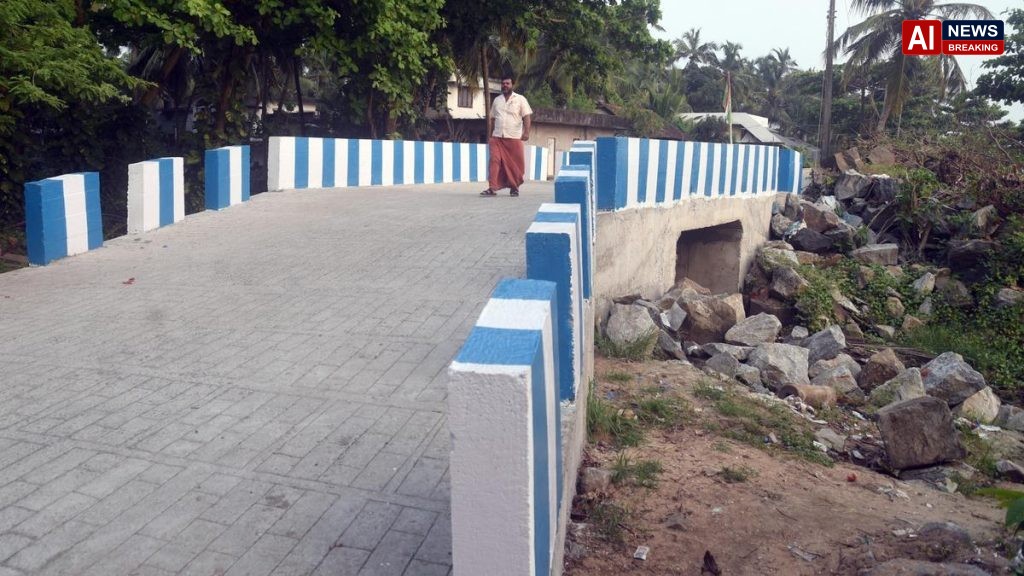
Two bridges complete coastal road link between Kollam and Koyilandy harbour - AI News Breaking
The state government has announced the completion of two new bridges that will seal a long‑awaited coastal road link between the fishing villages of Kollam, Arayankavu and Gurukulam beach and the historic Koyilandy harbour on the Malabar coast. The infrastructure, built at a cost of ₹1.16 crore, was funded by the Harbour Engineering Department and is expected to transform daily commutes for thousands of fisherfolk, reduce traffic on the national highway and stimulate economic activity in the region.Construction of the bridges began three years ago under a joint initiative of the Kerala Public Works Department and the Harbour Engineering Department, whose mandate includes improving maritime access for local communities. The project was identified as a priority after a series of consultations with fishermen’s cooperatives, who highlighted the difficulties of navigating the congested NH 66 corridor, especially during monsoon seasons when landslides and heavy traffic often render the highway impassable..
The new coastal road, now fully operational, runs parallel to the shoreline for roughly 12 kilometres, connecting the three beachside settlements directly to the Koyilandy harbour, a hub for both commercial and traditional fishing vessels.The first bridge, spanning the Kalliyil River near Kollam, measures 85 metres in length and incorporates a pre‑stressed concrete deck designed to withstand the corrosive saline environment typical of coastal structures. Engineers employed a modular construction technique that allowed the bridge components to be prefabricated off‑site and assembled in situ, minimizing disruption to the river’s flow and local ecology. The second bridge, crossing the smaller Arayankavu Canal, is 45 metres long and features a single‑lane carriageway with a pedestrian walkway, catering to both vehicular traffic and foot traffic of market vendors and schoolchildren.Local residents gathered on Saturday for an inauguration ceremony presided over by the Minister for Fisheries and Ports, who praised the project as a “lifeline for our coastal communities.” He noted that the bridges would not only shorten travel time—cutting the journey from the villages to the harbour from an average of 45 minutes to just 12—but also reduce fuel consumption and emissions by keeping traffic off the main highway..
“When fishermen can bring their catch to market faster, they earn more and we all benefit,” he said, before cutting a ceremonial ribbon.Fisherfolk who have already begun using the new route expressed optimism. Abdul Rahman, a third‑generation fisherman from Gurukulam, told reporters that the previous reliance on NH 66 meant navigating steep, winding sections that were dangerous during high tide. “Now we can take the road straight to the harbour, unload the boats, and get the fish to the cold storage units without delay,” he explained..
“It also means we can get our children to school on time, because the old road would often be blocked.” Similar sentiments were echoed by Lakshmi Nair, who runs a small fish processing unit in Arayankavu. She said the improved logistics could open up opportunities for exporting fresh produce to nearby districts, a market that was previously out of reach due to transportation bottlenecks.Economic analysts suggest that the bridge link may have a ripple effect beyond the immediate fishing sector. By diverting a substantial portion of local traffic away from NH 66, the new road could alleviate congestion in nearby towns such as Kozhikode, where the national highway is a critical artery for inter‑state commerce..
Moreover, the improved accessibility may attract ancillary businesses, including cold‑storage facilities, repair workshops and tourism operators interested in promoting coastal ecotourism. “Infrastructure is the backbone of regional development,” said Dr. Ramesh Menon, a senior fellow at the Kerala Institute of Development Studies..
“When you provide reliable, low‑cost connectivity for primary producers, you lay the groundwork for a more diversified local economy.”Environmental groups have monitored the project closely, given the delicate coastal ecosystems it traverses. The Harbour Engineering Department conducted a comprehensive Environmental Impact Assessment before construction, recommending measures such as mangrove re‑planting and the installation of sediment traps to prevent runoff from eroding riverbanks. Post‑construction monitoring will continue for the next two years, with periodic reports submitted to the State Pollution Control Board..
So far, preliminary data indicate that the bridges have not significantly altered tidal patterns or marine biodiversity, and the inclusion of a pedestrian walkway encourages non‑motorised movement, aligning with the state’s broader sustainability goals.The successful completion of the bridges also highlights the effectiveness of targeted funding mechanisms within the Harbour Engineering Department, which allocated the ₹1.16 crore budget entirely from its capital development pool. This approach contrasts with earlier infrastructure projects that relied on fragmented financing and often faced delays due to bureaucratic red tape. Officials credit the streamlined procurement process, which involved a single tender for both bridges, for keeping the project on schedule and within budget..
“When we centralise the responsibility and ensure clear lines of accountability, we can deliver public works more efficiently,” the department’s chief engineer, Anil Kumar, remarked.Looking ahead, the state plans to integrate the coastal road into a wider network of coastal highways that aim to connect Kerala’s extensive shoreline, spanning from the southern tip at Thiruvananthapuram to the northern reaches of Kannur. The broader vision includes additional bridges, causeways and ferry terminals designed to boost resilience against climate‑induced sea‑level rise and extreme weather events. For now, the Kollam–Koyilandy link stands as a tangible example of how focused infrastructure investment can directly improve the livelihoods of coastal communities, enhance safety on the roads, and lay the foundation for future growth in one of India’s most vibrant maritime regions..
Updated: October 13, 2026
Insight: The new bridges do more than cut travel time—they signal a shift toward treating coastal livelihoods as a strategic economic asset, not a peripheral concern. By redirecting traffic from a congested national artery, Kerala is quietly re‑wiring its supply chain, freeing up the highway for long‑haul commerce while unlocking fresh markets and services for small‑scale fishers.