 Saudi faces Iranian attacks amid U.S. refusal to provide aid.
  US Stock Futures Slide as AI Safety Warnings Shake Tech Stocks and Oil Prices Rise
  Ferry sinks in Java Sea; 6 dead, over 120 missing
  Bengaluru faces mobility crisis as commute times average 90 minutes
  Trump increases social media output using AI tools
 Saudi faces Iranian attacks amid U.S. refusal to provide aid.
**
Saudi faces Iranian attacks amid U.S. refusal to provide aid. - AI News Breaking
Riyadh is currently grappling with what regional analysts are describing as a worst-case strategic scenario, following a series of diplomatic and military setbacks that have left the kingdom and uncertain. The situation, which has intensified over recent weeks, stems from a combination of renewed aggression by Iran and a notably lukewarm response from Washington under the presidency of Donald Trump. For decades, Saudi Arabia has anchored its foreign policy on the assumption of unwavering American support, a pillar of stability that appears to be fracturing under the weight of shifting geopolitical priorities and hostile regional dynamics.The immediate catalyst for this anxiety was a series of targeted attacks by Iranian-backed militias against key infrastructure in eastern Saudi Arabia..
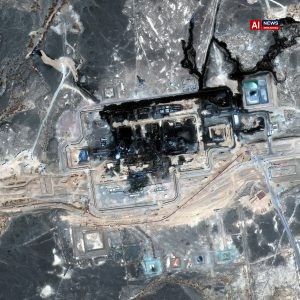
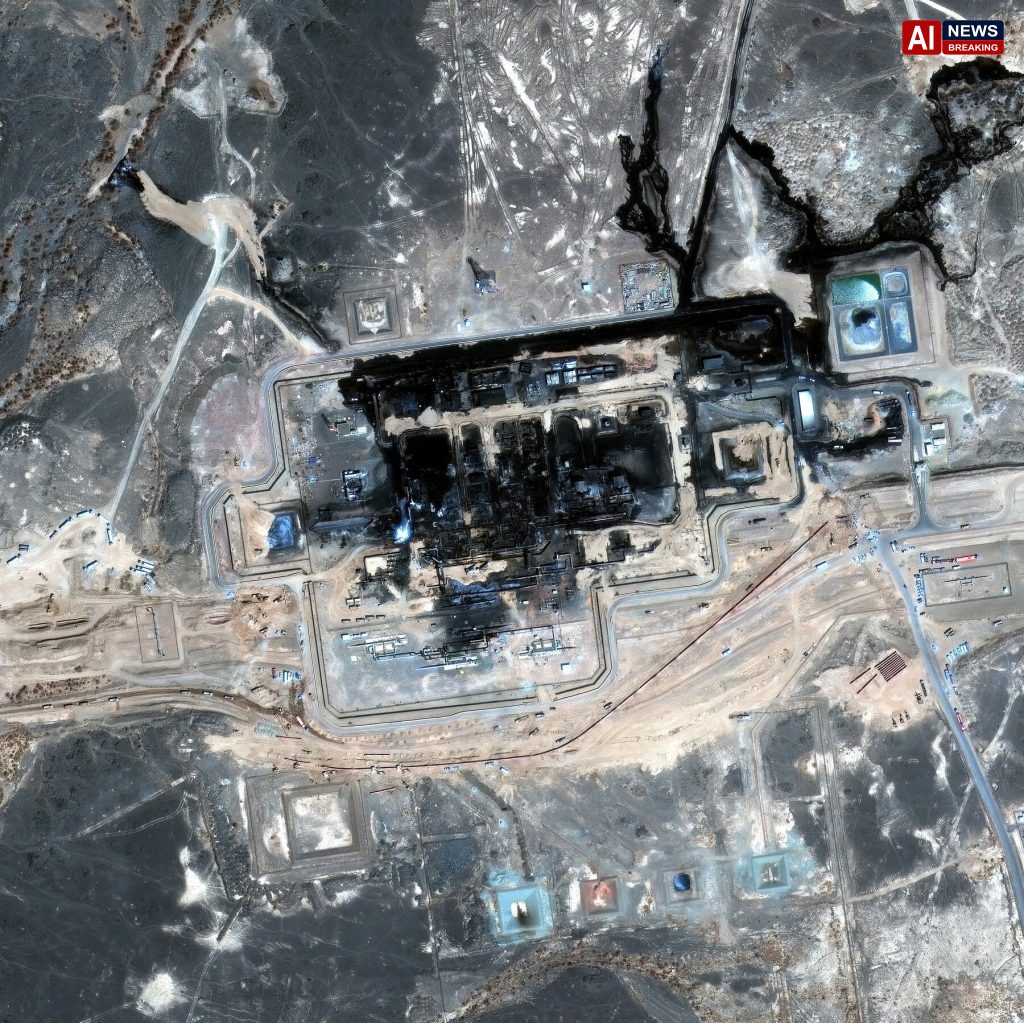
These strikes, which breached the kingdom’s airspace and damaged oil processing facilities, demonstrated a boldness that many experts had not anticipated during the previous cycle of regional tensions. While the Saudi defense ministry claimed to have intercepted the majority of the projectiles, the sheer volume of the barrage and the penetration of defensive screens raised serious questions among Riyadh’s leadership about the reliability of its current shield. This display of force by Tehran signals a clear shift in the regional balance of power, suggesting that the deterrent established in previous years has been significantly eroded.Compounding the security crisis was a high-profile diplomatic rebuff from the White House, which rejected Riyadh’s urgent pleas for enhanced military assistance and a more robust American presence in the Gulf..
Despite Saudi officials traveling to Washington to articulate the severity of the threat, they found themselves facing a presidential administration focused heavily on domestic economic metrics and a broader strategy of disengagement from Middle Eastern conflicts. The refusal to commit additional ground forces or advanced air defense systems was interpreted in Riyadh not merely as a policy disagreement, but as a fundamental reevaluation of the value of the Saudi-American alliance in the current geopolitical landscape.This diplomatic cold shower has plunged the Saudi leadership into a state of strategic shock, forcing a rapid reassessment of long-held assumptions about international alliances. For generations, the kingdom has operated on the premise that the United States views the stability of the Gulf as a vital national interest, contingent upon the free flow of oil and the containment of Iranian influence..
The current stance from Washington, which emphasizes burden-sharing and limits on intervention, challenges this foundational belief. Analysts note that this shift has left Riyadh feeling isolated at a time when it needs international support more than ever, creating a vacuum that Tehran is eager to exploit.The implications for regional security are profound, as Iran appears to be emboldening its proxy networks, including Hezbollah in Lebanon and various militias in Iraq and Syria, to test the limits of the new status quo. Without the clear backing of the United States, Saudi Arabia finds itself navigating a increasingly volatile environment where the cost of escalation is rising while the prospects for de-escalation are diminishing..
The kingdom’s Traditional hedging strategy, which balanced partnerships with Washington against engagement with other powers, is being stretched to its breaking point. The failure to secure a stronger American guarantee has prompted Riyadh to consider alternative security arrangements, a move that carries its own set of risks and uncertainties.Domestically, the situation poses significant challenges for Crown Prince Mohammed bin Salman, who has staked his political legacy on the vision of transforming Saudi Arabia into a global economic and military hub. The inability to guarantee the physical security of the kingdom’s borders and critical infrastructure undermines the confidence of international investors who are central to the Success of his economic diversification efforts..
The narrative of a strong, secure, and forward-looking Saudi Arabia is being challenged by headlines of vulnerability and diplomatic rejection, potentially slowing down the momentum of foreign direct investment that is crucial for the Kingdom’s future.Furthermore, the strategic shock has intensified internal debates within the Saudi security establishment regarding the pace and direction of military modernization. While the kingdom has invested billions in acquiring advanced weapons systems, including warships and aircraft from multiple vendors, the recent incidents have highlighted gaps in integrated air defense and rapid response capabilities. The reliance on foreign technology, much of which requires American authorization for full operational use, has created a bottleneck that Tehran’s forces have sought to exploit..
This dependency has become a liability in the eyes of some Saudi commanders, who are now advocating for greater autonomy in defense procurement and decision-making.The diplomatic fallout has also strained relations with other Gulf Cooperation Council states, which are witnessing Riyadh’s struggle and fearing that the instability could spill over their own borders. While there is a shared concern about Iranian expansionism, the differing approaches to engaging with Washington have created friction within the alliance. Some neighboring states have adopted more cautious diplomatic postures, aiming to maintain good relations with both the United States and Iran, whereas Saudi Arabia has been perceived as taking a harder line..
This divergence complicates efforts to present a unified front against regional threats, leaving individual Gulf states to navigate the crisis largely on their own.In the broader context of global geopolitics, the Saudi dilemma reflects a larger trend of regional powers adapting to a multipolar world order. With the United States signaling a retreat from its role as the primary security guarantor in the Middle East, countries like Saudi Arabia are being forced to forge new partnerships and redefine their strategic interests. This includes closer ties with China, which has emerged as a major economic partner and mediator in the region, as well as renewed engagement with Russia on energy issues..
However, these alternative alliances do not yet provide the same level of security assurance that the United States has historically offered, leaving Saudi Arabia in a precarious transitional phase.Economic consequences are beginning to surface as well, with oil markets reacting nervously to reports of potential disruptions in the Gulf. Although the attacks have not yet caused prolonged outages, the mere threat of further strikes against critical energy infrastructure has introduced volatility into global fuel prices. Saudi Arabia, as the world’s leading oil exporter, is keenly aware that its economic stability is inextricably linked to the security of its fields and ports..
The inability to fully neutralize the threat from Iran means that the kingdom must maintain higher military expenditures, diverting resources away from the social and economic reforms that are central to its Vision 2030 agenda.Looking ahead, the path for Saudi Arabia remains unclear, characterized by a delicate balancing act between diplomacy, deterrence, and internal consolidation. The kingdom is likely to pursue a two-track strategy, engaging in diplomatic channels with Iran to seek a de-escalation of hostilities while simultaneously accelerating its own military capabilities and diversifying its defense partnerships. This approach, while pragmatic, carries the risk of miscalculation, as any lapse in communication or any further act of aggression could spiral out of control..
The international community, particularly Washington, remains on the sidelines, watching with cautious interest as Riyadh attempts to navigate this treacherous landscape.Ultimately, the current crisis represents a defining moment for Saudi Arabia’s place in the modern world order. The rebuff from Trump and the aggression from Tehran have.
Updated: September 14, 2026
Saudi’s newfound strategic solitude may push it to fast‑track a self‑reliant defense industry, turning the current vulnerability into a catalyst for deeper ties with China and Russia.
If Riyadh can’t secure a reliable American shield, its investors will start weighing geopolitical