The Supreme Court will decide whether assault weapons bans violate the Second Amendment
 A Critic of Beijing Falls Short in Taiwan’s Key Mayoral Election
 EPA says no rise in contamination after Army detonates lead azide stockpile in Iowa
 Israeli Strike Kills 2 Workers at Gaza Clinic, Doctors Without Borders Says
 McQueen Pre-Fall 2027
Seven-member committee appointed to frame air ambulance SOPs
**
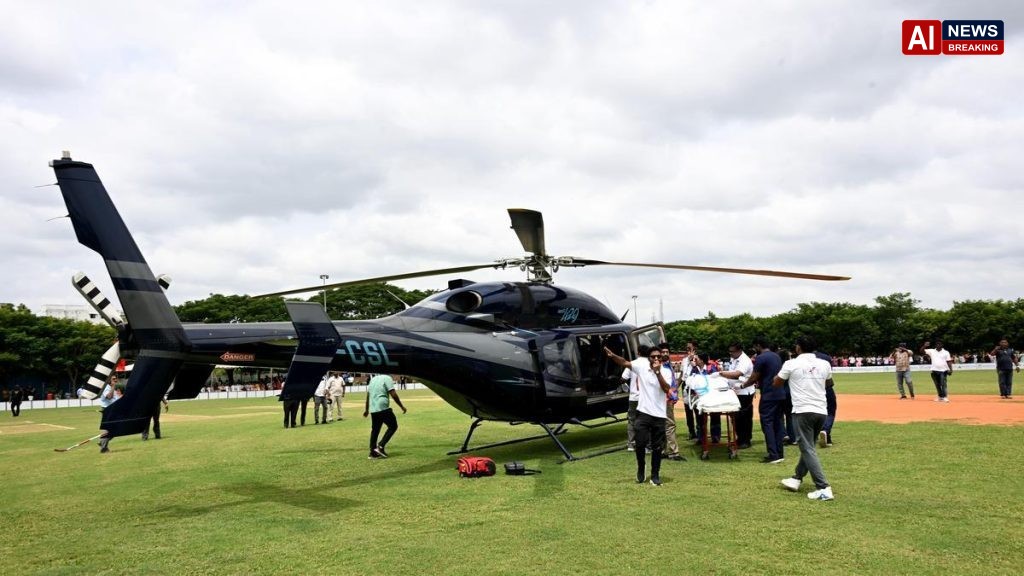
Seven-member committee appointed to frame air ambulance SOPs - AI News Breaking
sevenmember committee appointed frame:
The Maharashtra government has set up a seven‑member committee to draft standard operating procedures for air‑ambulance services, a move announced by Transport Minister Pratap Sarnaik on Thursday. The committee, which includes senior officials from the health, transport and aviation sectors as well as representatives of the state disaster management authority, is tasked with producing a comprehensive framework within two months of the Government Resolution that authorized its formation. The initiative comes amid growing calls for a coordinated emergency medical response system that can bridge the gap between remote rural areas and tertiary care hospitals in the state’s major urban centres.The decision follows a series of high‑profile incidents in which critically injured patients have faced prolonged delays reaching specialist facilities, often because of inadequate ground‑transport infrastructure or congested road networks..
In one recent case, a farmer from a village in the Kolhapur district suffered severe chest injuries in a road accident and had to wait more than six hours before an ambulance could navigate the narrow, poorly maintained roads to the nearest district hospital. By the time he was transferred to a tertiary centre in Pune via road, his condition had deteriorated significantly. Such episodes have highlighted the potential lifesaving role of air‑ambulance services, which can cut transport times to under an hour for locations within a 300‑kilometre radius of a suitable airstrip.The committee’s composition reflects the multi‑disciplinary nature of the challenge..
Meena Joshi, Director of the state’s Health Services, and includes the Director General of the Maharashtra State Road Transport Corporation, the Chief Commissioner of the Maharashtra Transport Department, a senior official from the Directorate General of Civil Aviation, and two senior medical officers from the state’s major teaching hospitals. The remaining members are a legal expert on health‑care regulations and a senior representative of the Indian Air Force’s medical evacuation unit, which has been consulted on best practices in air‑medical logistics.One of the key mandates of the committee is to define the criteria for activation of air‑ambulance missions. This will involve setting thresholds for injury severity, disease acuity and geographic remoteness, as well as establishing a clear chain of command for decision‑making..
The draft SOPs are expected to outline the role of the state health department in authorising flights, the responsibilities of the transport ministry in allocating aircraft, and the coordination mechanisms with private air‑charter operators who may be called upon in emergencies. The committee will also examine the feasibility of integrating existing helicopter‑based services operated by the Indian Air Force and the National Disaster Response Force into the civilian emergency medical system.Financial considerations form another pillar of the committee’s work. While the state has earmarked an initial allocation of ₹120 crore for the procurement of two medium‑range helicopters equipped with intensive‑care units, the SOPs will need to address long‑term sustainability, including maintenance costs, crew training, and fuel expenses..
The committee is expected to propose a mixed‑funding model that combines state budgetary support with revenue‑sharing arrangements with private operators and possible contributions from central government schemes such as the National Health Mission. A cost‑benefit analysis will be integral to the recommendations, with the aim of demonstrating that the reduction in mortality and morbidity outweighs the operational outlays.Training and crew composition are also on the agenda. International best practice suggests that an air‑ambulance crew typically includes a pilot, a critical‑care nurse and a paramedic, all of whom must undergo specialised training in aeromedical evacuation, advanced life support and aircraft safety protocols..
The committee will review existing training facilities in Maharashtra, such as the Aviation Training Institute in Pune, and consider partnerships with the Indian Institute of Aeronautics to develop bespoke curricula. It will also evaluate the need for on‑board medical equipment, ranging from portable ventilators and cardiac monitors to blood‑warming devices, to ensure that patients receive definitive care en route.Regulatory hurdles must be cleared before the SOPs can be operationalised. The Civil Aviation Requirements (CAR) Section 3, which governs the use of aircraft for medical purposes, requires explicit certification of aircraft and crew for air‑medical missions..
Additionally, the Indian Medical Council’s guidelines on tele‑medicine and remote monitoring may need to be adapted to the air‑ambulance context, where real‑time communication between the aircraft and receiving hospitals is critical. The committee’s legal adviser is expected to draft a set of recommendations that align state policies with national aviation and health regulations, thereby streamlining the approval process for new air‑ambulance bases.Stakeholder engagement will be an essential component of the drafting process. The committee has announced a series of consultations with representatives from rural health clinics, non‑government organisations involved in emergency response, and the families of patients who have previously relied on ad‑hoc air transport..
These dialogues aim to capture ground‑level insights into the practical challenges of accessing air‑ambulance services, such as the availability of suitable landing zones, the need for rapid patient triage, and the cultural acceptance of helicopter‑based care in remote communities. Feedback from these sessions will be incorporated into the final SOP document to ensure that the protocols are both technically sound and socially responsive.The two‑month deadline set by Minister Sarnaik underscores the urgency with which the state wishes to move forward. “Every minute counts when a life is hanging in the balance,” the minister said in his statement..
“By establishing clear, actionable procedures, we can harness the speed of air travel to deliver critical care where it is needed most, and we will do so with transparency, accountability and the highest standards of safety.” The minister added that the committee’s report would be presented to the cabinet for approval, after which a pilot phase could commence in the districts with the highest incidence of trauma and limited road connectivity, such as Dhule, Gadchiroli and the hilly regions of the Sahyadri range.If approved, the SOPs could pave the way for a statewide network of air‑ambulance hubs linked to existing district hospitals equipped with emergency departments. This network would function alongside the ground‑based ambulance fleet, creating a tiered response system capable of scaling resources according to the severity and location of incidents. The integration of air‑ambulance services is expected to reduce average transport times for critical patients from the current three‑to‑four‑hour window to under ninety minutes, thereby improving survival rates for conditions such as severe traumatic brain injury, cardiac arrest and obstetric emergencies.Critics, however, caution that the success of the programme will depend on more than just procedural guidelines..
They point to the need for robust monitoring mechanisms, data collection on response times and patient outcomes, and an independent oversight body to audit performance and financial management..
Maharashtra has formed a seven‑member panel to draft SOPs for a statewide air‑ambulance system, aiming to cut critical‑patient transport times and bridge gaps between remote villages and tertiary hospitals. The committee, chaired by the state health director and backed by ₹120 crore for two medical helicopters, must deliver its framework within two months, covering activation criteria, funding, training, regulatory compliance and stakeholder input.
If Maharashtra can translate its lofty SOP draft into a transparent, data‑driven air‑ambulance network, the state may leapfrog the chronic rural‑to‑urban health gap; failure to embed rigorous monitoring and sustainable financing will relegate the initiative to a costly, symbolic gesture.