Europe warns of Russia’s hybrid attacks but struggles to counter them
  Former chief election commissioner calls SIR scheme illegal.
  A Corruption Scandal Is Reshaping Brazil’s Presidential Election
  US citizen injured in Illinois after ICE agents mistook him for fugitive, tried to arrest him
  At 10 years old, Smithsonian’s Black museum is undaunted amid pressure from Trump administration
 SpaceX Targets Historic 75 Billion IPO to Fund Starship, AI Infrastructure and Orbital Data Centers
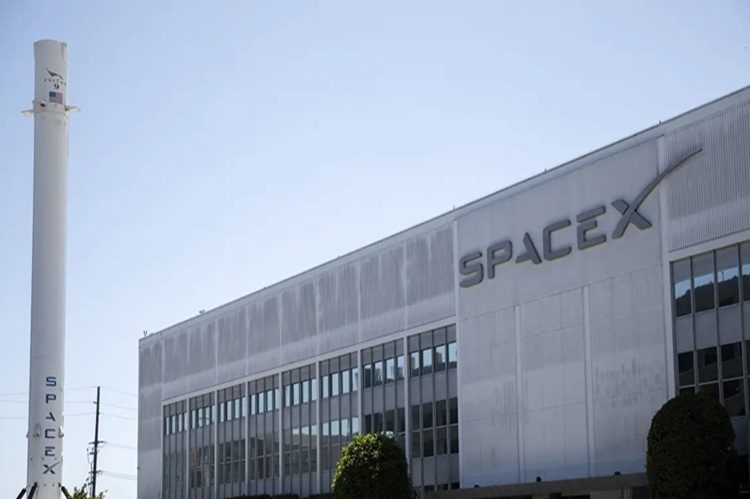
spacex targets historic billion:
SpaceX is reportedly preparing for a landmark IPO that could raise around $75 billion, potentially making it the largest public offering in history. The funding is expected to accelerate development of Starship, satellite networks, and new AI computing infrastructure, including future orbital data centers. The move signals Elon Musk’s ambition to integrate space technology with the next generation of artificial intelligence systems.
SpaceX, the aerospace and satellite communications company founded by Elon Musk, is reportedly gearing up for a historic initial public offering (IPO) that could raise approximately $75 billion. If executed at this scale, the listing would not only mark SpaceX’s transition into public markets but could also become the largest IPO in global financial history.
The reported plan reflects a broader strategic vision: transforming SpaceX from a launch and satellite company into a vertically integrated space infrastructure and artificial intelligence platform. According to reporting attributed to Bloomberg, the company aims to channel IPO proceeds into Starship development, satellite constellation expansion, AI computing infrastructure, and long-term ambitions such as orbital data centers.
Bloomberg Tech’s Ed Ludlow highlighted the scale and implications of the potential offering, emphasizing how it could reshape both the aerospace industry and global capital markets.
From Rocket Company to Space Infrastructure Giant: SpaceX began as a private aerospace startup focused primarily on reducing the cost of space access. Over time, it has evolved into a multi-layered technology ecosystem spanning rocket manufacturing, satellite internet services, and reusable launch systems.
The company’s two most significant operational pillars today are:
- Starship program, designed for deep space exploration and interplanetary transport
- Starlink satellite network, providing global broadband internet coverage
The proposed IPO suggests a further expansion beyond these domains, positioning SpaceX as a foundational infrastructure provider for future space-based computing and communications systems.
The $75 Billion IPO: Scale and Significance: If the reported valuation and capital raise targets are achieved, SpaceX’s IPO would surpass all previous public offerings in financial history.
Why the scale matters:
- It would signal unprecedented investor confidence in space infrastructure economics
- It could set a new benchmark for deep-tech IPO valuations
- It would dramatically increase liquidity in space-related capital markets
- It may influence funding patterns across AI, aerospace, and defense sectors
The scale of the IPO reflects not just current business operations, but long-term expectations about the commercialization of space-based services.
Elon Musk’s Vision: AI Infrastructure Beyond Earth: A central theme emerging from the reported IPO strategy is Elon Musk’s broader ambition to extend artificial intelligence infrastructure into space.
This includes:
- High-capacity AI computing systems integrated with satellite networks
- Orbital data centers designed to leverage space-based energy and cooling conditions
- A tightly coupled ecosystem linking Starlink connectivity with AI processing layers
The underlying logic is that space could provide unique advantages for large-scale computation, including reduced cooling constraints, scalable solar power, and global low-latency communication networks.
This positions SpaceX not just as a launch provider, but as a potential backbone of next-generation AI infrastructure.
Market Implications: A New Deep-Tech Capital Cycle
A SpaceX IPO of this magnitude would likely reshape capital allocation across multiple sectors.
Aerospace and Defense:
- Increased investment in reusable launch systems
- Higher valuation benchmarks for satellite companies
Artificial Intelligence:
- Integration of AI infrastructure with hardware-intensive ecosystems
- Expansion of compute-focused satellite applications
Capital Markets:
- Surge in deep-tech IPO appetite
- Greater investor focus on long-duration infrastructure bets
It would also potentially unlock liquidity for early investors and employees, while establishing a public valuation benchmark for space-based enterprises.
If realized at the projected scale, SpaceX’s IPO would represent a defining moment in the convergence of aerospace engineering, artificial intelligence, and global capital markets. It would signal a shift from traditional space exploration toward fully integrated space-based infrastructure ecosystems.
The company’s ambitions extend far beyond rockets and satellites, aiming to position space as a foundational layer for the next generation of digital and computational systems.
This potential IPO reflects a structural convergence between three previously distinct domains: aerospace manufacturing, satellite communications, and AI compute infrastructure. The strategic implication is that “space companies” are evolving into “infrastructure platform companies” whose value is derived less from hardware launches and more from continuous data, connectivity, and computation services. If SpaceX succeeds in integrating orbital systems with AI workloads, it could redefine not only the economics of space access but also the geographic constraints of digital infrastructure itself.