Europe warns of Russia’s hybrid attacks but struggles to counter them
  Former chief election commissioner calls SIR scheme illegal.
  A Corruption Scandal Is Reshaping Brazil’s Presidential Election
  US citizen injured in Illinois after ICE agents mistook him for fugitive, tried to arrest him
  At 10 years old, Smithsonian’s Black museum is undaunted amid pressure from Trump administration
 Spain Installs Floating Barrier Off Ceuta to Deter Migrants.
Spain has installed a floating barrier in the waters off Ceuta to deter migrants from attempting to cross into the territory, amid growing concerns over the large number of migrants and fatalities in the area. The move has sparked debate over the effectiveness and humanity of the measure, with many arguing for a more comprehensive and coordinated approach to addressing the migrant crisis.
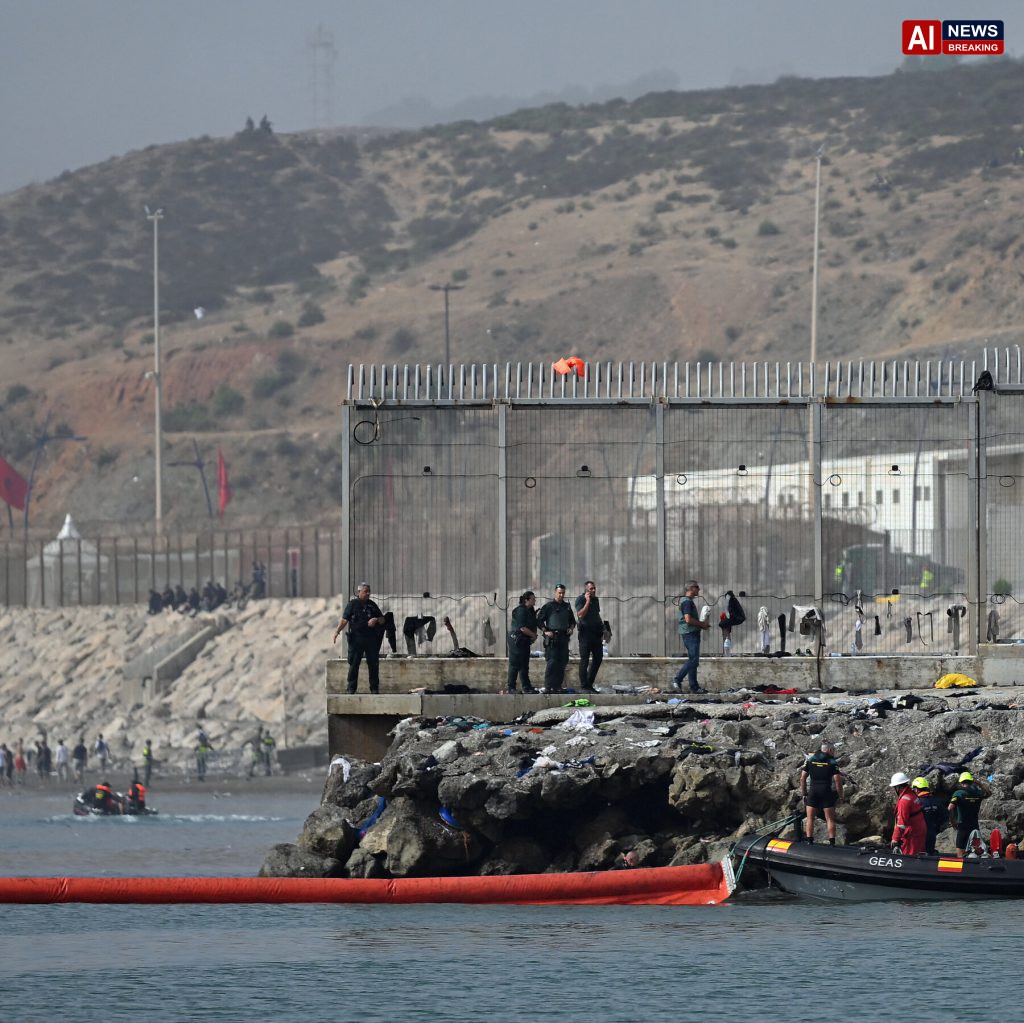
Spain Installs Floating Barrier in Ceuta After Influx of Migrants - AI News Breaking
Spain has installed a floating barrier in the waters off Ceuta, a Spanish exclave in Africa, in an effort to deter migrants from attempting to cross into the territory. The move comes after a recent influx of migrants surged into Ceuta, with most of them having since returned across the border to Morocco. The authorities have confirmed that at least 67 people died trying to enter the territory, highlighting the dangers and desperation of those seeking to reach European soil..
The installation of the floating barrier is a response to the growing concerns over the large number of migrants attempting to cross into Ceuta. The barrier is designed to prevent migrants from using inflatable boats and other vessels to reach the territory, and to reduce the risk of accidents and fatalities. The Spanish government has come under pressure to address the migrant crisis, with many calling for more effective measures to be taken to prevent further loss of life..
The migrant crisis in Ceuta has sparked tensions between Spain and Morocco, with the two countries having different opinions on how to address the issue. Morocco has been criticized for not doing enough to prevent migrants from attempting to cross into Ceuta, while Spain has been accused of not providing adequate support and resources to deal with the crisis. The situation has become increasingly politicized, with both countries seeking to deflect blame and responsibility..
Despite the installation of the floating barrier, many migrants are likely to continue attempting to cross into Ceuta. The territory’s proximity to Morocco and its status as a European enclave make it an attractive destination for those seeking to reach Europe. The migrants are often driven by desperation and a desire to escape poverty, conflict, and persecution in their home countries..
The journey is fraught with danger, but many are willing to take the risk in the hope of building a better life. The Spanish government has faced criticism for its handling of the migrant crisis, with many arguing that the response has been inadequate and inhumane. The use of the floating barrier has been criticized by human rights groups, who argue that it will only serve to push migrants into more dangerous and clandestine routes..
The government has defended its actions, saying that the barrier is necessary to prevent further loss of life and to maintain public order. The situation in Ceuta has highlighted the need for a more comprehensive and coordinated approach to addressing the migrant crisis. The European Union has come under pressure to provide more support and resources to member states dealing with large numbers of migrants..
The EU has established a number of initiatives and programs aimed at addressing the root causes of migration and providing support to migrants, but more needs to be done to address the crisis effectively. The migrant crisis in Ceuta is not an isolated incident, but rather part of a larger pattern of migration and displacement that is affecting many parts of the world. The ongoing conflict in Syria, the crisis in Libya, and the poverty and instability in many African countries have all contributed to the large numbers of migrants seeking to reach Europe..
The situation is complex and multifaceted, and will require a sustained and coordinated effort to address. The Spanish government has announced plans to increase the number of border guards and police in Ceuta, in an effort to strengthen security and prevent further migrant crossings. The government has also pledged to increase support and resources for migrants who have made it into the territory, including access to food, shelter, and medical care..
However, many migrants are likely to face a long and difficult journey, with uncertain prospects and limited opportunities. The use of the floating barrier in Ceuta has raised concerns about the impact on the local environment and ecosystem. The barrier is designed to be a temporary measure, but it is unclear what the long-term effects will be on the marine life and habitats in the area..
The Spanish government has said that it will monitor the situation and take steps to mitigate any adverse effects, but more needs to be done to assess and address the potential risks. The migrant crisis in Ceuta has sparked a wider debate about the role of borders and the management of migration flows. Many argue that the current system is broken and in need of reform, with a more humane and effective approach needed to address the complex issues surrounding migration..
The situation in Ceuta is a symptom of a larger problem, and will require a sustained and coordinated effort to address the root causes of migration and to find solutions that are fair, effective, and sustainable. The Spanish government has faced criticism for its decision to allow migrants to enter Ceuta, with many arguing that it has created a pull factor and encouraged more people to attempt the journey. However, the government has said that it is committed to upholding its humanitarian obligations and providing support and protection to those in need..
The situation is complex and nuanced, and will require a careful and considered approach to address the competing demands and priorities. The situation in Ceuta is likely to continue to evolve and unfold in the coming days and weeks. The Spanish government will face ongoing pressure to address the migrant crisis, and to find solutions that are effective, humane, and sustainable..
The use of the floating barrier is a temporary measure, and more will need to be done to address the underlying causes of migration and to find long-term solutions to the crisis. The situation is a challenge not just for Spain, but for the European Union and the international community as a whole..
Updated: August 1, 2026
The installation of the floating barrier in Ceuta may deter some migrants, but it’s a short-term fix that doesn’t address the root causes of migration, and may even push desperate individuals into more perilous routes. Ultimately, a more comprehensive and humane approach is needed to tackle the complex issues surrounding migration and provide sustainable solutions for those seeking a better life.