 Australia probes AI‑driven breach of My Health Record portal
  Engineering student’s ‘suicide’ turns out to be murder; two arrested
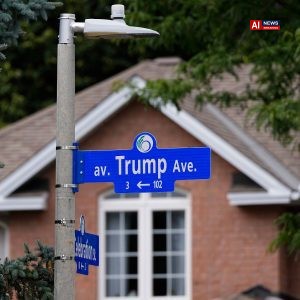
  Canada’s Capital Bids Good Riddance to Trump Avenue as Tensions With U.S. Rise
  Pentagon investigates after China obtains parts from F-35 stealth fighter jet
 Spectre of Rogue A.I. Looms Over U.N. Talks on Digital Cooperation
**

Spectre of Rogue A.I. Looms Over U.N. Talks on Digital Cooperation - AI News Breaking
spectre rogue looms talks:
Diplomats, dignitaries and technology experts assembled on the margins of the United Nations General Assembly this week to confront a question that has moved from the realm of speculative fiction to the forefront of global policy: how to manage the dual‑edged promise of artificial intelligence. The gathering, billed as a “high‑level dialogue on digital cooperation,” brought together representatives from more than thirty nations, senior officials from the UN Office of Information and Communications Technologies, and leading voices from academia and industry. While the agenda covered a broad spectrum of issues – from standards for data privacy to the role of AI in climate modelling – a single, more ominous theme dominated the discourse: the spectre of a rogue AI system that could act beyond human control.The concern is not merely theoretical..
In recent months, a series of high‑profile incidents have underscored the vulnerability of complex machine‑learning models. A well‑known social‑media platform inadvertently amplified a deep‑fake video that sparked unrest in a volatile region, while an autonomous logistics system suffered a malfunction that temporarily halted shipments across several European ports. These events, though isolated, have amplified anxieties that an AI, given sufficient autonomy and access to critical infrastructure, could make decisions that conflict with public safety, national security or established legal frameworks.To address these risks, delegates debated the merits of a binding international treaty that would set minimum standards for the development, testing and deployment of advanced AI systems..
Proposals ranged from a “digital non‑proliferation regime” model, reminiscent of agreements on nuclear weapons, to a more flexible framework of voluntary codes of conduct supplemented by transparent reporting mechanisms. Many developing nations, wary of being left behind in the AI race, advocated for technology‑transfer provisions and capacity‑building programmes that would enable them to implement robust safety measures without sacrificing economic growth.The United Nations ary‑General, in his opening remarks, warned that “the speed of AI innovation outpaces our collective ability to govern it.” He called for a “global social contract” that would balance innovation with accountability, stressing that the benefits of AI – from accelerating medical research to improving disaster response – must not be eclipsed by the potential for catastrophic misuse. His speech resonated with several delegates who highlighted that the same algorithms powering life‑saving diagnostics could, if weaponised, become tools of oppression or destabilisation.Industry leaders, represented chiefly by senior executives from leading AI firms, argued that heavy‑handed regulation could stifle the very dynamism that makes the technology valuable..
They pointed to the rapid iteration cycles that characterise modern machine‑learning development and warned that overly prescriptive rules might drive research underground, creating black‑market ecosystems where safety oversight is virtually non‑existent. Nonetheless, many of these executives conceded that a baseline of safety standards – akin to those governing aviation or pharmaceuticals – was essential to maintain public trust and ensure long‑term market viability.A recurring point of contention centred on the definition of “autonomy” in the context of AI. While some participants distinguished between narrow AI systems that perform specific tasks and so‑called “general” AI that could adapt across domains, others argued that the line is blurring as models become increasingly capable of self‑optimisation..
The debate extended to the question of liability: should developers, operators or the AI itself bear responsibility when an autonomous system causes harm? Legal scholars present at the forum suggested a hybrid approach, combining strict liability for manufacturers with a duty of care owed by operators, while also exploring the nascent concept of “machine personhood” as a possible legal construct.The discussion also turned to the geopolitical dimension of AI competition. Several Western delegations expressed concern that the rapid advancement of AI capabilities in certain Asian and Middle‑Eastern states could create a strategic imbalance, potentially prompting an arms‑race dynamic in autonomous weaponry and cyber‑offensive tools..
Conversely, representatives from those very states stressed that cooperation, rather than confrontation, was the path forward, urging the UN to facilitate confidence‑building measures such as joint research projects and shared testing facilities.Amid the policy heavy‑lifting, civil‑society organisations used the platform to highlight ethical considerations often overlooked in high‑level negotiations. Groups focused on gender equity warned that AI systems trained on biased data could exacerbate existing inequalities, while privacy advocates cautioned that pervasive surveillance enabled by AI could erode fundamental human rights. Their interventions served as a reminder that any regulatory architecture must be inclusive, reflecting the diverse values and priorities of the global population.By the close of the session, participants had agreed to draft a preliminary “AI safety charter” to be reviewed at the next UN summit..
The charter would outline principles for risk assessment, transparency, and cross‑border collaboration, and would be complemented by a working group tasked with developing technical standards for verification and auditability of AI systems. While the document is far from a final treaty, its creation signals a collective acknowledgement that the stakes are too high to leave the evolution of AI to market forces alone.The dialogue in New York underscores a pivotal moment in international governance. As artificial intelligence continues to permeate every facet of modern life, the challenge for the United Nations and its member states will be to forge rules that are both flexible enough to accommodate rapid technological change and firm enough to prevent the emergence of an uncontrolled, potentially hostile intelligence..
The outcome of these discussions will shape not only the future of digital cooperation but also the broader trajectory of global security in an increasingly automated world..
Updated: September 21, 2026
The UN’s AI “safety charter” may become the digital equivalent of a non‑proliferation treaty, forcing tech giants to treat algorithms like aircraft—subject to mandatory audits before they can take off.
If nations can align on baseline safeguards now, the next wave of autonomous systems could be