Europe warns of Russia’s hybrid attacks but struggles to counter them
  Former chief election commissioner calls SIR scheme illegal.
  A Corruption Scandal Is Reshaping Brazil’s Presidential Election
  US citizen injured in Illinois after ICE agents mistook him for fugitive, tried to arrest him
  At 10 years old, Smithsonian’s Black museum is undaunted amid pressure from Trump administration
 Sujit Bose Arrested: First TMC Leader Held After BJP’s Bengal Surge Sparks Political Storm
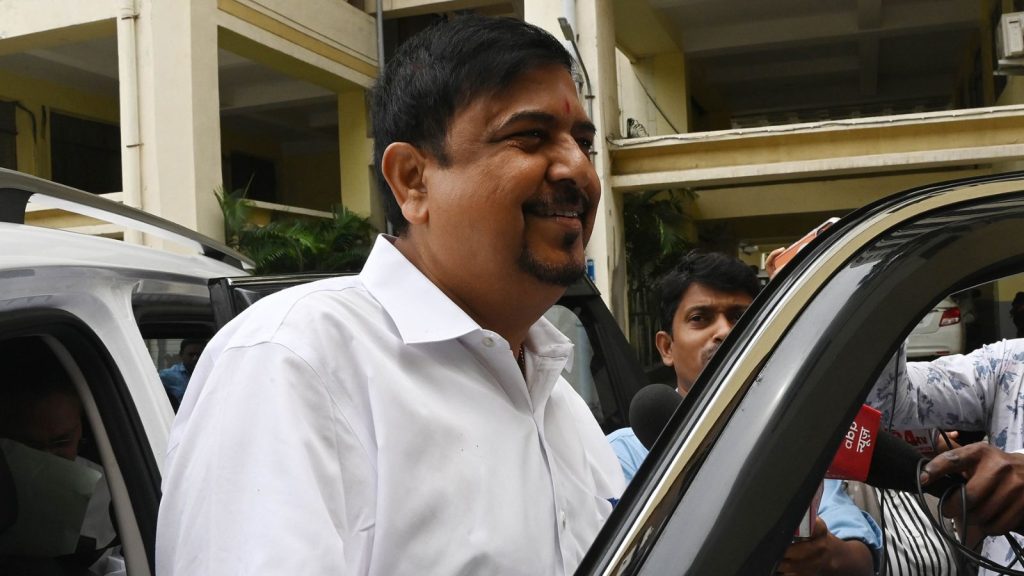
sujit bose arrested first:
Senior Trinamool Congress (TMC) leader Sujit Bose has become the first prominent party figure to be arrested after the BJP’s major political breakthrough in West Bengal. The development has triggered intense political reactions, with the TMC accusing central agencies of political vendetta while the BJP claims the law is finally catching up with corruption.
Bose’s arrest is being viewed as a symbolic turning point in Bengal politics, especially as the BJP attempts to expand its influence in the state following recent electoral gains.
West Bengal politics entered a new phase of confrontation after senior Trinamool Congress (TMC) leader Sujit Bose was arrested, becoming the first major TMC figure to face detention since the Bharatiya Janata Party (BJP) significantly strengthened its position in the state’s political landscape.
The arrest has immediately intensified the already bitter rivalry between Chief Minister Mamata Banerjee’s TMC and the BJP, with both sides framing the development in dramatically different ways. While the BJP described the action as evidence of accountability and anti-corruption enforcement, TMC leaders alleged that central investigative agencies are being used to intimidate opposition figures after the BJP’s growing success in Bengal.
The case has rapidly evolved beyond a single arrest and is now being interpreted as an indicator of the changing power dynamics in West Bengal politics.
Who Is Sujit Bose?
All India Trinamool Congress leader Sujit Bose is one of the more influential political figures in the party’s North Kolkata and Bidhannagar organizational structure. Over the years, he emerged as a trusted regional leader within Mamata Banerjee’s political ecosystem and built a strong network in urban and semi-urban constituencies around Kolkata.
Bose served in important ministerial and administrative roles under the TMC government and became known for his organizational abilities, local influence, and strong control over party workers in his area.
Within TMC circles, he has often been considered a key mobilizer during elections and a leader capable of maintaining the party’s grassroots machinery in politically sensitive districts. His influence expanded steadily during the years when the TMC consolidated dominance over Bengal politics after defeating the Left Front and later resisting the BJP’s rise.
Political observers have long viewed Bose as part of the second-rung leadership that helped Mamata Banerjee sustain TMC’s organizational power beyond the party’s central leadership.
Why Was Sujit Bose Arrested?
Reports indicate that Bose was arrested in connection with an ongoing investigation linked to alleged financial irregularities and corruption-related accusations. Investigative agencies reportedly questioned him over suspected links to irregular transactions, misuse of funds, and alleged procedural violations tied to administrative decisions taken during his tenure in office.
Authorities claim they gathered documentary and financial evidence before proceeding with the arrest. According to investigators, multiple rounds of questioning and evidence collection preceded the final action.
However, TMC leaders strongly rejected the allegations and argued that the arrest is politically motivated. Party spokespersons accused the BJP-led central government of targeting opposition leaders using investigative agencies such as the Enforcement Directorate (ED) and Central Bureau of Investigation (CBI).
The TMC has repeatedly claimed that opposition leaders across India are selectively targeted while politicians aligned with the BJP are often spared similar scrutiny.
The BJP, meanwhile, dismissed the political vendetta accusation and argued that corruption investigations cannot be blocked simply because the accused belongs to a powerful political party. BJP leaders in Bengal stated that the arrest reflects the beginning of greater accountability in state politics.
Why the Arrest Is Politically Significant
Sujit Bose’s arrest carries political weight because it comes at a time when the BJP is aggressively attempting to weaken the TMC’s long-standing dominance in West Bengal.
Although Mamata Banerjee remains one of the most powerful regional leaders in India, the BJP has steadily expanded its vote share and organizational presence in the state over the past several years. Recent electoral gains by the BJP have increased pressure on the TMC leadership and intensified political polarization across Bengal.
The arrest is being interpreted by many analysts as both a legal and political event. Symbolically, it signals that senior TMC leaders may now face increased scrutiny as the BJP attempts to position itself as the primary challenger capable of dismantling what it describes as a corruption-entrenched political structure.
For the TMC, the arrest creates a difficult political challenge. The party must simultaneously defend its leaders, maintain organizational morale, and avoid the perception that corruption allegations are damaging its credibility among voters.
TMC’s Response
The TMC leadership responded aggressively after the arrest, accusing the BJP of weaponizing investigative institutions for political gain.
Several party leaders alleged that central agencies are being used strategically in states where the BJP faces strong regional opposition. According to TMC leaders, the timing of the arrest is designed to create political pressure and generate media narratives unfavorable to the ruling party in Bengal.
Party workers staged protests in several areas following the arrest, with demonstrations criticizing the central government and demanding Bose’s release.
Mamata Banerjee herself has repeatedly accused the BJP of attempting to destabilize opposition governments through legal pressure, defections, and agency action rather than purely electoral competition.
The TMC is expected to intensify this narrative in the coming weeks, especially if additional investigations target other party leaders.
BJP Sees Opportunity
For the BJP, the arrest offers a political opening in a state where the party has spent years trying to convert electoral momentum into durable organizational power.
BJP leaders have consistently campaigned on allegations of corruption within the TMC government, particularly in cases involving recruitment scams, municipal irregularities, financial misconduct allegations, and local administrative controversies.
The arrest of a senior TMC figure allows the BJP to reinforce its messaging that corruption investigations are exposing systemic problems within Bengal’s ruling establishment.
Some BJP leaders have also suggested that more high-profile investigations could follow, although no official confirmation has been provided regarding future arrests or legal actions.
The BJP’s broader strategy appears aimed at weakening public trust in the TMC while simultaneously presenting itself as the alternative force capable of bringing “clean governance” to Bengal politics.
Bengal’s Political Climate Growing More Aggressive
West Bengal has witnessed increasingly confrontational politics in recent years, with tensions frequently escalating between the TMC and BJP at both organizational and street levels.
Political violence allegations, protests, corruption investigations, defections, and legal battles have become regular features of the state’s political environment.
The BJP’s emergence as the principal opposition force fundamentally altered Bengal’s political structure, which for decades was dominated first by the Left Front and later by the TMC.
As competition intensified, investigative agencies also became central players in the political narrative. Arrests, raids, financial probes, and corruption cases involving politicians have repeatedly generated national headlines.
Sujit Bose’s arrest therefore fits into a broader pattern of escalating institutional and political confrontation between state-level regional parties and the BJP-led central government.
What Happens Next?
The legal process surrounding Bose’s arrest is expected to continue over the coming weeks, with investigators likely seeking further questioning, financial records, and possible links to broader networks under investigation.
Bose’s legal team is expected to challenge the arrest and seek bail while contesting the allegations in court.
Politically, the arrest could have wider implications if additional TMC leaders come under scrutiny. Such developments may intensify factional anxieties within the party and sharpen anti-BJP rhetoric ahead of future elections.
At the same time, the BJP may attempt to use the arrest as evidence supporting its campaign narrative that Bengal requires political change and stronger institutional accountability.
The outcome of the case could therefore influence not only legal proceedings but also public perception ahead of future electoral battles in the state.
AI Insight
Sujit Bose’s arrest is significant not merely because of the legal allegations involved, but because of what it symbolizes in Bengal’s evolving political order. The BJP’s growing strength in the state is creating conditions where investigative actions against senior TMC leaders now carry national political implications. For Mamata Banerjee’s party, the challenge will be preventing corruption cases from damaging its image while maintaining its grassroots organizational strength. For the BJP, such arrests provide an opportunity to expand its anti-corruption narrative and deepen voter dissatisfaction with the ruling establishment. The larger political reality is that Bengal is entering a phase where legal battles, institutional pressure, and political warfare are becoming increasingly interconnected.