The Supreme Court will decide whether assault weapons bans violate the Second Amendment
 A Critic of Beijing Falls Short in Taiwan’s Key Mayoral Election
 EPA says no rise in contamination after Army detonates lead azide stockpile in Iowa
 Israeli Strike Kills 2 Workers at Gaza Clinic, Doctors Without Borders Says
 McQueen Pre-Fall 2027
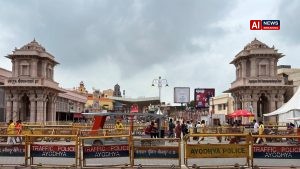
Supreme Court dismisses interim application in Thirupparankundram case.
**
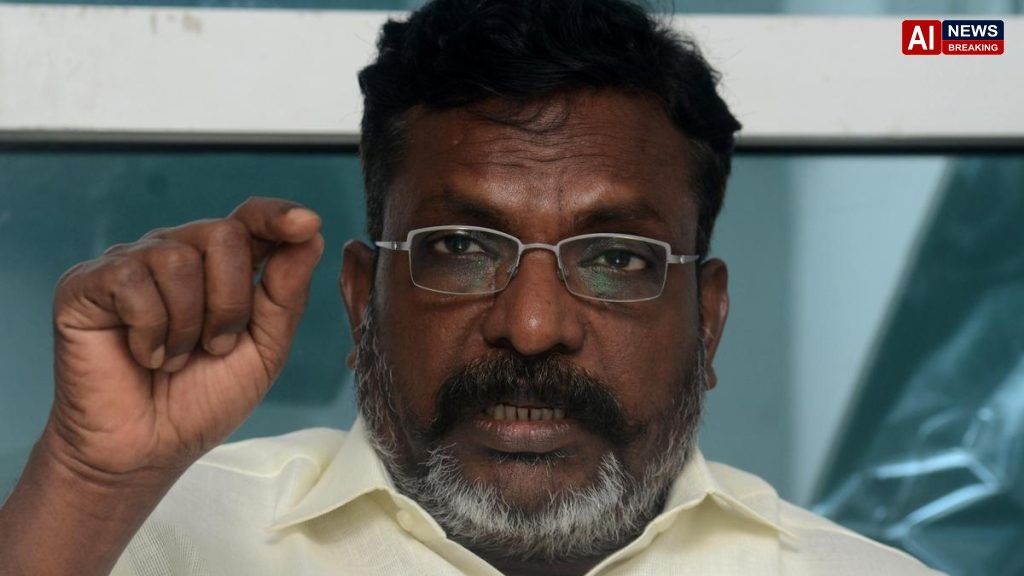
VCK chief terms Supreme Court’s interim verdict in Thirupparankundram case ‘shocking’ - AI News Breaking
The verdict delivered by the Supreme Court on the interim application in the Thirupparankundram case has drawn an unusually sharp reaction from the VCK chief, Thirumavalavan, who described it as “shocking” and warned that it could be seized upon by “communal forces as a victory for themselves”. In a press conference held in Chennai shortly after the judgment was read, the veteran politician, whose party represents Dalit and marginalized communities, articulated concerns that the ruling might inflame tensions in a region already sensitive to religious and caste fault lines.Thirupparankundram, a suburb of Madurai, became a flashpoint earlier this year when a public meeting organized by a fringe Hindu nationalist group turned violent, resulting in several injuries and the death of a youth allegedly linked to the protest. The incident sparked a police investigation that culminated in charges against a number of participants, including members of the Hindu Yuva Vahini..
The case was subsequently taken up by the Supreme Court on an interim basis after lower courts rejected a petition filed by the accused, seeking a stay on their arrest and a suspension of the criminal proceedings.In its judgment, the apex court dismissed the petition, stating that the evidence presented by the prosecution was “sufficient to warrant the continuation of the criminal trial”. The bench, comprising Justice R. Gupta, emphasized that the interim relief sought by the accused could not be granted “in the interest of justice and public order”..
The decision, while procedural, has been interpreted by some legal analysts as a signal that the judiciary will not entertain what they term “politically motivated” attempts to derail criminal investigations involving communal violence.Thirumavalavan, who has a history of vocal opposition to what he perceives as the growing influence of Hindutva organisations in Tamil Nadu, seized upon the judgment to raise broader concerns about the state of communal harmony. “The verdict, instead of delivering justice, offers a platform for communal forces to claim victory,” he said, his voice resonating with the frustration of supporters who have long complained of impunity for extremist groups. He warned that the perception of a judicial endorsement of the accused could “create an atmosphere conducive to violence”, potentially encouraging further attacks on minority communities.The comments have drawn a swift response from the government of Tamil Nadu, with Chief Minister M.K..
Stalin urging calm and emphasizing that the legal process must run its course. In a statement released by the state’s Department of Law, the administration reaffirmed its commitment to “upholding the rule of law and ensuring that any attempt to destabilise communal peace will be dealt with firmly”. The statement also highlighted recent initiatives aimed at strengthening community policing in Madurai, noting that “enhanced cooperation between police and local leaders is essential to prevent the recurrence of such incidents”.Legal experts, however, caution against reading too much into the political rhetoric surrounding the case..
Chandrasekaran of the National Law School of India, New Delhi, pointed out that the Supreme Court’s decision was confined to procedural matters and did not address the substantive guilt or innocence of the accused. “The Court is simply saying that the lower courts were correct in refusing the interim relief. It does not set a precedent on how communal violence cases should be adjudicated,” he explained..
He added that the judiciary’s role is to interpret the law, not to act as a surrogate for the executive’s law‑and‑order responsibilities.Human rights organisations have also weighed in, urging both the state and the central government to ensure that the investigation proceeds without political interference. Amnesty International India issued a brief note highlighting the need for “transparent and timely legal proceedings” and warned that “any perception of bias can exacerbate communal tensions”. The organization called for the protection of witnesses and the provision of adequate security for victims and their families, who have expressed fear of retaliation.The broader political context cannot be ignored..
Tamil Nadu’s political landscape has been increasingly polarized, with the DMK‑led coalition seeking to distance itself from the alleged rise of Hindutva groups, while the opposition Bharatiya Janata Party (BJP) continues to project itself as a defender of cultural nationalism. In this environment, the Thirupparankundram case has become a symbolic battlefield, with each side eager to claim moral superiority. The VCK’s reaction underscores a strategy of framing the legal outcome as part of a larger narrative about minority rights and secularism, a narrative that resonates with its core electorate.Meanwhile, the police have reiterated that they are committed to completing the investigation and filing a charge sheet against those found culpable..
A senior officer from the Madurai district, speaking on condition of anonymity, said that the department has already identified several individuals linked to the violent demonstration and that forensic evidence corroborates the prosecution’s case. He acknowledged the sensitivity of the matter, noting that “we are aware of the potential for unrest and are taking steps to maintain public order while pursuing the case”.As the legal process moves forward, the immediate impact of the Supreme Court’s interim verdict will likely be measured in the reactions it elicits from political actors and civil society. While Thirumavalavan’s stark warning reflects genuine anxiety about communal flare‑ups, it also serves as a reminder that the judiciary’s decisions, even when narrowly framed, can have reverberations beyond the courtroom..
Whether the verdict will indeed be leveraged by “communal forces” as a victory, as the VCK chief suggests, remains to be seen. What is certain is that the Thirupparankundram case will continue to be a litmus test for India’s capacity to confront and adjudicate acts of communal violence in an increasingly divided socio‑political climate..
Updated: November 21, 2026
The Supreme Court’s procedural rebuff may embolden Hindu nationalist factions to tout a judicial win, while simultaneously deepening Dalit‑minority mistrust of institutions already perceived as biased. If unchecked, this perception could turn a legal ruling into a catalyst for further communal polarization, testing the resilience of India’s secular framework.